NEWS

Magnetization Technology for Magnetic Rings

Magnetization Technology for Magnetic Rings: Methods, Pole Patterns, and Applications

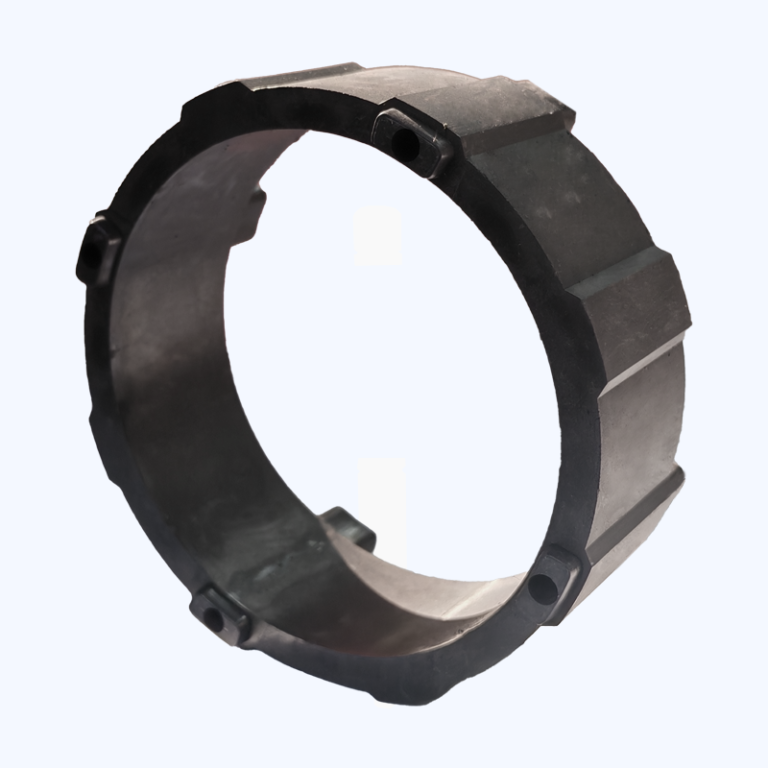
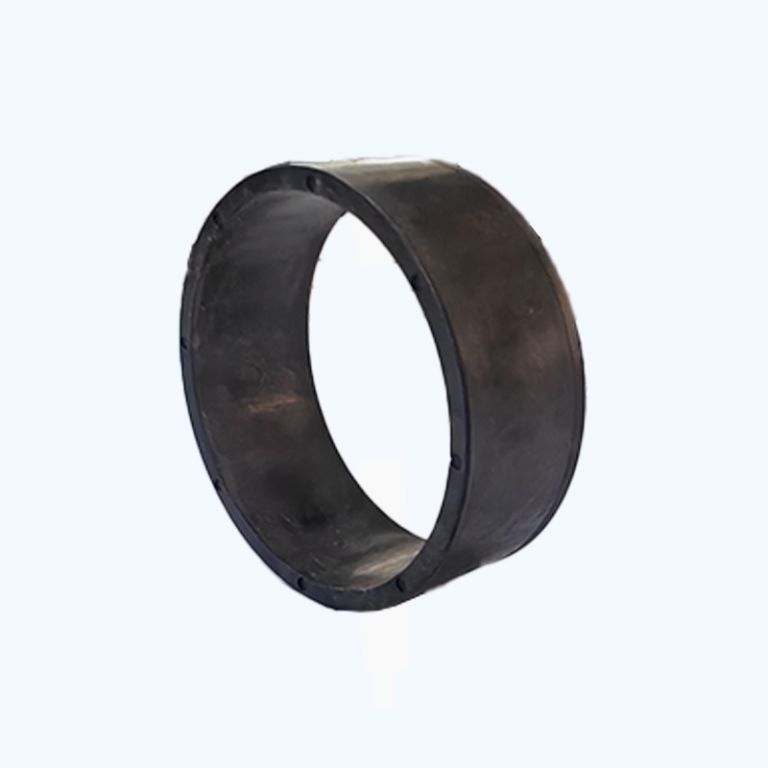
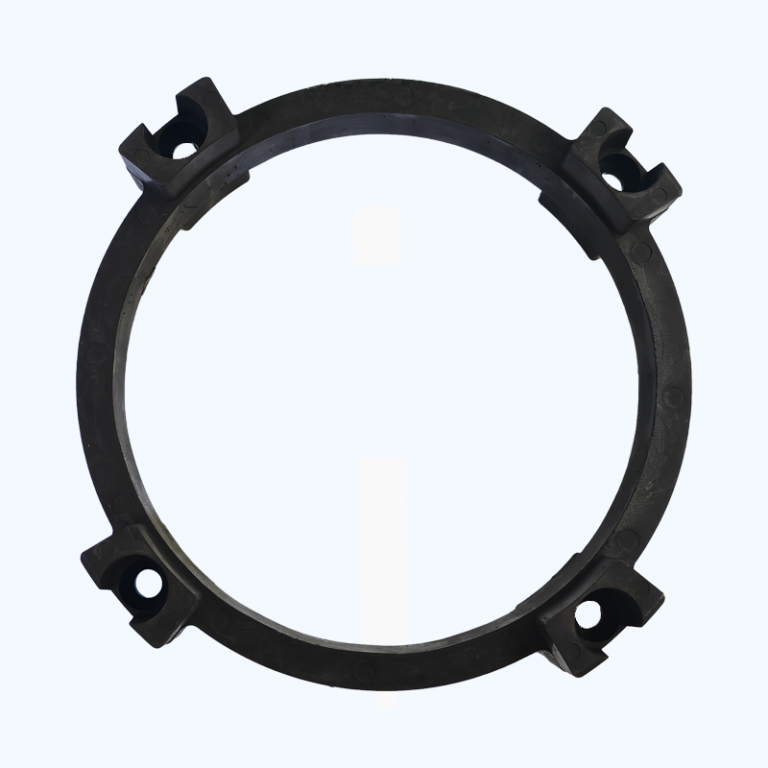
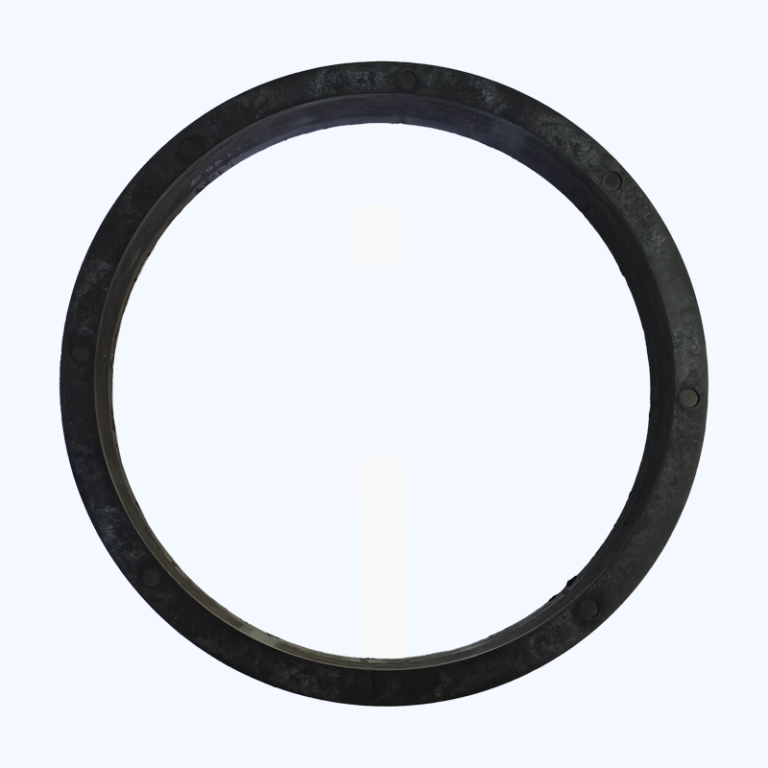
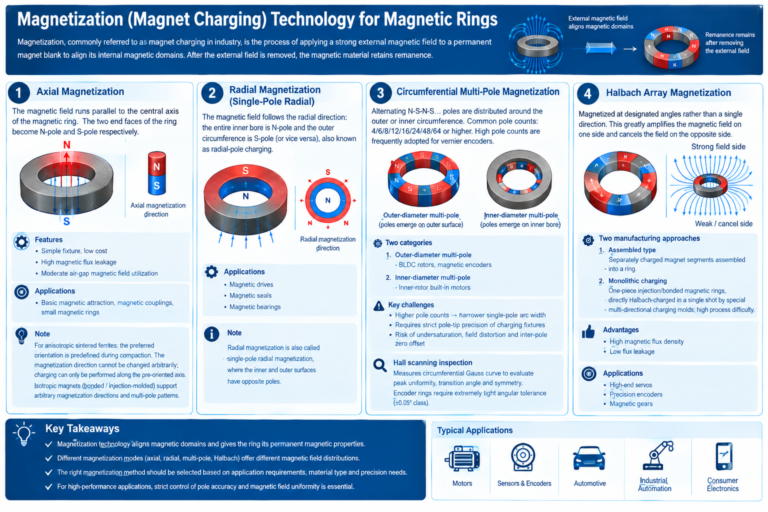
Magnetization Technology for Magnetic Rings is an important process in the manufacturing of permanent magnetic components. In industrial production, magnetization is also commonly called magnet charging. The process uses a strong external magnetic field to align the magnetic domains inside a permanent magnet blank. After the external magnetic field is removed, the magnetic material retains remanent magnetization. The final magnetic field distribution depends on the material, charging direction, fixture structure, pole arrangement, magnetic circuit, and process parameters. For motor rotors, magnetic encoders, magnetic couplings, sensors, and other precision components, selecting the appropriate Magnetization Technology for Magnetic Rings is essential for achieving the required magnetic field pattern. Understanding Magnetization Technology for Magnetic Rings The basic principle behind Magnetization Technology for Magnetic Rings is the application of a sufficiently strong external magnetic field to a permanent magnet material. Before charging, the magnetic domains inside the material are not necessarily aligned in the required direction. The external magnetic field provides the force needed to establish the desired magnetic orientation. Once the charging field is removed, the material retains part of this magnetization as remanence. The charging process therefore determines how the magnetic poles appear on the finished ring. Depending on the application, a
Diamagnetism in Ferrite Magnetic Rings

Diamagnetism in Ferrite Magnetic Rings and Ferrimagnetic Behavior

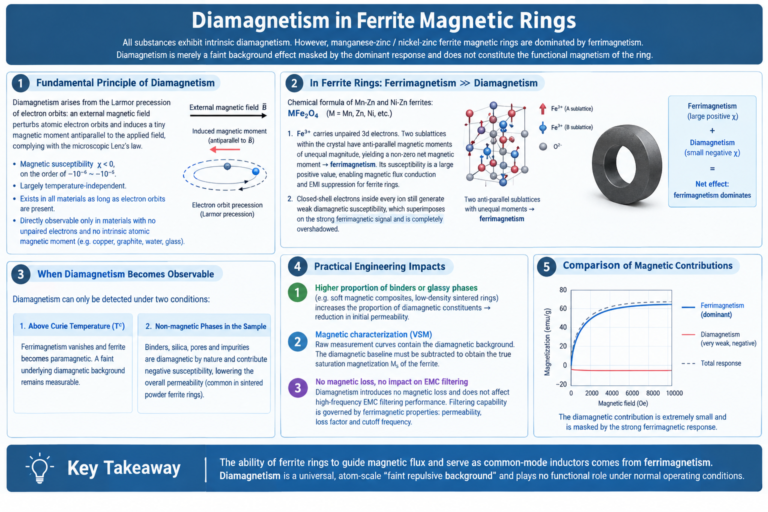
Ferrite magnetic rings are widely used in electromagnetic interference (EMI) suppression, common-mode filtering, inductors, transformers, and other electronic applications. Their magnetic performance is mainly determined by ferrimagnetism rather than diamagnetism. Understanding Diamagnetism in Ferrite Magnetic Rings is important because all materials contain some degree of diamagnetic response at the atomic level. However, in manganese-zinc (Mn-Zn) and nickel-zinc (Ni-Zn) ferrites, this weak background effect is overwhelmingly masked by the much stronger ferrimagnetic response. As a result, diamagnetism does not provide the functional magnetic behavior normally associated with ferrite rings. The ability of ferrite materials to guide magnetic flux and suppress high-frequency interference comes primarily from their ferrimagnetic properties. What Is Diamagnetism in Ferrite Magnetic Rings? Diamagnetism in Ferrite Magnetic Rings originates from the response of electron orbits to an external magnetic field. When an external magnetic field is applied to an atom, the motion of its electrons is slightly perturbed. This produces a very small induced magnetic moment that opposes the applied magnetic field. This behavior can be understood through Larmor precession and the microscopic form of Lenz’s law. The magnetic susceptibility of a diamagnetic material is negative: χ < 0 For typical diamagnetic materials, the magnitude of susceptibility is extremely

Magnetic Ring Physical Properties

Magnetic Ring Physical Properties and Electronic Applications

Magnetic rings are widely used in electronic equipment, motor systems, sensing devices, automotive components, and industrial automation. Their performance depends on material composition, magnetic structure, dimensions, frequency response, and magnetization design. Understanding Magnetic Ring Physical Properties helps engineers determine how a component will behave under different electrical and magnetic conditions. Ferrite rings used for electromagnetic interference (EMI) suppression mainly depend on frequency-related impedance, while permanently magnetized rings can be used with Hall-effect sensors for position and speed detection. Understanding Magnetic Ring Physical Properties The basic Magnetic Ring Physical Properties are closely related to the material from which the component is manufactured. Ferrite is widely used in electronic anti-interference components because of its magnetic response and frequency-dependent characteristics. Inside ferrite materials are numerous magnetic domains. When there is no external magnetic field, these domains have different orientations, and their magnetic effects largely cancel each other at the macroscopic level. When an alternating magnetic field is applied, the domains respond to the changing field. As the frequency increases, magnetic losses become more significant. This behavior contributes to the high-frequency impedance that makes ferrite components useful for noise suppression. Therefore, the Magnetic Ring Physical Properties should always be evaluated together with the operating

Magnetic Ring Physical Properties

Magnetic Ring Physical Properties and Applications in Electronic Devices

Understanding Magnetic Ring Physical Properties Magnetic rings are widely used in electronic devices, motor systems and sensing applications. Although they may have a simple ring-shaped structure, their performance is closely related to the physical characteristics of the magnetic material. The most important Magnetic Ring Physical Properties in electronic applications are related to their frequency-dependent impedance. Ferrite magnetic rings can provide relatively low impedance to low-frequency current while presenting much higher impedance to high-frequency signals. This characteristic allows magnetic rings to perform two important functions: electromagnetic interference suppression and magnetic sensing. Understanding these properties is important when selecting magnetic rings for cables, electronic circuits, motors and sensor systems. What Determines Magnetic Ring Physical Properties? Magnetic Domain Structure Ferrite materials contain numerous magnetic domains. Without an external magnetic field, these domains are generally oriented in different directions, so the material does not exhibit strong overall permanent magnetism. When an alternating magnetic field is applied, the magnetic domains respond to the changing field. At high frequencies, the domains repeatedly change their magnetic state. This process produces magnetic losses, including hysteresis-related losses and other energy dissipation mechanisms. Part of the high-frequency electrical energy is therefore converted into heat. This behavior gives ferrite magnetic rings

Magnetic Ring Pole Count

Magnetic Ring Pole Count and Gauss Value: How They Affect Performance

Introduction to Magnetic Ring Pole Count and Magnetic Field Strength Magnetic rings are widely used in motors, sensors, encoders, automotive components and industrial control systems. Their performance depends on several factors, but Magnetic Ring Pole Count and magnetic field strength are among the most important parameters. Although these two specifications are often discussed together, they perform different functions. Pole count mainly influences signal density, detection resolution and motor control characteristics. Magnetic field strength, commonly measured in Gauss, determines the intensity and effective range of the magnetic field. Understanding the relationship between Magnetic Ring Pole Count, Gauss value and magnetization direction can help engineers select the right magnetic solution for specific applications. What Is Magnetic Ring Pole Count? Understanding Magnetic Pole Configuration Magnetic Ring Pole Count refers to the number of alternating north and south magnetic poles distributed around or across a magnetic ring. For example, a 2-pole magnetic ring contains one north pole and one south pole. A 4-pole ring contains two alternating N-S pole pairs, while an 8-pole ring contains four pole pairs. Common configurations include: 2 poles 4 poles 8 poles 12 poles Multi-pole customized configurations The appropriate pole configuration depends on whether the magnetic ring is designed

Ferrite Magnetic Rings for EMI Suppression

Ferrite Magnetic Rings for EMI Suppression in Electronic Devices

Introduction to Ferrite Magnetic Rings for EMI Suppression Modern electronic devices rely heavily on switching power supplies, variable-frequency motors, digital control circuits and high-speed communication systems. While these technologies improve efficiency and functionality, they can also generate unwanted high-frequency electromagnetic noise. If electromagnetic interference is not properly controlled, the noise may travel along power lines or signal cables. This can interfere with nearby electronic equipment, affect sensitive control circuits and reduce the stability of wireless communication systems. Ferrite Magnetic Rings for EMI Suppression provide a practical and widely used solution for controlling high-frequency interference. Installed around power cables or signal lines, these magnetic components help reduce unwanted noise without significantly affecting normal low-frequency current transmission. What Are Ferrite Magnetic Rings for EMI Suppression? Ferrite Magnetic Rings for EMI Suppression are soft magnetic components designed to increase impedance against unwanted high-frequency electrical noise. They are commonly manufactured from ferrite materials and installed directly around electrical cables. When a cable passes through a ferrite ring, the magnetic component creates frequency-dependent impedance within the circuit. At normal operating frequencies, the impedance remains relatively low, allowing electrical current or useful signals to pass through. At higher interference frequencies, however, the impedance increases. Part of

Magnetic Ring Sensors

Magnetic Ring Sensors: How Magnetic Rings Enable Intelligent Detection

Introduction to Magnetic Ring Sensors As household appliances and electronic devices become increasingly intelligent, reliable sensing technology plays an essential role in improving automation, safety and operational accuracy. Magnetic Ring Sensors are widely used in modern equipment to detect movement, position, speed and other physical conditions without direct mechanical contact. In many applications, a permanent magnetic ring works together with a Hall sensor to convert physical movement into electrical signals. Because this detection method does not require direct contact between the sensing components, it offers advantages such as reduced mechanical wear, fast response and good resistance to dust and moisture. From household appliances and personal electronics to motor control and flow measurement systems, Magnetic Ring Sensors provide a practical solution for intelligent sensing applications. What Are Magnetic Ring Sensors? The term Magnetic Ring Sensors generally refers to a sensing system in which a magnetic ring works together with a Hall-effect sensor or another magnetic sensing device. The magnetic ring generates a magnetic field, while the sensor detects changes in that field. When the magnetic ring moves, rotates or changes position relative to the sensor, the detected magnetic signal also changes. The electronic control system can then process this signal to

Automotive Ferrite Magnets

Automotive Ferrite Magnets: A Reliable Solution for Vehicle Motor Applications

Introduction to Automotive Ferrite Magnets Modern vehicles rely on numerous electric motors to support functions such as windshield wiping, power windows, seat adjustment, fuel delivery, air circulation and thermal management. Behind many of these systems are Automotive Ferrite Magnets, which provide a stable magnetic field for permanent-magnet motors. Although rare-earth magnets receive considerable attention in high-power applications, ferrite remains an important material for automotive motor manufacturing. Its balanced combination of magnetic stability, corrosion resistance, temperature performance and cost efficiency makes it suitable for many high-volume vehicle applications. For manufacturers of automotive motors and magnetic components, selecting the appropriate Automotive Ferrite Magnets requires careful consideration of material grade, magnet geometry, motor structure and operating conditions. What Are Automotive Ferrite Magnets? Automotive ferrite magnets are permanent magnetic components designed for use in vehicle motors, actuators and related electrical systems. They are commonly produced from permanent ferrite materials, including strontium ferrite-based material systems. Depending on the motor design, these magnets can be manufactured in different forms, including: Ferrite magnetic arcs Ring magnets Segment magnets Rotor magnets Customized permanent magnets Injection-molded ferrite components Unlike soft ferrite cores used for EMI suppression, permanent ferrite magnets generate and maintain a magnetic field after magnetization. Automotive Ferrite

Permanent Ferrite Magnetic Rings

Permanent Ferrite Magnetic Rings for Automotive Motors

Introduction to Permanent Ferrite Magnetic Rings Permanent Ferrite Magnetic Rings are important magnetic components used in automotive motor systems. In automotive applications, the term “magnetic ring” can refer to different products, including soft ferrite rings for electromagnetic interference (EMI) suppression and permanent-magnet components used to generate the excitation field of motors. Among automotive auxiliary motor applications, permanent ferrite magnetic arcs and rings are particularly important. These components provide a stable magnetic field for various DC permanent-magnet motors used throughout a vehicle. With their combination of cost efficiency, temperature stability, corrosion resistance and demagnetization resistance, Permanent Ferrite Magnetic Rings remain a practical choice for many automotive motor applications. What Are Permanent Ferrite Magnetic Rings? Permanent Ferrite Magnetic Rings are permanent-magnet components manufactured from ferrite magnetic materials, commonly based on strontium ferrite. Depending on the motor structure, they can be produced as: Magnetic rings Arc magnets Segment magnets Customized rotor magnets Injection-molded ferrite magnetic components Unlike soft ferrite components used for EMI suppression, permanent ferrite materials retain a stable magnetic field after magnetization. In automotive motors, this magnetic field acts as the excitation source and interacts with the electromagnetic field generated by the motor windings. Permanent Ferrite Magnetic Rings in Automotive Motors

Ferrite Magnetic Rings

Ferrite Magnetic Rings for Electromagnetic Interference Suppression

Introduction to Ferrite Magnetic Rings for EMI Suppression Ferrite Magnetic Rings are widely used as electromagnetic interference (EMI) suppression components in power and signal cable systems. In this application, the magnetic ring works as a common-mode choke, helping reduce unwanted high-frequency noise while allowing normal operating current and signals to pass through. As electronic equipment becomes increasingly interconnected, EMI can affect smart-home devices, industrial controllers, LED power supplies, cameras, sensors and communication equipment. Properly selected Ferrite Magnetic Rings can provide a compact and economical solution for controlling common-mode interference. The effectiveness of a magnetic ring depends on several factors, including ferrite material, operating frequency, ring dimensions, cable diameter and the number of winding turns. What Are Ferrite Magnetic Rings? Ferrite Magnetic Rings are ring-shaped soft magnetic components generally made from ferrite materials with frequency-dependent impedance characteristics. When a cable passes through the magnetic ring, the ring interacts with common-mode high-frequency currents traveling along the conductor. At the target interference frequencies, the ferrite material presents increased impedance to unwanted noise. This allows the component to attenuate high-frequency interference without significantly affecting the normal low-frequency operating current. Depending on the application, Ferrite Magnetic Rings can be installed around: Power cables USB cables

Permanent Magnet Magnetic Rings

Permanent Magnet Magnetic Rings: Materials, Magnetization and Motor Performance

Introduction to Permanent Magnet Magnetic Rings In modern motor design, Permanent Magnet Magnetic Rings are widely used as rotor excitation components in BLDC motors, permanent-magnet synchronous motors (PMSM) and stepper motors. By generating alternating N/S magnetic poles around the rotor circumference, Permanent Magnet Magnetic Rings interact with the magnetic field produced by the stator windings to generate electromagnetic torque. The performance of Permanent Magnet Magnetic Rings is determined by more than magnetic strength alone. Material selection, forming technology, pole configuration, magnetization accuracy, axial dimensions and air-gap magnetic-field distribution all influence the final motor performance. For this reason, choosing the right Permanent Magnet Magnetic Rings requires a complete evaluation of the motor’s operating temperature, torque requirements, power density, production volume and cost target. What Are Permanent Magnet Magnetic Rings? Permanent Magnet Magnetic Rings are annular permanent-magnet components designed to provide the excitation magnetic field of a motor rotor. During manufacturing, multiple alternating N and S poles can be magnetized around the circumference of the ring. When the rotor rotates inside the stator, these magnetic poles interact with the rotating electromagnetic field generated by the stator windings. This interaction produces electromagnetic torque and drives the motor. Typical applications of Permanent Magnet Magnetic

Permanent Magnet Magnetic Rings

Permanent Magnet Magnetic Rings for BLDC, PMSM and Stepper Motors

Introduction Permanent-magnet motors are widely used in modern automotive systems, household appliances, industrial equipment and precision motion systems. Among the magnetic components used in these motors, Permanent Magnet Magnetic Rings can serve as an important part of the rotor and provide the magnetic field required to generate electromagnetic torque. Brushless DC motors (BLDC), permanent-magnet synchronous motors (PMSM) and stepper motors can all use permanent magnetic structures to create rotor excitation. Depending on the motor’s power density, operating temperature, dimensional requirements and production volume, manufacturers can select different magnetic materials and forming processes. The main options include sintered, injection-molded and bonded magnetic rings. Each manufacturing method provides a different balance between magnetic performance, mechanical properties, integration capability and cost. What Are Permanent Magnet Magnetic Rings? Permanent Magnet Magnetic Rings are annular permanent-magnet components designed to generate a stable magnetic field within a motor. During manufacturing, multiple alternating N and S poles can be magnetized around the circumference of the ring. When the ring is installed as part of the rotor, these magnetic poles interact with the rotating magnetic field generated by the energized stator windings. The interaction produces electromagnetic torque and causes the rotor to rotate. This basic structure can be

Scroll to Top