NEWS

multipole strip magnet

Multipole Strip Magnet for Precision Sensing and Industrial Applications

Introduction A multipole strip magnet is an important magnetic component used in modern sensing and positioning systems. Unlike conventional magnets that have only one north pole and one south pole, this type of magnetic strip contains multiple alternating poles arranged along its surface. The alternating magnetic pattern creates a consistent and repeatable magnetic field that can be detected by sensors with high accuracy. As industries continue to adopt automation and intelligent control technologies, reliable magnetic sensing solutions have become increasingly important. Multipole magnetic strips are widely used in encoder systems, motion control equipment, robotics, and industrial machinery because they provide stable magnetic signals while maintaining long-term performance. What Is a Multipole Strip Magnet? A multipole strip magnet is a magnetic strip that has been specially magnetized with a series of alternating north and south poles. The distance between poles, often referred to as pole pitch, can be customized according to the requirements of a specific application. This magnetic structure allows sensors to identify changes in polarity as movement occurs. By converting magnetic information into electrical signals, control systems can accurately monitor position, speed, and direction. Compared with traditional sensing technologies, magnetic strips offer a simple, durable, and cost-effective solution for

multipole ring magnet

Multipole Ring Magnet for High-Precision Magnetic Field Applications

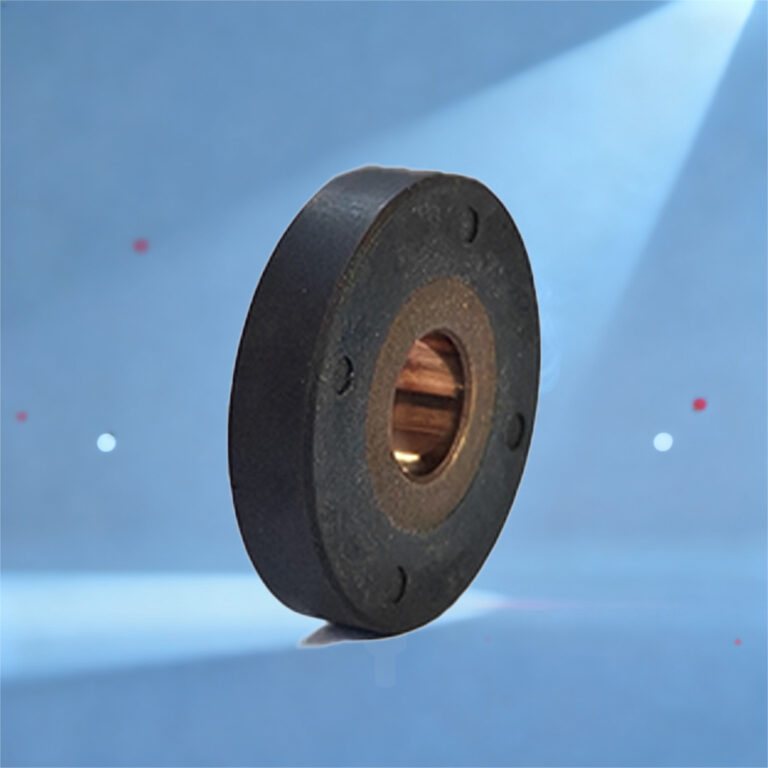
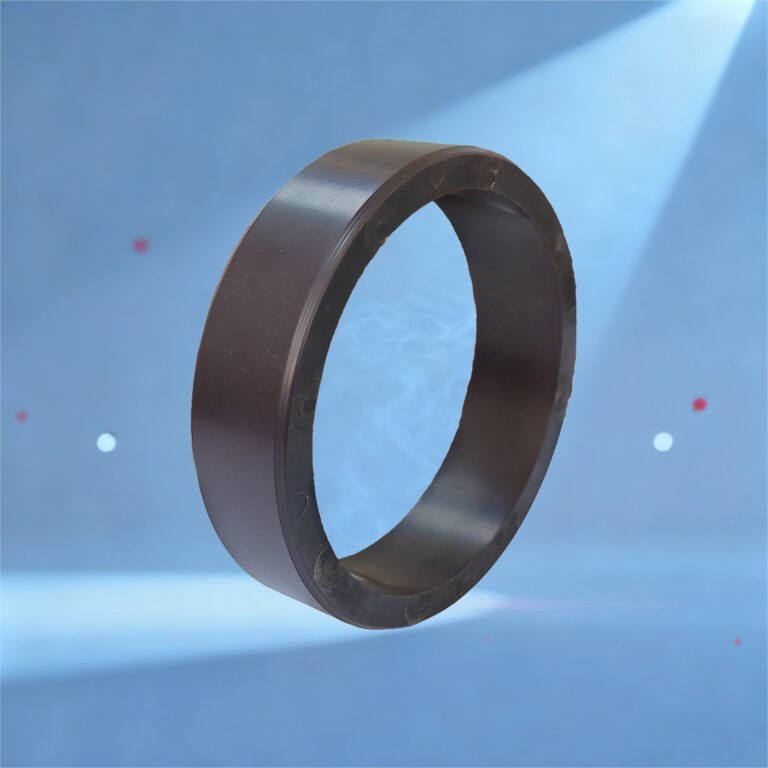
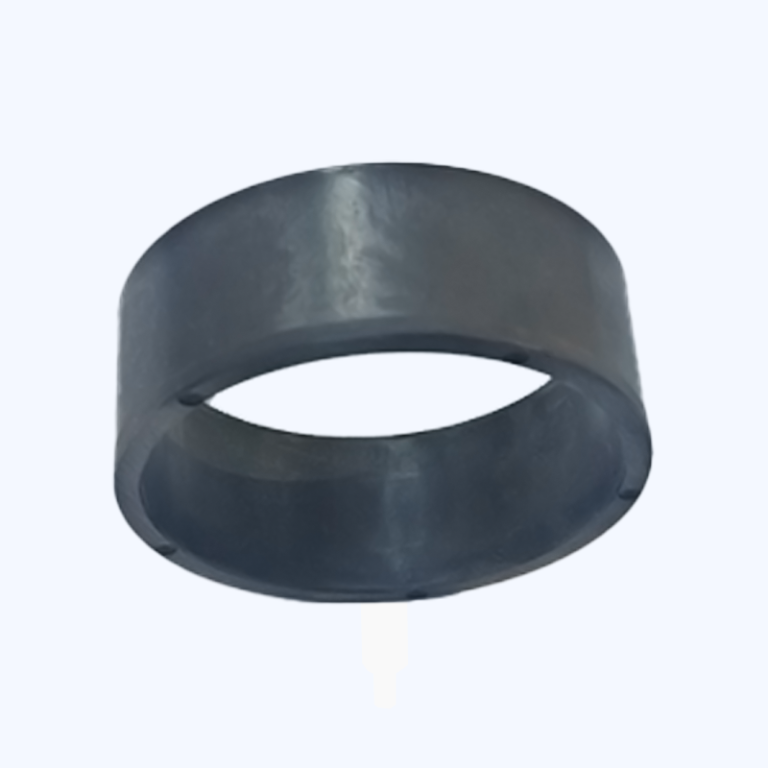
Introduction A multipole ring magnet is a precision-engineered magnetic component designed with multiple alternating north and south poles distributed evenly along a circular structure. This configuration generates a highly structured magnetic field that is essential for modern sensing, motion feedback, and automation systems. In advanced industrial environments, accuracy, stability, and repeatability are critical. The multipole ring magnet developed by HIGHKOS MAGNET is widely used in applications requiring precise angular detection and stable magnetic signal output. Structure and Design Characteristics Unlike traditional single-pole magnets, a multipole ring magnet features a segmented magnetic structure. Each pole is magnetized in an alternating N-S pattern, forming a continuous magnetic waveform around the ring. Key structural features include: Evenly distributed magnetic poles around the circumference Customizable pole count depending on resolution requirements High symmetry for stable rotational performance Consistent magnetic flux transition between poles The precision of pole arrangement directly influences the accuracy of sensor feedback systems. Working Principle The multipole ring magnet operates by generating a repeating magnetic field pattern. When the ring rotates, sensors such as Hall effect devices detect changes in magnetic polarity as each pole passes. This allows the system to convert magnetic variations into electrical signals, enabling real-time measurement of:

Stable Magnetic Field

Stable Magnetic Field Technology in High-Precision Magnetic Rings

Introduction In modern precision engineering systems, the stability of the magnetic field plays a critical role in ensuring accurate sensing, motion control, and energy transfer. A stable magnetic field refers to a spatial magnetic environment that remains uniform, symmetrical, and predictable over time. Depending on whether the magnet is static or rotating, the field maintains either a constant distribution or a strictly defined dynamic pattern. High-performance magnetic rings developed by HIGHKOS MAGNET are designed to provide highly stable magnetic field structures for demanding applications such as sensors, encoders, and advanced industrial systems. What Is a Stable Magnetic Field? A stable magnetic field is defined by three key characteristics: First, spatial uniformity, meaning the magnetic flux distribution remains even around the ring structure. Second, directional consistency, ensuring that the field orientation does not randomly fluctuate at any fixed point. Third, temporal stability, where the field remains constant in time for static magnets or follows precise periodic behavior for rotating magnetic systems. This stability is essential for systems that depend on predictable electromagnetic behavior. Core Functions of Stable Magnetic Fields Precision Measurement Reference Stable magnetic fields serve as a foundational reference in high-accuracy measurement systems. Devices such as Hall sensors, magnetic encoders,

Does Size Affect Gauss Value

Does Size Affect Gauss Value? Understanding the Relationship Between Magnet Dimensions and Magnetic Field Strength

Many engineers and product designers ask a common question: Does Size Affect Gauss Value? The answer is yes. While the magnetic material determines the intrinsic magnetic properties, the size and geometry of a magnet directly influence the magnetic field strength measured on its surface. Understanding the relationship between magnet dimensions and magnetic field strength helps improve product performance, optimize costs, and ensure reliable operation in motors, sensors, encoders, and automation systems. For custom magnetic ring solutions, visit https://www.highkos.com/. Why Does Size Affect Gauss Value? To understand Does Size Affect Gauss Value, it is important to distinguish between remanence and surface Gauss value. Remanence is an inherent property of the magnetic material and remains the same regardless of the magnet’s dimensions. Surface Gauss value, however, depends on how magnetic flux is distributed within the magnet. A larger or thicker magnet can direct magnetic flux differently than a smaller one, resulting in different Gauss meter readings even when the magnets are made from the same material. Does Size Affect Gauss Value Through Magnet Thickness? Thickness is usually the most influential dimension. For axially magnetized magnetic rings, increasing thickness allows more magnetic flux to concentrate near the pole surface. As thickness increases, the

multipole magnets

Multipole Magnets: Enhancing Precision in Modern Sensing and Motion Control

As automation, robotics, and smart manufacturing continue to evolve, the need for accurate and reliable sensing technologies is increasing. Multipole magnets have become an important component in modern positioning, speed detection, and motion-control systems. Their unique magnetic structure enables precise signal generation, helping equipment operate with greater efficiency and accuracy. Today, these advanced magnetic components are widely used in industrial machinery, automotive systems, household appliances, and medical equipment. Their ability to deliver stable performance under demanding conditions makes them a preferred choice for many engineers and manufacturers. What Are Multipole Magnets? Multipole magnets are magnetic components that contain multiple alternating north and south poles arranged across a surface or around a circular structure. Unlike conventional magnets with only one north pole and one south pole, this configuration creates a repeating magnetic field pattern. The alternating pole arrangement allows sensors to detect movement, position, direction, and speed with high accuracy. Depending on the application, manufacturers can customize pole count, pole pitch, magnetic strength, and material type to meet specific performance requirements. Because of their flexibility and precision, these magnetic components are widely used in modern sensing systems. How Multipole Magnets Work The operation of multipole magnets is based on alternating magnetic

multipole magnetic tape

Multipole Magnetic Tape for Precision Sensing and Motion Control

As automation and intelligent technologies continue to advance, reliable sensing components are becoming increasingly important. The multipole magnetic tape is widely recognized as an effective solution for position detection, speed monitoring, and motion control. With its alternating magnetic pole structure, multipole magnetic tape provides accurate feedback signals while maintaining excellent durability and long-term stability. From industrial automation and smart home appliances to automotive systems, this magnetic sensing technology helps improve efficiency, precision, and reliability. As manufacturers seek more advanced non-contact sensing solutions, demand for multipole magnetic tape continues to grow. What Is Multipole Magnetic Tape? Multipole magnetic tape is a magnetic material that has been magnetized with multiple alternating north and south poles along its surface. Unlike conventional magnets that contain only one north pole and one south pole, this design creates a repeating magnetic field pattern that can be accurately detected by Hall sensors and magnetic readers. The distance between adjacent poles, known as the pole pitch, can be customized according to application requirements. Different pole pitches provide different sensing resolutions, allowing engineers to optimize system performance for specific projects. Because of its flexibility and reliability, multipole magnetic tape is widely used in sensing, positioning, and motion-control applications. How

magnetic ring gauss value

How Does the Gauss Value of a Magnetic Ring Affect the Magnetic Field?

When selecting a magnet for sensors, motors, and industrial equipment, engineers often evaluate the magnetic ring gauss value to understand its magnetic capabilities. This parameter helps determine how much magnetic energy is available for a specific application and whether the component can deliver reliable long-term performance. Although magnetic field strength is important, it is only one part of the overall picture. Material type, magnet dimensions, magnetization pattern, and operating conditions all influence how a ring magnet performs in real-world applications. For additional information about custom magnetic products and engineering solutions, visit https://www.highkos.com/. What Is the Magnetic Ring Gauss Value? The magnetic ring gauss value refers to the magnetic flux density measured at a specific location, usually on the surface of a ring magnet. This measurement is obtained using a Gauss meter and is expressed in Gauss (G). A higher gauss reading generally indicates a stronger magnetic field near the surface. However, surface measurements alone do not fully describe how a magnet will behave within a complete system. Engineers typically use this data as an initial reference when comparing different magnetic materials and designs. Why Magnetic Field Strength Matters Improved Attraction Force Magnets with higher surface flux density can create stronger

magnetic ring performance

How Magnetic Ring Performance Affects Sensor Accuracy and Reliability

Magnetic ring performance is a critical factor in modern sensor technology. Sensors used in industrial automation, automotive systems, household appliances, and smart devices rely on magnetic fields to detect movement, position, speed, and electrical current. When the magnetic ring provides stable and consistent magnetic characteristics, sensors can achieve higher accuracy and more reliable operation. At HIGHKOS MAGNET, we develop magnetic solutions designed to support demanding sensing applications. Learn more about our products and services at https://www.highkos.com/. Why Magnetic Ring Performance Matters A magnetic ring acts as the source of the magnetic field that a sensor detects. The quality of this magnetic field directly influences signal quality, measurement precision, and overall system reliability. Strong magnetic output and uniform magnetic distribution help sensors produce accurate and repeatable results. Several factors contribute to the effectiveness of a magnetic ring, including material selection, magnetization accuracy, manufacturing precision, and dimensional consistency. Optimizing these factors improves sensing performance while reducing the possibility of measurement errors. Magnetic Field Strength and Distribution One of the most important aspects of magnetic ring performance is magnetic field strength. Sensors depend on a stable magnetic field to detect changes accurately. If the magnetic field is weak or unevenly distributed, sensor readings

multipole magnetic strip

Multipole Magnetic Strip: Features, Applications, and Benefits

As automation and intelligent technologies continue to advance, reliable sensing components are becoming increasingly important. The multipole magnetic strip is widely recognized as an effective solution for position detection, speed monitoring, and motion control. With its alternating magnetic pole structure, the multipole magnetic strip provides accurate feedback while maintaining excellent durability and long-term performance. From industrial automation to smart appliances and automotive systems, this magnetic sensing technology helps improve efficiency, precision, and reliability. As manufacturers seek more advanced non-contact sensing solutions, the demand for the multipole magnetic strip continues to grow. What Is a Multipole Magnetic Strip? A multipole magnetic strip is a magnetic material magnetized with multiple alternating north and south poles along its surface. Unlike conventional magnets that have only one north pole and one south pole, this design creates a repeating magnetic pattern that can be detected by Hall sensors and magnetic readers. The distance between adjacent poles, known as the pole pitch, can be customized according to specific application requirements. Different pole pitches provide different sensing resolutions, allowing engineers to optimize system performance. The versatility of the multipole magnetic strip makes it suitable for a wide variety of sensing, positioning, and motion-control applications. How Magnetic Sensing

magnetic rings

Three Core Applications of Magnetic Rings in Household Appliances

Magnetic rings are widely used in modern household appliances because they provide stable, accurate, and reliable sensing performance. When combined with Hall sensor technology, magnetic rings help appliances achieve intelligent control without physical contact. This non-contact sensing solution improves safety, enhances durability, and supports precise monitoring functions in many smart home devices. Learn more about magnetic technology solutions at High Kos Today, magnetic rings in household appliances are commonly applied in safety protection systems, motor speed monitoring, and liquid flow measurement. Their ability to operate accurately in humid, dusty, and high-temperature environments makes them an ideal choice for modern smart appliances. Acting as a Safety Guard: Detecting Closed Doors and Lids Working Principle A magnetic ring or small magnet is mounted on movable components such as blender lids, washing machine doors, or refrigerator doors. The Hall sensor is fixed on the main body of the appliance. When the lid or door is fully closed, the magnetic ring aligns with the Hall sensor and generates a magnetic signal. Once the lid or door is opened, the magnetic signal disappears immediately, and the control system cuts off power or activates an alarm. This magnetic induction solution provides fast response and reliable safety

multipolar magnets

Best Multipolar Magnets Guide for Modern Magnetic Applications

What are multipolar magnets Multipolar magnets are advanced magnetic components designed with multiple alternating north and south poles distributed across a single magnetic surface. Compared with traditional two-pole magnets, this structure provides more precise magnetic field control and improved operational performance. These magnetic solutions are widely used in electric motors, automation systems, sensors, medical devices, and electronic equipment. The unique pole arrangement improves rotational smoothness, positioning accuracy, and energy efficiency in various applications. Because of their compact structure and strong magnetic capabilities, multipolar magnetic systems have become increasingly important in modern industrial and technological development. Key benefits of multipolar magnets One major advantage of multipolar magnets is enhanced magnetic precision. The alternating pole configuration allows smoother motion control and more stable rotational performance in motor-driven systems. Another important benefit is higher energy efficiency. Optimized magnetic field distribution helps reduce power loss while improving torque output and operational responsiveness. Compact equipment design is also easier to achieve because strong magnetic performance can be generated within limited space. This is especially useful for miniature motors, smart electronics, and automated devices. In addition, advanced magnetic structures help reduce vibration and operational noise, improving system stability and overall user experience. Applications of multipolar magnets

multipolar magnets

Best Multipolar Magnets Guide for Precision Magnetic Systems

What are multipolar magnets Multipolar magnets are advanced magnetic components designed with multiple alternating north and south poles across a single magnetic surface. Unlike traditional magnets that only contain one north pole and one south pole, these magnets provide more complex magnetic field distribution for higher precision and performance. This magnetic technology is widely used in motors, sensors, automation systems, medical equipment, and electronic devices. The multiple pole configuration improves rotational stability, positioning accuracy, and overall system efficiency. Because of their compact structure and strong magnetic control capabilities, multipolar magnetic solutions have become increasingly important in modern industrial applications. Key benefits of multipolar magnets One of the main advantages of multipolar magnets is precise magnetic field control. The alternating pole arrangement allows smoother motion, improved positioning accuracy, and better responsiveness in motor systems. Another important benefit is higher efficiency. Multipolar magnetic structures help reduce energy loss while improving torque performance and operational stability. Compact equipment design is also possible because strong magnetic performance can be achieved in smaller spaces. This is especially valuable in electronics, automation equipment, and miniature motor systems. In addition, these magnetic systems help reduce vibration and operational noise, improving long-term reliability and user experience. Applications of

Scroll to Top