
Understanding Magnetic Ring Physical Properties
Magnetic rings are widely used in electronic devices, motor systems and sensing applications. Although they may have a simple ring-shaped structure, their performance is closely related to the physical characteristics of the magnetic material.
The most important Magnetic Ring Physical Properties in electronic applications are related to their frequency-dependent impedance. Ferrite magnetic rings can provide relatively low impedance to low-frequency current while presenting much higher impedance to high-frequency signals.
This characteristic allows magnetic rings to perform two important functions: electromagnetic interference suppression and magnetic sensing.
Understanding these properties is important when selecting magnetic rings for cables, electronic circuits, motors and sensor systems.
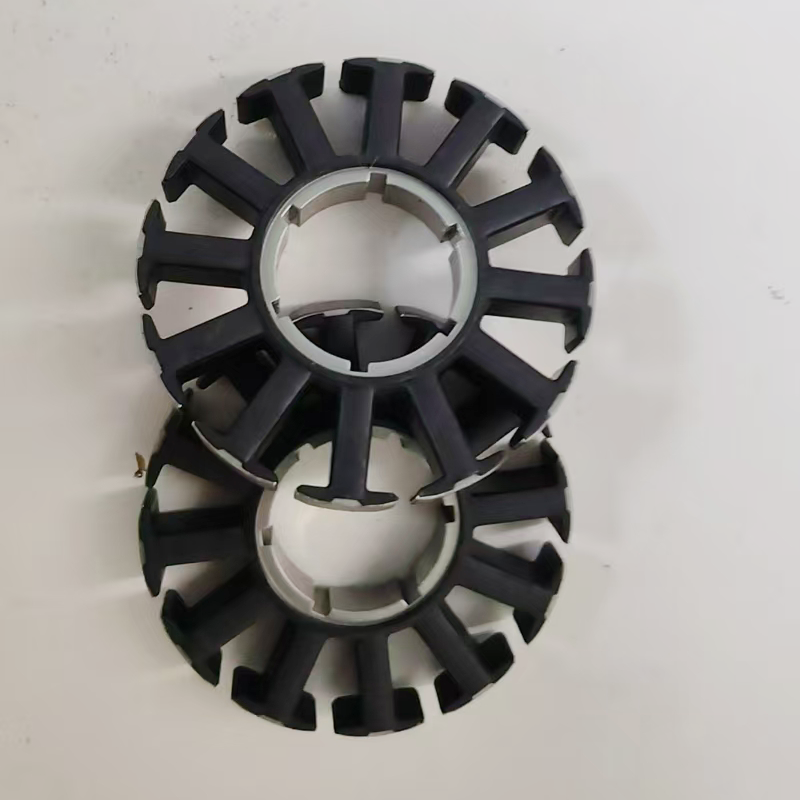
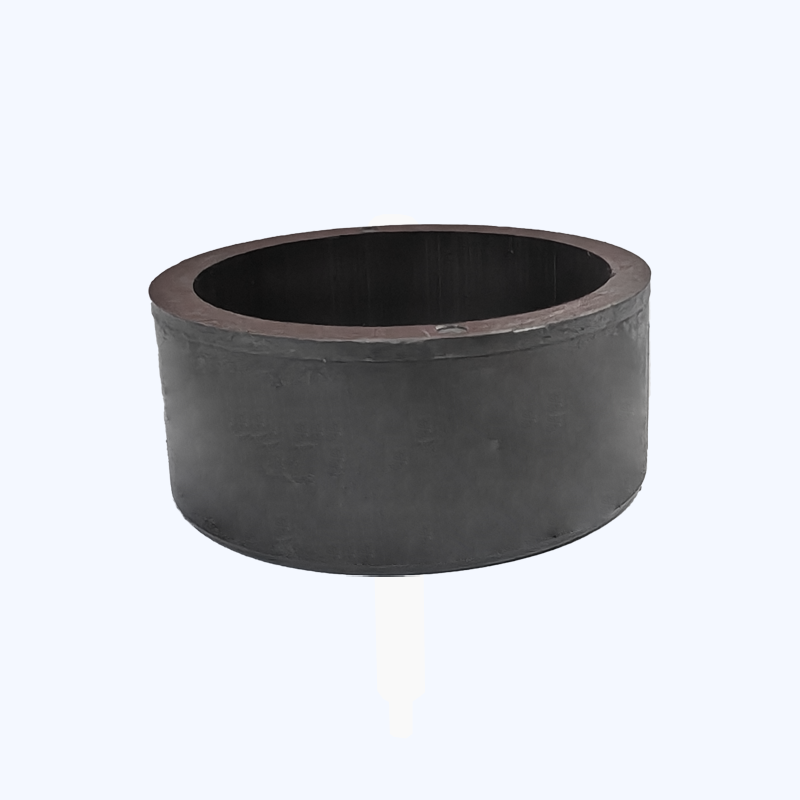
What Determines Magnetic Ring Physical Properties?
Magnetic Domain Structure
Ferrite materials contain numerous magnetic domains. Without an external magnetic field, these domains are generally oriented in different directions, so the material does not exhibit strong overall permanent magnetism.
When an alternating magnetic field is applied, the magnetic domains respond to the changing field.
At high frequencies, the domains repeatedly change their magnetic state. This process produces magnetic losses, including hysteresis-related losses and other energy dissipation mechanisms.
Part of the high-frequency electrical energy is therefore converted into heat.
This behavior gives ferrite magnetic rings their useful frequency-selective characteristics.
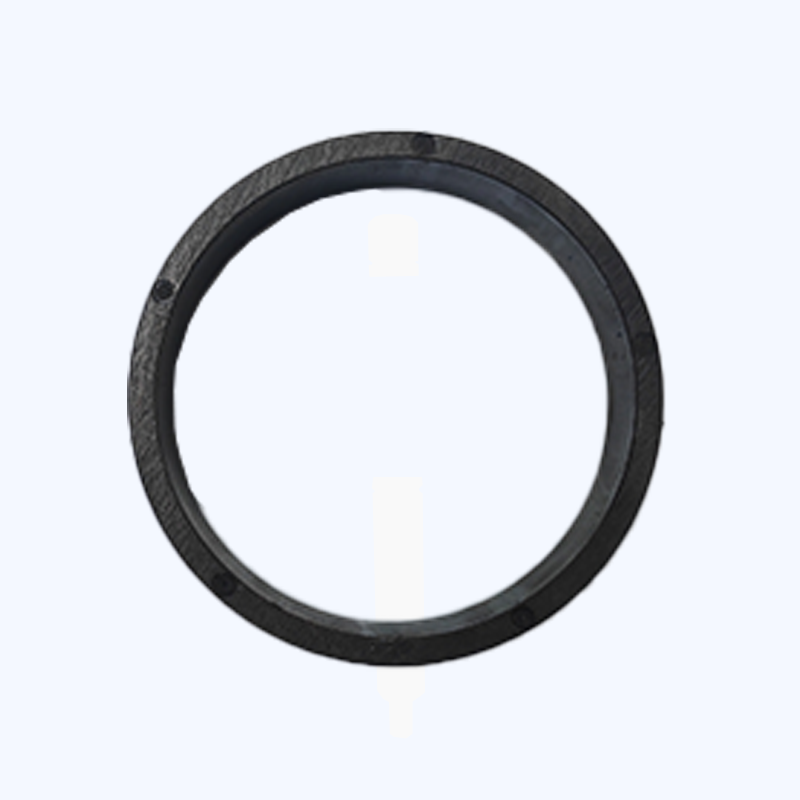
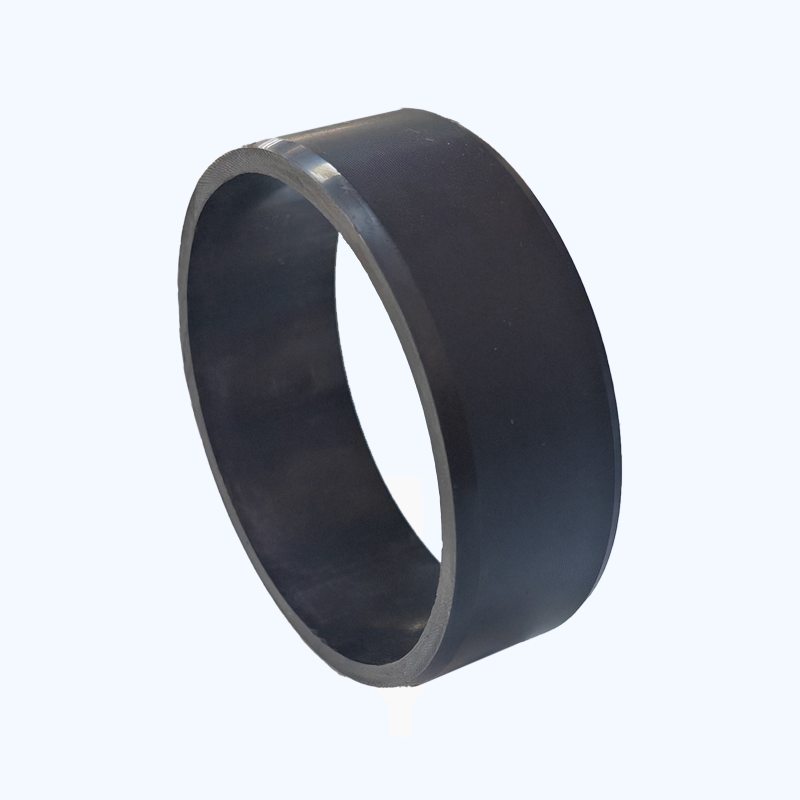
Frequency-Dependent Impedance
One of the most important Magnetic Ring Physical Properties is frequency-dependent impedance.
At relatively low frequencies, the magnetic ring generally has limited impedance and allows normal electrical current to pass with relatively little influence.
As frequency increases, the impedance of the ferrite component can increase substantially within its effective operating range.
As a result, the magnetic ring can attenuate unwanted high-frequency noise while allowing the main power or signal to continue operating.
This principle is the foundation of many ferrite EMI suppression components.
Magnetic Rings for Electromagnetic Interference Suppression
How Ferrite Rings Reduce High-Frequency Noise
When a ferrite magnetic ring is installed around a power cable or signal cable, it interacts with unwanted high-frequency currents flowing through the cable.
The ferrite material presents increased impedance to these high-frequency components and dissipates part of their energy.
This can reduce conducted electromagnetic interference and help prevent noise from spreading through the wiring system.
Typical applications include:
- Charger cables
- USB cables
- Computer cables
- Monitor cables
- Power supply lines
- Motor wiring
- Household appliance circuits
- Communication equipment
The familiar cylindrical bulge found on some charger and data cables is often a ferrite EMI suppression component.
Low-Frequency Power Transmission
An important advantage of ferrite magnetic rings is that they can suppress unwanted high-frequency noise without significantly interfering with normal low-frequency power transmission.
For example, a device powered by DC or mains-frequency electricity can continue receiving its required operating power while high-frequency interference is attenuated.
This makes ferrite rings useful for electronic equipment where maintaining normal power or signal transmission is essential.
Magnetic Rings in Household Appliances
Modern household appliances increasingly incorporate switching power supplies, inverter systems and electronic motor controllers.
These circuits can generate high-frequency electrical noise during operation.
Ferrite magnetic rings can be installed on cables connecting motors, control boards and power circuits.
Inverter Air Conditioners
Variable-frequency air conditioners use electronic inverter circuits to control motor speed.
Rapid switching can generate unwanted high-frequency components.
Ferrite rings installed on appropriate wiring can help reduce the propagation of this interference and support stable operation of the control system.
Washing Machines
Inverter washing machines also rely on electronic motor control.
During acceleration, deceleration and high-speed spinning, switching activity can produce electrical noise.
Properly selected ferrite components can help reduce unwanted interference on internal and external cables.
Magnetic Rings as Sensing Components
Not all magnetic rings are designed for EMI suppression.
A different type of magnetic ring can be magnetized as a permanent magnetic component and used together with Hall-effect sensors.
In this configuration, the magnetic ring acts as a magnetic marker.
When the ring rotates or moves with a mechanical component, its magnetic field changes relative to the fixed Hall sensor.
The sensor detects these changes and converts them into electrical signals.
The control system can then use these signals to determine physical parameters such as:
- Position
- Rotational speed
- Direction
- Rotation frequency
- Flow rate
This provides a non-contact method for detecting mechanical movement.
Magnetic Ring Physical Properties in Sensing Applications
Magnetic Field Strength
For sensing applications, magnetic field strength is an important parameter.
The magnetic ring must generate a field strong enough for the Hall sensor to detect reliably at the specified operating distance.
The actual field strength depends on factors including:
- Magnetic material
- Ring dimensions
- Magnetization pattern
- Pole count
- Air gap
- Sensor sensitivity
Therefore, magnetic ring design should be evaluated together with the selected Hall sensor.
Magnetization Pattern
The magnetization pattern determines how the magnetic field is distributed around the ring.
A magnetic ring can be designed with different pole arrangements depending on the required sensing function.
Multi-pole magnetization is particularly useful for speed and position detection because alternating magnetic poles generate repeated signal changes as the ring rotates.
Dimensional Accuracy
For rotating applications, dimensional accuracy is also important.
An improperly manufactured magnetic ring may introduce eccentricity, uneven air gaps or inconsistent magnetic signals.
For precision sensing systems, control of the ring’s dimensions, concentricity and magnetization quality can directly influence signal stability.
Magnetic Ring vs Mobile Phone Magnetic Attachment Ring
The term “magnetic ring” is sometimes used for completely different products.
It is therefore important to distinguish electronic magnetic rings from magnetic attachment rings used with mobile phones.
Electronic Ferrite Magnetic Rings
Electronic EMI suppression rings are generally made from ferrite materials.
Typical characteristics include:
- Designed for electromagnetic interference suppression
- Generally not permanent magnets
- Usually dark grey or black
- Often have a matte or relatively rough surface
- Installed around cables or incorporated into electronic circuits
- Used as frequency-dependent filtering components
These products are electronic components rather than phone mounting accessories.
Mobile Phone Magnetic Attachment Rings
Magnetic attachment rings used for smartphones are different products.
They may contain neodymium magnets or ferromagnetic metal components and are designed to provide magnetic attachment to compatible mounts or accessories.
Typical characteristics include:
- Permanent magnetic attraction
- Used for phone mounting
- Attached to the back of a phone or case
- Usually smooth and finished for consumer use
- Designed for mechanical attachment rather than EMI suppression
They should not be confused with ferrite EMI suppression rings.
Key Applications of Electronic Magnetic Rings
The physical properties of magnetic rings make them useful across multiple industries.
Consumer Electronics
Applications include chargers, adapters, computers, monitors and data cables.
Household Appliances
Magnetic rings can help suppress interference in air conditioners, washing machines, fans and other electronically controlled appliances.
Motor Systems
Ferrite components may be installed around motor cables to control high-frequency noise generated by inverter-driven motors.
Industrial Equipment
Industrial controllers, sensors, power supplies and automation equipment can use ferrite magnetic components as part of their EMC design.
Magnetic Sensing
Permanent-magnet rings can work with Hall sensors for speed, position and movement detection.
How to Select a Magnetic Ring
The correct magnetic ring depends on the intended function.
For EMI Suppression
Consider:
- Target interference frequency
- Ferrite material
- Inner diameter
- Outer diameter
- Ring length
- Cable dimensions
- Number of cable turns
- Required impedance
Mn-Zn and Ni-Zn ferrites have different frequency characteristics and should be selected according to the target noise spectrum.
For Magnetic Sensing
Important parameters include:
- Magnetic field strength
- Pole count
- Magnetization direction
- Ring dimensions
- Sensor sensitivity
- Air gap
- Operating temperature
- Required detection accuracy
A sensing magnetic ring should be designed as part of the complete sensor system rather than selected only according to its surface magnetic strength.
Custom Magnetic Ring Manufacturing
Different applications require different magnetic and mechanical characteristics.
A customized magnetic ring can be developed according to the customer’s requirements for material, geometry and magnetic performance.
Important customization parameters can include:
- Ring diameter
- Ring thickness
- Magnetic material
- Pole number
- Magnetization pattern
- Magnetic field strength
- Dimensional tolerance
- Operating temperature
- Application environment
For motor and sensor applications, precise control of magnetization and dimensional consistency is particularly important.
Frequently Asked Questions
What are the main Magnetic Ring Physical Properties?
The main properties include frequency-dependent impedance, magnetic permeability, magnetic loss characteristics, magnetic field response and dimensional stability.
Do ferrite magnetic rings have permanent magnetism?
Ferrite rings used for EMI suppression are generally soft magnetic components rather than permanent magnets. Permanent-magnet ferrite rings are a different material application designed to generate a stable magnetic field.
How do magnetic rings suppress EMI?
They present increased impedance to high-frequency interference and dissipate part of the unwanted energy, reducing the propagation of high-frequency noise through cables.
Can magnetic rings be used with Hall sensors?
Yes. Permanent-magnet magnetic rings can work with Hall sensors to detect rotational position, speed and other forms of mechanical movement.
Are electronic ferrite rings the same as smartphone magnetic rings?
No. Ferrite EMI suppression rings are electronic components designed to control high-frequency noise, while smartphone magnetic attachment rings are designed primarily for magnetic mounting.
Conclusion
The Magnetic Ring Physical Properties determine how these components behave in electronic and sensing systems.
Ferrite magnetic rings used for EMI suppression rely on their frequency-dependent impedance to attenuate unwanted high-frequency noise while allowing normal power or signal transmission. Permanent-magnet rings, on the other hand, can work with Hall sensors to convert mechanical movement into electrical signals for position, speed and flow detection.
Because magnetic rings serve different functions and can be produced using different materials, magnetization patterns and manufacturing processes, selecting the right design requires consideration of the complete application.
For electronic components, motor systems and magnetic sensing applications, customized magnetic ring solutions can help achieve the required magnetic, mechanical and dimensional performance.