
Introduction to Magnetic Ring Sensors
As household appliances and electronic devices become increasingly intelligent, reliable sensing technology plays an essential role in improving automation, safety and operational accuracy. Magnetic Ring Sensors are widely used in modern equipment to detect movement, position, speed and other physical conditions without direct mechanical contact.
In many applications, a permanent magnetic ring works together with a Hall sensor to convert physical movement into electrical signals. Because this detection method does not require direct contact between the sensing components, it offers advantages such as reduced mechanical wear, fast response and good resistance to dust and moisture.
From household appliances and personal electronics to motor control and flow measurement systems, Magnetic Ring Sensors provide a practical solution for intelligent sensing applications.
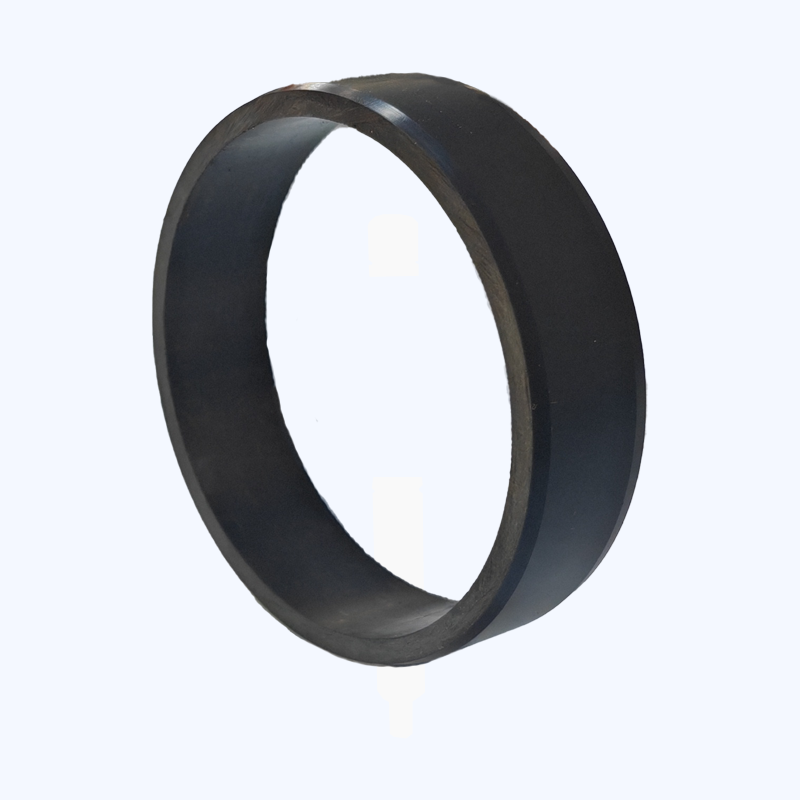
What Are Magnetic Ring Sensors?
The term Magnetic Ring Sensors generally refers to a sensing system in which a magnetic ring works together with a Hall-effect sensor or another magnetic sensing device.
The magnetic ring generates a magnetic field, while the sensor detects changes in that field.
When the magnetic ring moves, rotates or changes position relative to the sensor, the detected magnetic signal also changes. The electronic control system can then process this signal to determine the operating condition of the device.
Depending on the application, magnetic sensing systems can be used to detect:
- Position
- Rotation
- Speed
- Direction
- Opening and closing status
- Water flow
- Component movement
Magnetic Ring Sensors for Safety Detection
Lid and Door Detection in Household Appliances
One of the most common applications of Magnetic Ring Sensors is safety detection.
In appliances such as juicers, blenders and washing machines, the magnetic component can be installed on a movable lid or door, while a Hall sensor is mounted on the main body.
When the lid is properly closed, the magnetic field reaches the sensor.
The control system receives the correct signal and allows the appliance to operate.
If the lid is opened or moved away from its proper position, the magnetic signal changes or disappears.
The controller can then immediately activate a safety function, such as:
- Stopping the motor
- Disconnecting power
- Preventing the appliance from starting
- Activating an alarm
This non-contact sensing method avoids mechanical switches that may wear out after repeated use.
Refrigerator Door Detection
A similar principle can also be used for refrigerator doors.
When the door is properly closed, the magnetic sensing system detects its position.
If the door remains open, the control system can trigger an audible or visual reminder.
This simple application demonstrates how magnetic sensing technology can help improve both energy efficiency and user convenience.
Magnetic Ring Sensors for Motor Speed Measurement
How Magnetic Speed Detection Works
Motor speed measurement is another important application of Magnetic Ring Sensors.
A magnetic ring is installed on a rotating shaft, rotor or other rotating component.
As the motor operates, the magnetic ring rotates at the same speed.
For a multi-pole magnetic ring, alternating north and south magnetic poles pass by the Hall sensor during rotation.
Each magnetic pole transition generates a corresponding electrical signal or pulse.
The controller can calculate the number of pulses within a specific period of time.
Based on this information, the system can determine the rotational speed of the motor.
Magnetic Ring Sensors in Washing Machines
Washing machines require precise control of motor speed during different operating stages.
The required rotation speed during washing is significantly different from the speed used during spinning.
A magnetic sensing system can provide real-time rotational feedback to the control system.
By monitoring the signals generated by the rotating magnetic ring, the controller can adjust the motor speed and improve operating stability.
This feedback can help support:
- Smooth washing cycles
- Controlled acceleration
- Stable spinning
- Motor protection
- Improved energy management
Magnetic Ring Sensors for Electric Bicycle Motors
Magnetic sensing technology is also used in electric bicycle systems.
A magnetic component can work with Hall sensors to detect rotational movement and cadence.
The control system analyzes these signals to determine how the motor should respond.
Depending on the design of the system, the detected information can help control:
- Pedaling cadence
- Motor assistance
- Rotational direction
- Motor speed
Fast response is particularly important in these applications because the motor controller must adjust its output according to changing riding conditions.
Magnetic Ring Sensors for Position Measurement
Magnetic sensing systems can also be used to determine the position of moving components.
When a magnetic ring or magnet moves relative to a fixed Hall sensor, the change in magnetic field can be converted into a position signal.
This technology can be used for:
- Door detection
- Lid position monitoring
- Motor rotor positioning
- Linear movement detection
- Actuator position sensing
Compared with mechanical switches, magnetic sensing provides a non-contact method of detection.
This can reduce physical wear and improve reliability in applications involving frequent movement.
Magnetic Ring Sensors for Flow Measurement
How Magnetic Flow Detection Works
Magnetic Ring Sensors can also be used in flow measurement systems.
In a typical water flow sensor, an impeller is installed inside the water channel.
The impeller rotates as water passes through the system.
A magnetic ring or small permanent magnet is integrated into the rotating impeller.
As the impeller turns, the magnetic field changes relative to a nearby Hall sensor.
The Hall sensor detects these changes and generates electrical pulses.
The control system counts the pulses and calculates the flow rate.
Magnetic Flow Sensors in Tankless Water Heaters
Tankless water heaters require accurate flow information to control heating performance.
If the water flow rate changes, the heating system must adjust its output accordingly.
A magnetic flow sensing system can provide real-time information about water movement.
The control unit can use this information to regulate:
- Heating power
- Water temperature
- Pump operation
- System protection
This helps support more stable water temperature during operation.
Magnetic Ring Sensors in Coffee Machines
Coffee machines often require accurate water control during the extraction process.
A flow meter equipped with a magnetic sensing system can measure the amount of water moving through the machine.
As water rotates the internal impeller, the integrated magnetic component produces changing magnetic signals.
The controller counts these signals and determines the water volume.
This information can help control:
- Water dosage
- Extraction time
- Pump operation
- Beverage consistency
Advantages of Magnetic Ring Sensors
Non-Contact Detection
One of the main advantages of magnetic sensing is that the sensor and magnetic ring do not need to physically touch each other.
This reduces mechanical friction and wear.
Good Resistance to Dust and Moisture
Mechanical switches can be affected by dust, moisture and repeated physical contact.
Magnetic sensing systems can be enclosed inside protective housings, making them suitable for appliances and equipment operating in demanding environments.
Fast Response
Hall sensors can respond quickly to changes in magnetic fields.
This makes Magnetic Ring Sensors useful for applications involving high-speed rotation and rapid position changes.
Long Service Life
Because the sensing system operates without direct mechanical contact, component wear can be reduced.
This can support longer service life when the magnetic material and sensor are correctly selected.
Choosing the Right Magnetic Ring for Sensing Applications
The performance of a magnetic sensing system depends on more than the Hall sensor itself.
The design of the magnetic ring is also important.
Key factors include:
Magnetic Material
Common permanent magnetic materials include:
- Ferrite
- Bonded magnets
- Injection-molded magnets
- NdFeB magnets
The appropriate material should be selected according to the required magnetic field strength, operating temperature, cost and environmental conditions.
Pole Configuration
The number and arrangement of magnetic poles affect the output signal.
For speed measurement, increasing the number of magnetic poles can generate more pulses per revolution.
However, the sensor and control system must be capable of accurately processing the resulting signal frequency.
Ring Dimensions
The outer diameter, inner diameter and thickness of the magnetic ring influence the magnetic field distribution.
Dimensions should be optimized according to the available installation space and sensing distance.
Air Gap
The distance between the magnetic ring and the Hall sensor is an important design parameter.
An excessive air gap may weaken the detected magnetic field.
An air gap that is too small may create assembly difficulties or increase the risk of mechanical interference.
Operating Environment
The sensing system should also be designed according to the application environment.
Important considerations include:
- Temperature
- Humidity
- Vibration
- Water exposure
- Dust
- Chemical exposure
Magnetic Ring Materials for Smart Devices
Different applications may require different magnetic materials.
Ferrite Magnetic Rings
Ferrite provides good cost efficiency and corrosion resistance.
It is suitable for many household appliances and general sensing applications.
Bonded Magnetic Rings
Bonded magnets can provide good dimensional flexibility and support different magnetization patterns.
They are useful for applications requiring customized geometries or multi-pole magnetic structures.
Injection-Molded Magnetic Rings
Injection molding can support complex shapes and integrated components.
For certain applications, the magnetic component can be designed together with plastic structural parts, helping simplify assembly.
Customized Magnetic Ring Solutions for Sensing Systems
Standard magnetic components may not always meet the requirements of a specific sensing application.
Customized magnetic rings can be designed according to:
- Required magnetic field strength
- Number of magnetic poles
- Pole pitch
- Magnetization direction
- Ring dimensions
- Sensor type
- Operating air gap
- Application environment
For applications such as motor speed detection, position sensing and flow measurement, the magnetic ring and Hall sensor should be considered as a complete sensing system.
Proper matching between these components can improve signal stability and detection accuracy.
Frequently Asked Questions
What are Magnetic Ring Sensors used for?
Magnetic Ring Sensors are used for non-contact detection of position, speed, rotation, opening and closing status, and flow.
Can a magnetic ring work with a Hall sensor?
Yes. A magnetic ring can generate a changing magnetic field that is detected by a Hall sensor. The resulting electrical signals can be processed by a controller.
How does a magnetic ring measure motor speed?
As a multi-pole magnetic ring rotates, its alternating magnetic poles pass the Hall sensor and generate pulses. The controller calculates the pulse frequency to determine motor speed.
Are magnetic sensing systems suitable for washing machines?
Yes. They can provide rotational feedback for motor control and help monitor different operating speeds during washing and spinning cycles.
How does a magnetic ring help measure water flow?
A magnetic ring can be integrated into a rotating impeller. Water flow causes the impeller to rotate, while a Hall sensor detects the changing magnetic field and generates pulses that can be converted into flow information.
Conclusion
Magnetic Ring Sensors play an increasingly important role in intelligent devices and automated control systems.
By working together with Hall sensors, magnetic rings can convert physical movement into electrical signals without direct mechanical contact.
From safety detection in household appliances to motor speed measurement and water flow monitoring, this technology provides a reliable and flexible sensing solution.
With the continued development of smart appliances, electric mobility and automated equipment, customized magnetic rings with optimized materials, pole configurations and dimensions will continue to support more accurate and reliable sensing applications.