NEWS

Permanent Ferrite Magnetic Rings

Permanent Ferrite Magnetic Rings for Automotive Motors

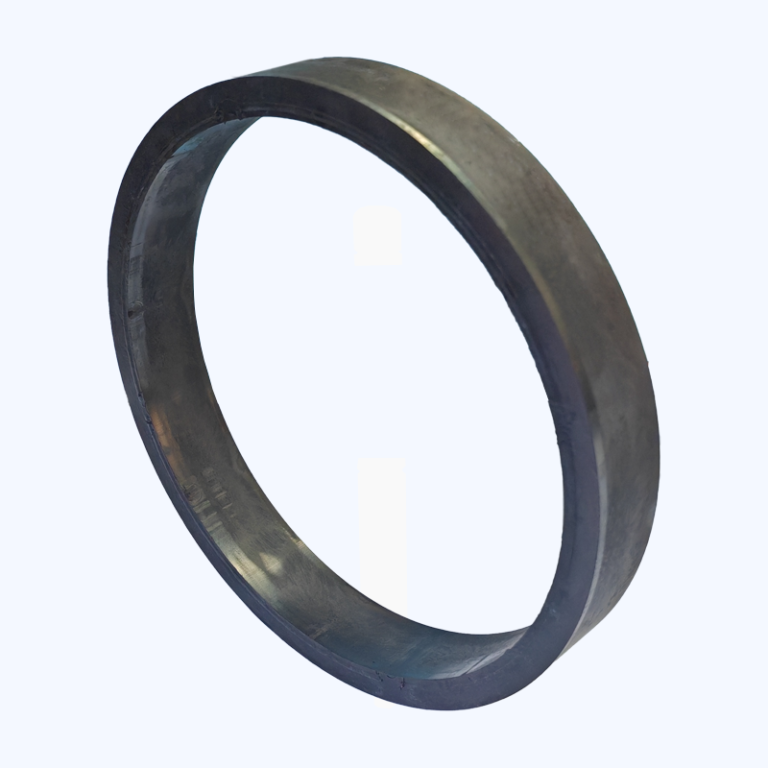
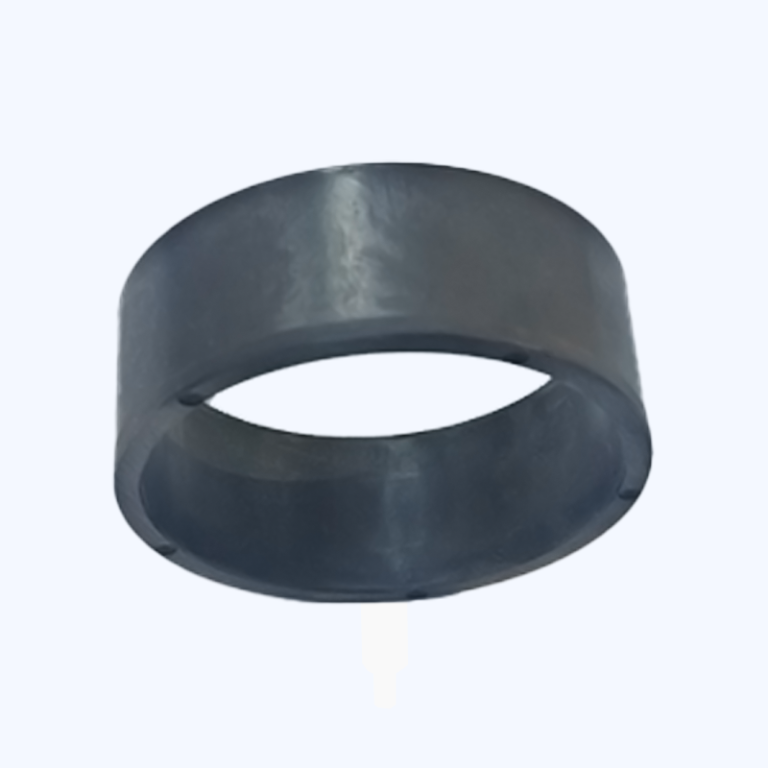
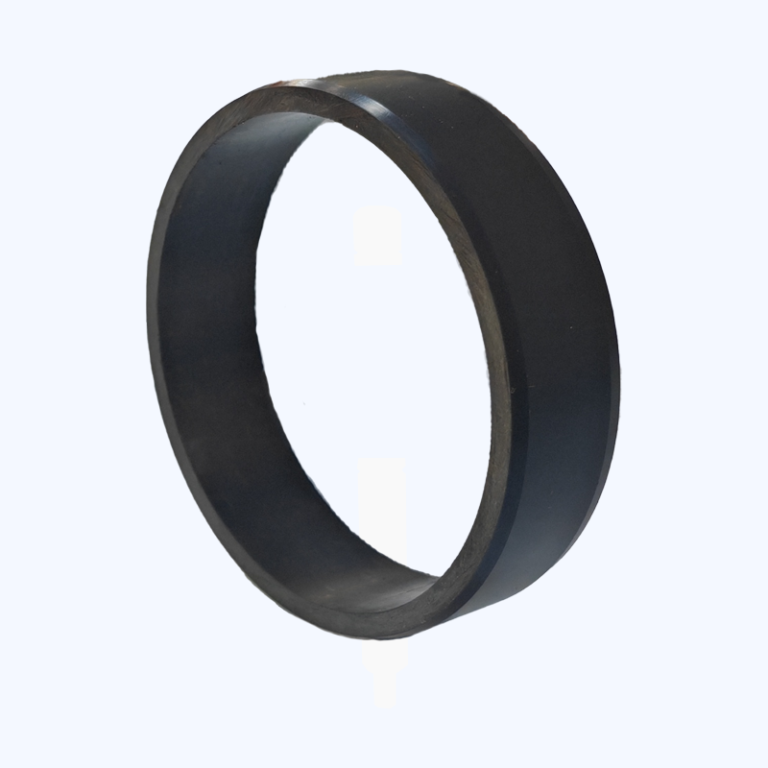
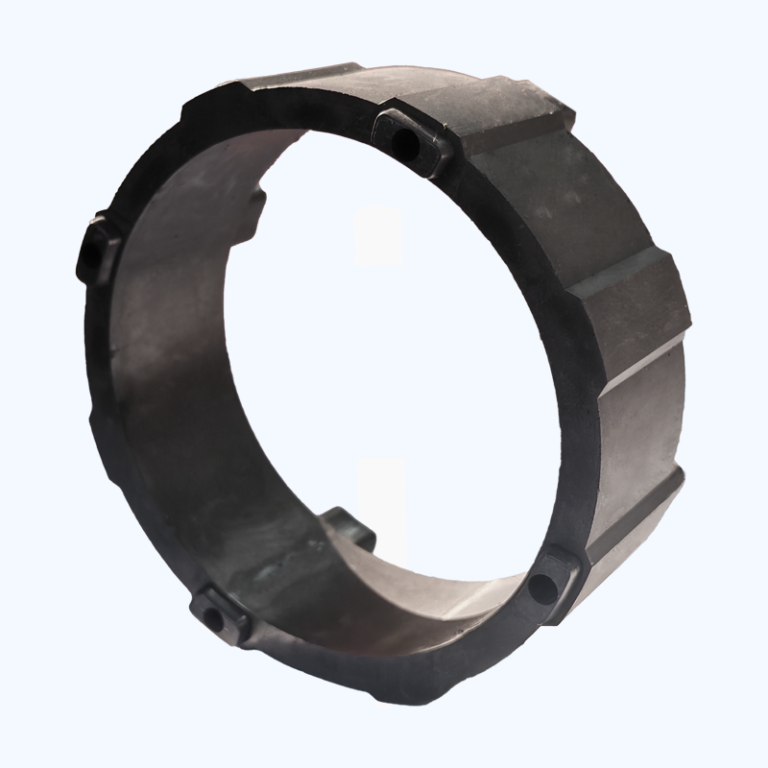
Introduction to Permanent Ferrite Magnetic Rings Permanent Ferrite Magnetic Rings are important magnetic components used in automotive motor systems. In automotive applications, the term “magnetic ring” can refer to different products, including soft ferrite rings for electromagnetic interference (EMI) suppression and permanent-magnet components used to generate the excitation field of motors. Among automotive auxiliary motor applications, permanent ferrite magnetic arcs and rings are particularly important. These components provide a stable magnetic field for various DC permanent-magnet motors used throughout a vehicle. With their combination of cost efficiency, temperature stability, corrosion resistance and demagnetization resistance, Permanent Ferrite Magnetic Rings remain a practical choice for many automotive motor applications. What Are Permanent Ferrite Magnetic Rings? Permanent Ferrite Magnetic Rings are permanent-magnet components manufactured from ferrite magnetic materials, commonly based on strontium ferrite. Depending on the motor structure, they can be produced as: Magnetic rings Arc magnets Segment magnets Customized rotor magnets Injection-molded ferrite magnetic components Unlike soft ferrite components used for EMI suppression, permanent ferrite materials retain a stable magnetic field after magnetization. In automotive motors, this magnetic field acts as the excitation source and interacts with the electromagnetic field generated by the motor windings. Permanent Ferrite Magnetic Rings in Automotive Motors

Ferrite Magnetic Rings

Ferrite Magnetic Rings for Electromagnetic Interference Suppression

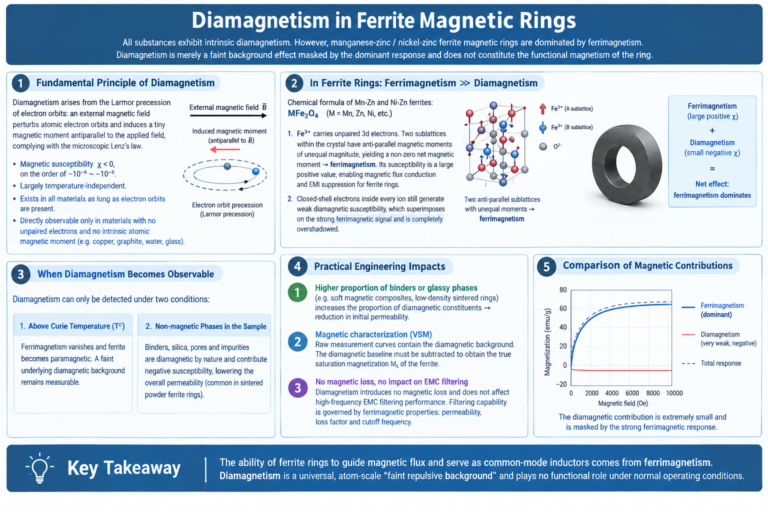
Introduction to Ferrite Magnetic Rings for EMI Suppression Ferrite Magnetic Rings are widely used as electromagnetic interference (EMI) suppression components in power and signal cable systems. In this application, the magnetic ring works as a common-mode choke, helping reduce unwanted high-frequency noise while allowing normal operating current and signals to pass through. As electronic equipment becomes increasingly interconnected, EMI can affect smart-home devices, industrial controllers, LED power supplies, cameras, sensors and communication equipment. Properly selected Ferrite Magnetic Rings can provide a compact and economical solution for controlling common-mode interference. The effectiveness of a magnetic ring depends on several factors, including ferrite material, operating frequency, ring dimensions, cable diameter and the number of winding turns. What Are Ferrite Magnetic Rings? Ferrite Magnetic Rings are ring-shaped soft magnetic components generally made from ferrite materials with frequency-dependent impedance characteristics. When a cable passes through the magnetic ring, the ring interacts with common-mode high-frequency currents traveling along the conductor. At the target interference frequencies, the ferrite material presents increased impedance to unwanted noise. This allows the component to attenuate high-frequency interference without significantly affecting the normal low-frequency operating current. Depending on the application, Ferrite Magnetic Rings can be installed around: Power cables USB cables

Permanent Magnet Magnetic Rings

Permanent Magnet Magnetic Rings: Materials, Magnetization and Motor Performance

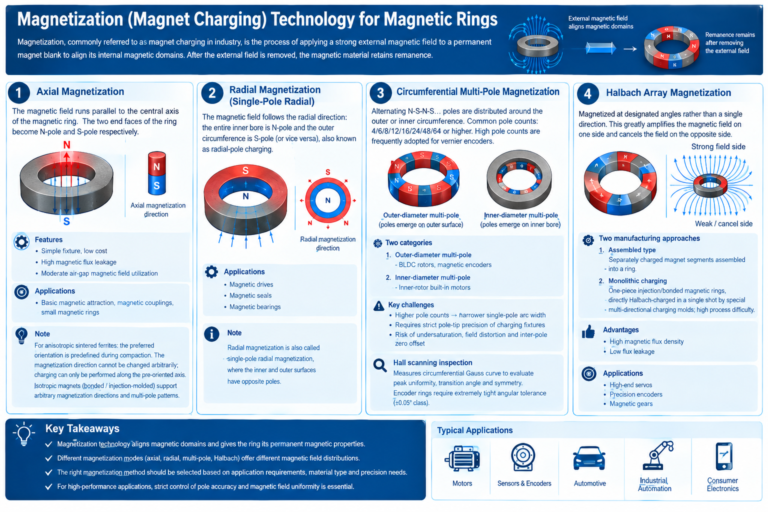
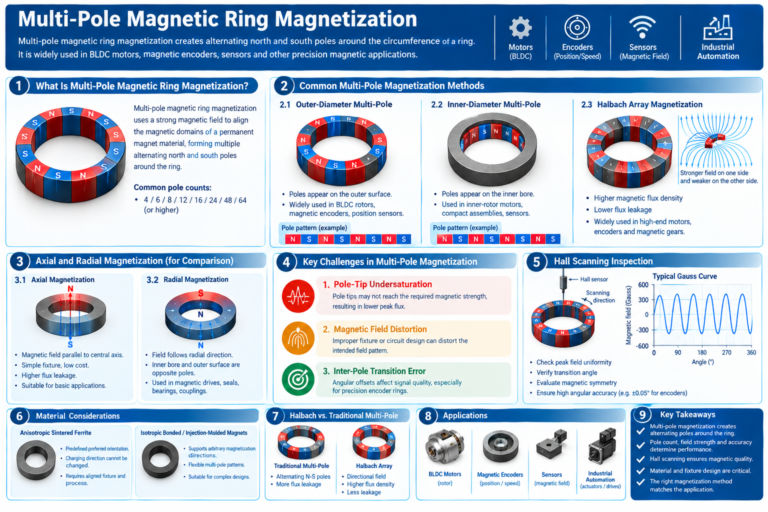
Introduction to Permanent Magnet Magnetic Rings In modern motor design, Permanent Magnet Magnetic Rings are widely used as rotor excitation components in BLDC motors, permanent-magnet synchronous motors (PMSM) and stepper motors. By generating alternating N/S magnetic poles around the rotor circumference, Permanent Magnet Magnetic Rings interact with the magnetic field produced by the stator windings to generate electromagnetic torque. The performance of Permanent Magnet Magnetic Rings is determined by more than magnetic strength alone. Material selection, forming technology, pole configuration, magnetization accuracy, axial dimensions and air-gap magnetic-field distribution all influence the final motor performance. For this reason, choosing the right Permanent Magnet Magnetic Rings requires a complete evaluation of the motor’s operating temperature, torque requirements, power density, production volume and cost target. What Are Permanent Magnet Magnetic Rings? Permanent Magnet Magnetic Rings are annular permanent-magnet components designed to provide the excitation magnetic field of a motor rotor. During manufacturing, multiple alternating N and S poles can be magnetized around the circumference of the ring. When the rotor rotates inside the stator, these magnetic poles interact with the rotating electromagnetic field generated by the stator windings. This interaction produces electromagnetic torque and drives the motor. Typical applications of Permanent Magnet Magnetic

Permanent Magnet Magnetic Rings

Permanent Magnet Magnetic Rings for BLDC, PMSM and Stepper Motors

Introduction Permanent-magnet motors are widely used in modern automotive systems, household appliances, industrial equipment and precision motion systems. Among the magnetic components used in these motors, Permanent Magnet Magnetic Rings can serve as an important part of the rotor and provide the magnetic field required to generate electromagnetic torque. Brushless DC motors (BLDC), permanent-magnet synchronous motors (PMSM) and stepper motors can all use permanent magnetic structures to create rotor excitation. Depending on the motor’s power density, operating temperature, dimensional requirements and production volume, manufacturers can select different magnetic materials and forming processes. The main options include sintered, injection-molded and bonded magnetic rings. Each manufacturing method provides a different balance between magnetic performance, mechanical properties, integration capability and cost. What Are Permanent Magnet Magnetic Rings? Permanent Magnet Magnetic Rings are annular permanent-magnet components designed to generate a stable magnetic field within a motor. During manufacturing, multiple alternating N and S poles can be magnetized around the circumference of the ring. When the ring is installed as part of the rotor, these magnetic poles interact with the rotating magnetic field generated by the energized stator windings. The interaction produces electromagnetic torque and causes the rotor to rotate. This basic structure can be

Multi-Track Vernier Magnetic Encoder

Multi-Track Vernier Magnetic Encoders: High-Resolution Absolute Position Sensing

Introduction Modern motor control systems increasingly require accurate position feedback without sacrificing reliability or increasing hardware complexity. A conventional single-track magnetic ring can provide rotor angle information, but its resolution is ultimately limited by the magnetic signal period and the resolution of the signal-processing hardware. Multi-Track Vernier Magnetic Encoders provide a practical solution by using multiple concentric magnetic tracks with different pole-pair counts. By combining the electrical angles generated by these tracks through a vernier algorithm, the encoder can achieve much finer angular resolution while maintaining single-turn absolute position output. This technology is particularly suitable for servo motors, robotics, industrial automation and other applications where both reliable absolute positioning and high resolution are required. What Is a Multi-Track Vernier Magnetic Encoder? A multi-track vernier magnetic encoder uses multiple magnetic tracks arranged concentrically on a rotating magnetic ring. Each track has a different number of magnetic pole pairs and therefore generates a different number of electrical signal cycles during one mechanical revolution. For example, a three-track design may use: One pole pair on the first track 15 pole pairs on the second track 64 pole pairs on the third track The encoder IC reads the magnetic signals from these tracks simultaneously

Multi-Track Magnetic Encoder Rings

Multi-Track Magnetic Encoder Rings: Accuracy, Error Sources and Vernier-Type Position Sensing

Introduction As motor control systems move toward higher precision and smarter position feedback, absolute magnetic encoders are becoming increasingly important in servo motors, robotics, industrial automation and other precision applications. Among these technologies, Multi-Track Magnetic Encoder Rings use two or more concentric magnetic tracks to determine the absolute angular position of a rotating shaft. A typical vernier-type dual-track design combines a coarse track with a fine track. The coarse track provides unique absolute position information, while the fine track improves angular subdivision and position accuracy. However, achieving high absolute accuracy is not determined by the magnetic ring alone. Magnetizing quality, track concentricity, assembly eccentricity, air-gap stability, Hall sensor performance and decoding algorithms all influence the final encoder performance. What Is a Multi-Track Magnetic Encoder Ring? A multi-track magnetic encoder ring is a permanent magnetic component designed for absolute angular position sensing. In a typical dual-track vernier structure, two concentric magnetic tracks are magnetized with different pole arrangements. The two tracks generate separate magnetic signals that are detected by Hall sensors. The encoder controller compares the signals from the two tracks and uses their phase relationship to calculate the unique angular position of the rotor. This approach provides an important advantage

Magnetic Encoder Absolute Position

Magnetic Encoder Absolute Position Reading: How It Works

Introduction In modern motor control systems, accurate rotor position information is essential for achieving precise motion, stable speed regulation and reliable closed-loop control. Unlike incremental sensors that only provide relative movement information, an absolute encoder can determine the rotor’s position immediately after the system is powered on. Magnetic Encoder Absolute Position technology uses a combination of a permanent magnet ring, Hall sensors and signal-processing algorithms to convert mechanical rotation into an electrical position signal. The system can determine the shaft angle without requiring the motor to return to a reference position first. This makes magnetic encoders particularly useful in servo motors, robotics, industrial automation, electric vehicles and other applications where reliable position feedback is required. What Is a Magnetic Encoder? A magnetic encoder is a non-contact position sensing device that detects changes in a magnetic field to determine the rotational position of a shaft. The basic system normally consists of three main parts: Permanent magnet ring Hall sensing element Signal processing circuit The permanent magnet ring rotates together with the motor shaft, while the Hall sensor remains fixed relative to the motor housing. As the shaft rotates, the magnetic field detected by the sensor changes continuously. The sensor converts these

Injection Molded Magnets

Hall Sensing Magnetic Rings: Applications in BLDC Motors and Servo Systems

Introduction As modern motors continue to evolve toward higher efficiency, smarter control and greater precision, accurate rotor position detection has become increasingly important. Whether in industrial automation, electric vehicles or household appliances, motor controllers rely on precise position feedback to ensure smooth and efficient operation. Hall Sensing Magnetic Rings are one of the most widely used magnetic components for rotor position detection. Working together with Hall effect sensors, these magnetic rings convert rotor movement into electrical signals that enable real-time motor control. From brushless DC motors (BLDC) to high-precision servo systems and specialized sensing applications, Hall sensing magnetic rings have become an essential part of intelligent motion control. What Are Hall Sensing Magnetic Rings? Hall Sensing Magnetic Rings are permanent magnetic rings specially designed for use with Hall effect sensors. Unlike rotor magnets that generate driving torque, Hall sensing magnetic rings are dedicated to position detection and signal generation. The magnetic ring is mounted directly onto the motor shaft and rotates together with the rotor. As it rotates, alternating north and south magnetic poles pass by stationary Hall sensors installed on the stator. The Hall sensors detect these changing magnetic fields and convert them into electrical signals that are transmitted

Injection Molded Magnetic Rings

Injection Molded Magnetic Rings vs Bonded Magnetic Rings for Motor Applications

Introduction Selecting the right magnetic ring is one of the most important decisions when designing a permanent magnet motor. The choice directly influences motor efficiency, output torque, manufacturing cost and long-term reliability. Among the most commonly used magnetic solutions are Injection Molded Magnetic Rings and bonded magnetic rings. Although both belong to the bonded magnet family, they are designed for different engineering priorities. Injection molded magnetic rings emphasize structural integration and manufacturing efficiency, while bonded magnetic rings focus on delivering stronger magnetic performance for high-power applications. Understanding the differences between these two technologies helps engineers and manufacturers select the most suitable magnetic solution for their motor designs. What Are Injection Molded Magnetic Rings? Injection Molded Magnetic Rings are manufactured by mixing magnetic powder with thermoplastic resin and forming the material through an injection molding process. This technology allows complex shapes to be produced with high dimensional accuracy while supporting integrated molding with other motor components. One of the biggest advantages of injection molding is insert molding, where the magnetic ring is directly molded onto a motor shaft or metal insert to create a complete rotor assembly. This process reduces assembly steps, improves production consistency and increases mechanical reliability. What Are

Permanent Magnet Rotor Components

Permanent Magnet Rotor Components: Why Magnetic Rings Improve Variable Frequency Motor Performance

Introduction As variable frequency motors become more efficient and compact, rotor design has become one of the most important factors affecting motor performance. Among modern rotor technologies, Permanent Magnet Rotor Components play a critical role in improving efficiency, reducing mechanical complexity and increasing long-term reliability. Instead of assembling multiple individual magnets onto the rotor core, many manufacturers now use integrated magnetic rings to create a more stable and efficient rotor structure. This design is widely used in permanent magnet synchronous motors (PMSMs), brushless DC (BLDC) motors and other high-performance motor systems. This article explains how permanent magnet rotor components work, their advantages and why integrated magnetic rings have become a preferred solution for modern motor manufacturers. What Are Permanent Magnet Rotor Components? Permanent Magnet Rotor Components are magnetic assemblies installed on the rotating shaft of a motor to generate the rotor magnetic field. In permanent magnet synchronous motors, these components are responsible for producing the constant magnetic field that interacts with the rotating magnetic field generated by the stator. Modern rotor components are commonly manufactured using permanent ferrite magnetic rings or other multi-pole permanent magnetic materials. The magnetic ring features alternating north and south poles distributed evenly around its circumference,

Ferrite Magnetic Rings

Ferrite Magnetic Rings for EMI Suppression in Variable Frequency Motor Systems

Introduction As variable frequency motor systems become increasingly common in industrial automation, HVAC equipment, electric vehicles, and household appliances, electromagnetic compatibility (EMC) has become a key consideration in system design. While frequency converters improve motor efficiency and speed control, they also generate high-frequency electromagnetic interference (EMI) that can affect nearby electronic devices. Ferrite Magnetic Rings are one of the most effective and economical solutions for reducing EMI. Installed on motor power cables, they suppress high-frequency noise, improve system stability, and help equipment meet EMC requirements. This article explains how ferrite magnetic rings work, their applications in variable frequency motor systems, and how to select the right magnetic ring for demanding EMC environments. What Are Ferrite Magnetic Rings? Ferrite magnetic rings are passive magnetic components designed to absorb and suppress high-frequency electromagnetic interference. Unlike permanent magnetic rings used inside motor rotors, ferrite magnetic rings are installed externally on power or signal cables to reduce conducted and radiated noise. Because they require no external power source and are easy to install, ferrite magnetic rings are widely used in industrial automation, power electronics, communication equipment, and inverter-driven motor systems. Two Different Applications of Magnetic Rings in Variable Frequency Motor Systems Although they share

Injection Molded Magnetic Rings

Injection Molded Magnetic Rings vs Bonded Magnetic Rings: 8 Key Differences for Motor Performance

Introduction Injection molded magnetic rings and bonded magnetic rings are two widely used permanent magnet solutions in modern electric motors. Although both are manufactured using magnetic powders combined with polymer binders, their production methods, magnetic properties, structural characteristics, and application scenarios differ significantly. Selecting the appropriate magnetic ring is essential for improving motor efficiency, reliability, and overall product performance. While injection molded magnetic rings excel in integrated structures and precision manufacturing, bonded magnetic rings are designed for applications requiring stronger magnetic fields and higher output torque. Understanding these differences helps motor manufacturers choose the most suitable solution based on design objectives, production volume, and operating conditions. Learn more about customized magnetic solutions: https://www.highkos.com/ What Are Injection Molded Magnetic Rings? Injection Molded Magnetic Rings for Integrated Motor Design Injection molded magnetic rings are manufactured by mixing magnetic powder with engineering thermoplastics and forming the material through an injection molding process. One of the greatest advantages of this manufacturing method is the ability to produce complex geometries while simultaneously molding the magnet together with other components such as motor shafts, hubs, or plastic carriers. This insert molding process creates an integrated rotor assembly that eliminates secondary bonding operations, reduces assembly errors, and

Scroll to Top