
Introduction to Magnetic Ring Pole Count and Magnetic Field Strength
Magnetic rings are widely used in motors, sensors, encoders, automotive components and industrial control systems. Their performance depends on several factors, but Magnetic Ring Pole Count and magnetic field strength are among the most important parameters.
Although these two specifications are often discussed together, they perform different functions. Pole count mainly influences signal density, detection resolution and motor control characteristics. Magnetic field strength, commonly measured in Gauss, determines the intensity and effective range of the magnetic field.
Understanding the relationship between Magnetic Ring Pole Count, Gauss value and magnetization direction can help engineers select the right magnetic solution for specific applications.
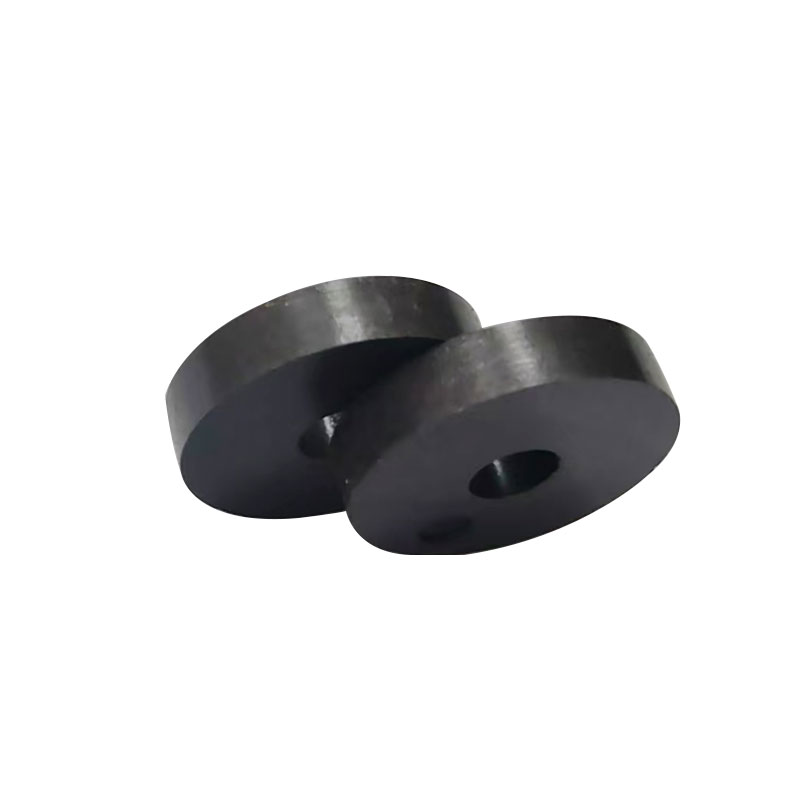
What Is Magnetic Ring Pole Count?
Understanding Magnetic Pole Configuration
Magnetic Ring Pole Count refers to the number of alternating north and south magnetic poles distributed around or across a magnetic ring.
For example, a 2-pole magnetic ring contains one north pole and one south pole. A 4-pole ring contains two alternating N-S pole pairs, while an 8-pole ring contains four pole pairs.
Common configurations include:
- 2 poles
- 4 poles
- 8 poles
- 12 poles
- Multi-pole customized configurations
The appropriate pole configuration depends on whether the magnetic ring is designed for motor operation, position detection, speed measurement or another sensing application.
How Magnetic Ring Pole Count Affects Sensor Resolution
More Poles Create More Signal Pulses
When a multi-pole magnetic ring rotates past a Hall-effect sensor, changes in the magnetic field generate electrical signals.
Each N-S pole pair can produce one complete signal cycle. Therefore, increasing the number of poles increases the number of signal changes generated during one complete mechanical revolution.
A higher Magnetic Ring Pole Count can provide:
- More measurement points per revolution
- Higher pulse density
- Improved position detection
- More detailed rotational information
For applications requiring precise speed or position feedback, a properly selected multi-pole configuration can improve the amount of information available to the control system.
Higher Pole Count Does Not Always Mean Better Performance
Increasing the pole count can improve signal density, but more poles are not automatically the best choice.
Higher pole counts reduce pole pitch, which may increase manufacturing requirements for magnetization accuracy. The sensor must also be capable of detecting the resulting magnetic transitions reliably.
In high-speed applications, a large number of poles can generate very high signal frequencies. This may increase processing requirements for the control system.
Therefore, pole configuration should always be matched with:
- Rotational speed
- Sensor response capability
- Control system processing speed
- Air gap
- Magnetic material
- Required measurement accuracy
Selecting Magnetic Ring Pole Count for Different Applications
Pole Count for High-Speed Motors
Motors designed for high-speed operation often use relatively lower pole counts.
A lower number of magnetic poles can reduce the electrical switching frequency at high rotational speeds. This may help reduce certain electrical and magnetic losses within the motor system.
Applications may include high-speed fans, pumps and other rotating equipment.
Pole Count for High-Torque Motors
Motors designed for higher torque at medium or lower speeds may use medium or higher pole counts.
A suitable multi-pole magnetic configuration can support the required magnetic interaction between the rotor and stator.
The final design depends on the complete motor structure rather than pole count alone.
Pole Count for Position and Speed Sensors
In sensing applications, a higher number of poles can generate more pulses during each revolution.
This makes multi-pole magnetic rings suitable for applications such as:
- Motor speed detection
- Rotary position measurement
- Magnetic encoders
- Industrial automation
- Robotic equipment
- Automotive sensors
The pole count should be selected according to the required resolution and maximum operating speed.
Why Magnetic Pole Polarity Must Be Correct
Risks of Incorrect Magnetic Pole Installation
Correct magnetic polarity is essential in many motor and sensing applications.
If the pole sequence is incorrect, such as adjacent poles having the same polarity when alternating poles are required, the magnetic field pattern may no longer match the control system design.
Potential problems include:
- Failure to start
- Irregular rotation
- Motor vibration
- Excessive heat generation
- Incorrect sensor signals
- Reduced motor performance
In severe cases, abnormal operation may place excessive stress on the motor driver or electronic control system.
For this reason, magnetic pole orientation and magnetization quality should be carefully inspected before assembly.
What Does the Gauss Value of a Magnetic Ring Mean?
Understanding Magnetic Flux Density
Gauss is a commonly used unit for magnetic flux density.
The Gauss value of a magnetic ring indicates the strength of the magnetic field at a specific measurement location.
However, a Gauss value should never be considered independently. The measured result can vary according to:
- Measurement position
- Air gap
- Magnetization direction
- Magnetic material
- Ring geometry
- Number of magnetic poles
A magnetic ring with a high surface Gauss value may produce a much weaker magnetic field several millimeters away from its surface.
How Gauss Value Affects Magnetic Attraction and Driving Force
A higher surface magnetic flux density generally produces a stronger magnetic field within the working area.
Depending on the application, this can increase:
- Magnetic attraction
- Magnetic coupling capability
- Sensor signal strength
- Air-gap magnetic field intensity
A surface magnetic flux density of approximately 4000–4500 G is generally considered a relatively strong magnetic field, although the actual suitability depends on the magnetic material and application.
For motor applications, the magnetic field must be designed together with the complete electromagnetic circuit.
Simply increasing the Gauss value does not guarantee better overall motor performance.
Magnetic Ring Gauss Value and Sensor Sensitivity
The Importance of Signal Amplitude
In magnetic sensing systems, the magnetic field generated by the ring directly affects the signal received by the sensor.
If the magnetic field is too weak, the Hall sensor may not receive a stable or sufficiently strong signal.
If the field is too strong, certain sensors may approach saturation or require additional system calibration.
The ideal magnetic field range should therefore be matched to:
- Sensor sensitivity
- Operating air gap
- Magnetic pole pitch
- Required signal amplitude
- Operating temperature
A properly designed magnetic sensing system requires the magnetic ring and sensor to be evaluated together.
How Magnetization Direction Changes Magnetic Field Distribution
Radial Magnetization
In a radially magnetized magnetic ring, the magnetic poles are distributed along the inner or outer circumference of the ring.
For outer radial magnetization, the primary working magnetic field is concentrated near the outer diameter.
For inner radial magnetization, the magnetic field is primarily designed to operate near the inner diameter.
Radial magnetization is commonly used in:
- Motor rotors
- Rotary sensors
- Magnetic encoders
- Position detection systems
Axial Magnetization
In an axially magnetized magnetic ring, the north and south poles are distributed across the top and bottom surfaces of the ring.
The magnetic field is mainly generated along the axial direction.
This type of magnetization may be used when the sensor or magnetic component is positioned above or below the ring.
The required magnetization direction should always be determined according to the working position of the magnetic field.
The Effect of Distance on Magnetic Field Strength
Why the Air Gap Matters
Magnetic field strength decreases as the distance from the magnetic surface increases.
The exact rate of attenuation depends on the magnet geometry, magnetic material and field measurement position.
For this reason, a magnetic ring that produces a high surface Gauss value may generate a significantly lower field at a sensor positioned several millimeters away.
The operating air gap is therefore one of the most important design parameters.
When designing a magnetic sensing or motor system, engineers should consider:
- Magnetic ring dimensions
- Pole count
- Surface magnetic flux density
- Magnetization direction
- Sensor position
- Air gap
These factors work together to determine the actual magnetic field available at the working location.
How to Select the Right Magnetic Ring
The selection of a magnetic ring should begin with the final application requirements.
For High-Precision Detection
Applications requiring detailed position or speed information may require a higher pole count and accurate pole spacing.
For High-Speed Rotation
High-speed systems may require an optimized pole count to balance signal frequency, magnetic losses and control requirements.
For Strong Magnetic Fields
Applications requiring a stronger working magnetic field should consider material selection, magnet dimensions and operating air gap rather than focusing only on the Gauss value.
For Directional Magnetic Fields
The magnetization direction should match the position of the sensor or the required magnetic circuit.
Radial and axial magnetization patterns create different field distributions and should not be selected interchangeably.
Magnetic Ring Pole Count and Gauss Value: Key Differences
| Parameter | Main Function | Primary Impact |
|---|---|---|
| Pole Count | Defines the number of alternating magnetic poles | Signal density and detection resolution |
| Gauss Value | Indicates magnetic flux density at a measurement point | Magnetic field strength and sensor signal level |
| Magnetization Direction | Defines the orientation of the magnetic field | Working magnetic field distribution |
| Air Gap | Defines the distance to the working component | Effective magnetic field strength |
Frequently Asked Questions
What is Magnetic Ring Pole Count?
Magnetic Ring Pole Count refers to the total number of alternating north and south magnetic poles formed on a magnetic ring.
Does a higher pole count provide higher resolution?
A higher pole count can generate more magnetic signal cycles per revolution, which can provide more detailed position or speed information. However, the sensor and control system must be capable of processing the higher signal frequency.
What does the Gauss value of a magnetic ring indicate?
The Gauss value represents magnetic flux density at a specific measurement position. The measured value changes with distance, magnetization direction and ring geometry.
Does a higher Gauss value always mean better performance?
Not necessarily. The required magnetic field depends on the application. An excessively strong magnetic field may not improve system performance and may be unsuitable for some sensors.
What is the difference between radial and axial magnetization?
Radial magnetization creates a magnetic field primarily around the inner or outer circumference of the ring, while axial magnetization creates a field between the top and bottom surfaces.
Conclusion
Magnetic Ring Pole Count and magnetic field strength are two essential parameters in the design of magnetic rings for motors and sensing systems.
Pole count primarily determines the density of available magnetic signals and influences resolution and control performance. The Gauss value, combined with magnetic material, ring dimensions and magnetization direction, determines the strength and distribution of the working magnetic field.
For practical applications, magnetic ring selection should not be based on a single parameter. Pole count, magnetic field strength, material properties, magnetization pattern, air gap and system requirements should all be considered together.
By matching these factors to the final application, manufacturers can develop magnetic ring solutions for high-precision sensing, stable motor operation and reliable magnetic field performance.