NEWS

bldc ceiling fan magnet

BLDC Ceiling Fan Magnet untuk Motor Kipas Modern yang Efisien

Perkembangan teknologi kipas modern terus mengalami peningkatan untuk memenuhi kebutuhan efisiensi energi dan kenyamanan pengguna. Salah satu komponen penting dalam sistem motor modern adalah bldc ceiling fan magnet, yang berperan dalam meningkatkan performa motor agar lebih stabil, hemat energi, dan memiliki putaran yang lebih halus. Penggunaan bldc ceiling fan magnet pada kipas langit-langit semakin banyak diterapkan karena mampu memberikan keseimbangan antara efisiensi daya dan kenyamanan penggunaan dalam jangka panjang. Keunggulan BLDC Ceiling Fan Magnet pada Motor Modern Teknologi BLDC menawarkan banyak keunggulan dibanding motor konvensional, terutama dalam hal efisiensi dan ketahanan. Efisiensi Energi Lebih Baik Salah satu keunggulan utama bldc ceiling fan magnet adalah kemampuannya mengurangi konsumsi listrik. Sistem magnet permanen membantu motor bekerja lebih efisien dengan kehilangan energi yang lebih kecil. Hal ini membuat kipas dapat digunakan lebih lama tanpa meningkatkan biaya listrik secara signifikan. Operasi Lebih Tenang dan Stabil Motor yang menggunakan bldc ceiling fan magnet memiliki tingkat getaran yang rendah sehingga menghasilkan suara yang lebih halus. Kipas jenis ini sangat cocok digunakan pada: Kamar tidur Ruang kerja Hotel Kantor Ruang belajar Dengan operasi yang lebih tenang, kenyamanan ruangan menjadi jauh lebih baik. Umur Motor Lebih Panjang Karena motor BLDC tidak menggunakan sikat karbon, gesekan internal menjadi lebih

computer fan magnets

The Ultimate Guide to Computer Fan Magnets: Types, Benefits, and Applications

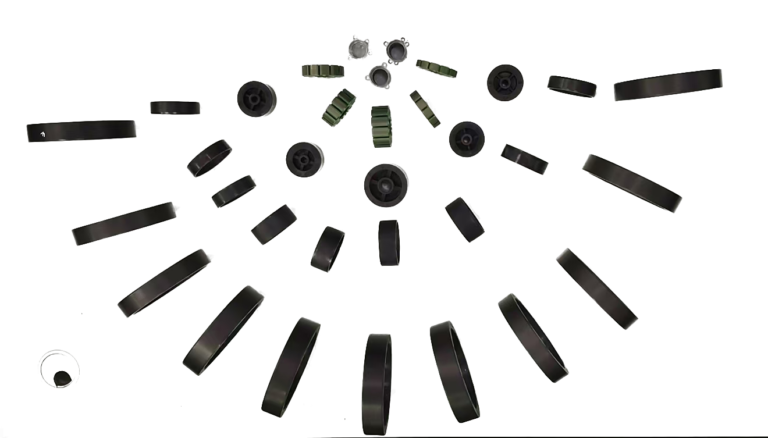
Introduction to Computer Fan Magnets Computer fan magnets are key components used in cooling fan motors across desktops, laptops, gaming PCs, servers, and industrial electronic systems. These magnetic parts are responsible for generating the electromagnetic force required to drive rotor movement in brushless DC motors. In modern electronics, heat generation has become a major challenge due to higher processing power and compact device design. Efficient thermal management depends heavily on stable and reliable cooling systems. High-quality computer fan magnets help ensure smooth motor operation, stable airflow, and improved heat dissipation. Because of their importance, computer fan magnets are widely used in consumer electronics, data centers, automotive systems, and industrial cooling equipment. They help improve energy efficiency, reduce vibration, and extend fan lifespan. For professional magnetic solutions and customization services, visit Highkos. Working Principle of Computer Fan Magnets How Computer Fan Magnets Drive Cooling Fans In brushless DC cooling fans, computer fan magnets are mounted on the rotor while electromagnetic coils are placed on the stator. When current flows through the coils, a magnetic field is generated, which interacts with the magnets to produce rotational torque. This non-contact operation reduces mechanical wear and improves overall efficiency. Compared to traditional brushed motors,

ferrite ring

Stable Performance of Magnetic Rings: From Functional to Reliable

Stable performance is the cornerstone of transforming a ferrite ring from merely functional to highly reliable. In modern electronic devices such as power supplies, communication equipment, industrial machinery, and automotive electronics, this magnetic core must maintain predictable behavior under various internal and external interferences. Key parameters like permeability, inductance, and loss should change minimally to ensure smooth operation. Ferrite rings play a crucial role in controlling electromagnetic fields, reducing noise, and stabilizing currents in circuits. For more information on high-quality magnetic components, visit High Kos. Their stability directly affects efficiency, safety, and device lifespan. Temperature Stability of Ferrite Rings Temperature stability is a key factor in the reliability of inductive rings. Core indicators include the Curie temperature and the permeability-temperature curve. Principle: The permeability of ferrite increases slightly with temperature but drops sharply near the Curie point (typically above 110–140℃). Performance: High-performance ferrite maintains a permeability variation within ±25%, or even ±15%, across normal operating ranges (-40℃ to 85℃ or 105℃). This ensures predictable performance from cold start to full-power thermal equilibrium. Application Significance: Designers can reserve performance margins in power supplies and communication devices, guaranteeing stable operation from low-temperature storage to high-load heat conditions. Case Example: In telecom base

high-efficiency magnetic rings

High-Efficiency Magnetic Rings: From Energy Conversion to Energy Saving

Magnetic rings are an essential component in modern electronic devices, playing a pivotal role in power conversion, energy efficiency, and device reliability. Among them, high-efficiency magnetic rings are especially valued because they minimize energy loss, reduce heat generation, and support compact, high-performance system designs. Understanding their principles and benefits is critical for engineers, designers, and manufacturers aiming to improve device performance while lowering costs. Learn more about high-quality magnetic rings at Highkos. What Does High Efficiency Mean in Magnetic Rings? When referring to high efficiency in magnetic rings, it specifically means minimal energy loss during operation. Unlike ordinary materials that may consume a significant portion of input electricity as heat, high-efficiency ferrite magnetic rings allow almost all electrical energy to be transmitted to the load. This efficiency is not only about energy savings; it also ensures: Stable operation under high-frequency conditions Reduced thermal stress on surrounding components Longer device lifespan and reliability In modern applications such as mobile chargers, laptop adapters, data center power supplies, and photovoltaic inverters, high-efficiency magnetic rings are a key factor enabling high power density in small form factors. For more technical solutions, visit Highkos Magnetic Solutions. Understanding Low Loss Components The total power loss (Pcv)

how to make a fan with magnets

How to Make a Fan with Magnets: Principles, Steps, and Applications

Introduction to How to Make a Fan with Magnets Understanding how to make a fan with magnets is an excellent way to learn the basics of magnetic force and modern motor technology. Many modern fans use magnetic systems inside brushless motors to achieve smooth, efficient, and quiet operation. By combining permanent magnets with electromagnetic coils, a fan can rotate continuously with minimal friction and energy loss. Today, the concept of how to make a fan with magnets is widely applied in household appliances, cooling systems, and industrial ventilation equipment. The use of magnetic technology improves efficiency while extending the lifespan of the motor. For professional magnetic materials and customized solutions, visit https://www.highkos.com/. How Magnetic Fans Work Magnetic Interaction To understand how to make a fan with magnets, it is important to know how magnetic fields interact. Permanent magnets generate a stable magnetic field, while electrical current passing through coils creates an electromagnetic field. The attraction and repulsion between these magnetic fields produce rotational force, allowing the fan blades to spin. Rotor and Stator Design In a magnetic fan system, magnets are typically installed on the rotor, while coils are placed on the stator. When the electromagnetic field changes direction, the

how to make a fan spin with magnets

How to Make a Fan Spin with Magnets: Understanding the Basics

Understanding How to Make a Fan Spin with Magnets The concept of how to make a fan spin with magnets is based on the interaction between magnetic fields and electrical currents. This principle is widely used in modern brushless motors, where magnets and electromagnetic coils work together to generate rotational motion. Many engineers and hobbyists explore how to make a fan spin with magnets to create efficient, low-noise, and durable motor systems. This method eliminates the need for direct mechanical contact, improving both performance and lifespan. For more professional solutions, visit https://www.highkos.com/. Basic Principles Behind Magnet-Driven Fans Magnetic Field Interaction To understand how to make a fan spin with magnets, it is essential to learn how magnetic fields interact. When current flows through coils, it generates an electromagnetic field. This field interacts with permanent magnets, creating attraction and repulsion forces that produce torque. Role of Permanent Magnets Permanent magnets, such as ferrite or neodymium, are key components in this system. They provide a stable magnetic field that enables continuous rotation. Choosing the right material is important when learning how to make a fan spin with magnets, as it directly affects efficiency and performance. Brushless Motor Mechanism In brushless motors, electronic

ceiling fan magnets

Ceiling Fan Magnets: Key Components for Efficient Motor Performance

What Are Ceiling Fan Magnets Ceiling fan magnets are essential components used in modern fan motors, especially in DC brushless systems. These magnets are typically mounted in the rotor and interact with the stator’s electromagnetic field to generate motion. Their quality directly influences efficiency, noise level, and overall lifespan. With the increasing demand for energy-efficient appliances, these components are playing a more important role in both residential and commercial environments. They are widely applied in smart home systems, where consistent performance and reduced energy consumption are critical. For more advanced solutions, visit https://www.highkos.com/. How Ceiling Fan Magnets Work Magnetic Field Interaction These components generate a stable magnetic field that interacts with stator windings. This interaction produces torque, enabling the fan blades to rotate smoothly and efficiently. High-quality materials help maintain stable output, reduce vibration, and ensure long-term operational consistency. Role in Brushless DC Motors In brushless DC motors, ceiling fan magnets eliminate the need for mechanical brushes. This significantly reduces friction, lowers energy loss, and extends the motor’s service life. As a result, modern ceiling fans operate quietly and require less maintenance over time. Importance of Magnet Design The arrangement, size, and magnetic strength are carefully engineered to achieve optimal

multipole strip magnet

Hall Induction Magnetic Ring: The Intelligent Core of DC Brushless Fan Motors

Hall Induction Magnetic Ring: The Intelligent Core of DC Brushless Fan Motors In today’s smart homes, where quiet operation, energy efficiency, and long service life are essential, DC brushless fan motors have become the mainstream choice. The key to achieving these advantages lies in the Hall induction magnetic ring, which works in coordination with Hall sensors to enable precise control. This system replaces traditional mechanical brushes and gives modern fans intelligent sensing and control capabilities. For more information about magnetic components and manufacturing solutions, visit <a href=”https://www.highkos.com/” target=”_blank”>https://www.highkos.com/</a>. Magnetic Ring: The Source of a Stable Magnetic Field The rotor of a DC brushless fan motor is typically equipped with a multi-pole magnetic ring made from neodymium iron boron permanent magnet material. The magnetic ring is alternately magnetized with N poles and S poles and is mounted along the inner wall of the rotor housing. It rotates together with the fan blades during operation. The core function of the magnetic ring is to generate a stable magnetic field. This magnetic field interacts with the rotating magnetic field produced by the stator coils, creating electromagnetic force that drives the rotor to rotate continuously. Multi-pole magnetization is a key technical feature of the

magnetic ring

Magnetic Ring: The “Perpetual Heart” of a Brushless Motor

In modern DC brushless fans, the magnetic ring plays a fundamental role in ensuring stable, efficient, and long-lasting motor operation. Installed around the rotor, this key component is made from high-performance permanent magnet materials and features multiple alternating north (N) and south (S) poles. Its precise magnetic design directly determines the performance and efficiency of the entire motor system. How the Magnetic Ring Generates Driving Force The multi-pole magnetic ring interacts continuously with the rotating magnetic field generated by the stator coils. When the electromagnetic field shifts, it creates a controlled push-and-pull effect on the rotor. This interaction produces smooth rotational motion, which ultimately drives the fan blades to generate airflow. Because the magnetic ring is carefully engineered and uniformly magnetized, it ensures stable torque output, reduced vibration, and consistent performance even under long-term operation. This makes it an essential component in high-demand applications such as electronic cooling systems, industrial ventilation equipment, and precision motor assemblies. 👉 Learn more about advanced magnetic solutions here:https://www.highkos.com/ Enabling a True Brushless Motor Structure One of the most important advantages of the magnetic ring is that it enables a completely brushless design. In traditional brushed motors, carbon brushes physically contact the commutator, which leads

injection molded ferrite magnet

Injection Molded Ferrite Magnet: Efficient Solutions for Precision Components

What Is an Injection Molded Ferrite Magnet An injection molded ferrite magnet is a magnetic component produced by blending ferrite powder with thermoplastic binders and forming it through injection molding. This process enables the creation of complex geometries with high precision while maintaining consistent magnetic performance. Compared with traditional sintered magnets, an injection molded ferrite magnet offers better design flexibility and improved production efficiency. It is widely used in industries such as electronics, automotive, and medical devices, where compact size and lightweight design are critical. In addition, this method supports modern engineering requirements for integrated and multifunctional components. Manufacturing Process of Injection Molded Ferrite Magnet Material Preparation The process begins with mixing ferrite powder and thermoplastic resins into a uniform compound. This step is essential to ensure stable magnetic properties and mechanical strength. Additives may be used to improve flow characteristics, reduce defects, and enhance bonding between materials. Injection Molding Stage The prepared compound is heated and injected into molds under controlled conditions. This stage allows manufacturers to produce intricate shapes that are difficult to achieve with conventional methods. It is especially suitable for high-volume production due to its repeatability and efficiency. For more information, visit our injection molding services.

injection molded ferrite magnets

Injection Molded Ferrite Magnets: Efficient Solutions for Complex Magnetic Parts

What Are Injection Molded Ferrite Magnets Injection molded ferrite magnets are magnetic components manufactured by combining ferrite powder with thermoplastic binders and forming them through injection molding. This advanced process enables the production of complex shapes with high precision and consistent performance. Compared with traditional sintered magnets, this manufacturing method offers greater flexibility in design and improved production efficiency. It is widely used in industries such as electronics, automotive, and medical devices, where compact and lightweight components are essential. In addition, this process supports modern product designs that require both functionality and reduced weight. Manufacturing Process of Injection Molded Ferrite Magnets Material Preparation The process begins by blending ferrite powder with thermoplastic resins to create a uniform mixture. This step is critical for ensuring stable magnetic properties and mechanical strength. Additives may also be included to improve flow behavior, enhance bonding, and reduce defects during molding. Careful material formulation also contributes to better thermal stability and long-term durability. Injection Molding Stage The prepared material is heated and injected into molds under controlled pressure and temperature. This stage allows manufacturers to create intricate geometries that are difficult to achieve with conventional production methods. The process is highly suitable for mass production

how to injection mold magnets

How to Injection Mold Magnets: A Comprehensive Guide

Understanding How to Injection Mold Magnets The question “how to injection mold magnets” refers to the process of embedding magnets into plastic components during injection molding. Many engineers and designers want to learn how to injection mold magnets to create functional assemblies efficiently while maintaining precise component geometry. This process is widely applied in industries such as electronics, automotive, and medical devices, where compact design, high precision, and durability are essential. Understanding how to injection mold magnets ensures reliable magnetic functionality without the need for secondary assembly or adhesives. In addition, this method supports lightweight product development, which is increasingly important in energy-efficient systems. Preparing Magnets for Injection Molding Before molding, magnets must be carefully coated or treated to withstand the high heat and pressure of injection molding. Common magnets include neodymium iron boron (NdFeB) and ferrite. Proper positioning in the mold is crucial to ensure accurate alignment and optimal performance after molding. Knowing how to injection mold magnets helps in selecting the right coatings, mold fixtures, and thermoplastic materials. It also ensures that the magnets maintain their magnetic properties throughout the molding process, which is critical for high-performance applications. Injection Molding Process Once magnets are placed in the mold,

Scroll to Top