
Ferrite magnetic rings are essential components in modern electronic and electrical systems. They are widely used in switching power supplies, EMI filters, inductors, transformers, communication equipment, automotive electronics, industrial automation systems, and renewable energy devices. As electronic equipment becomes more compact and operates under increasingly demanding environments, the stability and reliability of magnetic materials become more important than ever.
Among various magnetic materials, ferrite magnetic rings are highly valued for their excellent temperature stability, long-term durability, predictable magnetic behavior, and outstanding manufacturing consistency. Through advanced material formulation and precision sintering technology, modern ferrite cores can maintain stable performance under both extreme temperatures and continuous long-term operation.
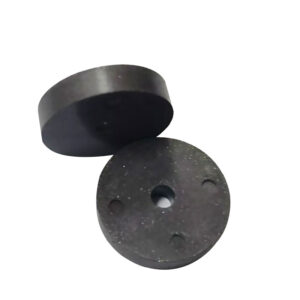
This article explains the temperature stability, aging characteristics, batch consistency, and overload stability of ferrite magnetic rings while highlighting their engineering value in practical applications.
Temperature Stability of Ferrite Magnetic Rings
Temperature has a direct influence on magnetic materials. As temperature changes, magnetic permeability, impedance, and inductance may also change. However, high-quality ferrite magnetic rings are specifically designed to minimize these variations and provide stable operation across a wide temperature range.
Key Indicators of Temperature Stability
Two major indicators are commonly used to evaluate the temperature stability of ferrite magnetic rings:
- Curie Temperature (Tc)
- Permeability-Temperature Curve
The Curie temperature represents the point at which ferrite materials lose their magnetic properties. A higher Curie temperature generally indicates better thermal reliability.
The permeability-temperature curve shows how magnetic permeability changes under different temperatures. This curve is extremely important for engineers because it allows precise prediction of circuit behavior under thermal stress.
Wide Operating Temperature Range
Modern ferrite magnetic rings can operate stably within a wide environmental temperature range.
Typical operating standards include:
- -40°C to +85°C for consumer electronics
- -40°C to +105°C for industrial systems
- Up to +125°C for automotive electronics
Within these temperature ranges, high-quality ferrite materials maintain controllable and predictable magnetic performance.
Stable Magnetic Permeability
One of the biggest advantages of ferrite magnetic rings is the stability of magnetic permeability under changing temperatures.
Stable permeability helps maintain:
- Consistent inductance values
- Reliable EMI suppression performance
- Stable power conversion efficiency
- Reduced electromagnetic interference
- Predictable circuit behavior
This is especially important in high-frequency switching power supplies and communication systems where even small magnetic fluctuations may affect system performance.
Curie Temperature and Thermal Protection
Ferrite magnetic rings are generally designed with a Curie temperature above 130°C. Some advanced ferrite materials can achieve even higher Curie temperatures depending on application requirements.
A sufficiently high Curie temperature provides several advantages:
- Prevents sudden magnetic failure
- Improves high-temperature reliability
- Enhances overload tolerance
- Reduces risk of system shutdown
- Protects electronic components from thermal instability
Even under continuous high-load operation, ferrite magnetic rings can maintain stable magnetic properties without catastrophic magnetic loss.
Engineering Value of Thermal Stability
The thermal stability of ferrite magnetic rings provides major engineering benefits in real-world applications.
Accurate Circuit Design
Because ferrite materials have clearly defined permeability-temperature curves, engineers can accurately calculate inductance variations under both low and high temperatures.
This enables:
- More precise power supply design
- Better EMI filter optimization
- Stable switching frequency control
- Improved system reliability
Predictable thermal behavior is particularly important for precision electronic devices and industrial systems operating in harsh climates.
Reliable Operation in Extreme Environments
Electronic equipment often operates under highly variable environmental conditions.
For example:
- Outdoor communication systems may face freezing winters and extreme summer heat
- Automotive electronics experience rapid temperature fluctuations
- Industrial machinery operates continuously under heavy thermal loads
Stable ferrite magnetic rings help ensure that systems continue functioning reliably in all conditions.
Noise Reduction and Stable Performance
Poor magnetic stability can cause problems such as:
- Abnormal transformer buzzing
- Increased electromagnetic interference
- Startup instability
- Reduced power efficiency
- Thermal drift in inductors
High-quality ferrite magnetic rings help eliminate these issues by maintaining consistent magnetic characteristics across temperature changes.
Long-Term Time Stability and Aging Characteristics
Another important advantage of ferrite magnetic rings is their excellent aging resistance.
Ferrite is a ceramic sintered material with a highly stable internal structure. Unlike some metallic magnetic materials, ferrite does not experience significant internal chemical reactions or mechanical creep during long-term operation.
Minimal Performance Degradation
Over years of operation, ferrite magnetic rings show extremely low degradation in key parameters such as:
- Magnetic permeability
- Impedance
- Core loss
- Inductance stability
- EMI suppression capability
In many practical applications, the performance degradation over 10 to 20 years is almost negligible.
Importance of Aging Stability in Industrial Applications
Long-term stability is critical for equipment that must operate continuously for many years without maintenance.
Typical examples include:
- Industrial automation equipment
- Medical devices
- Base station power supplies
- Renewable energy systems
- Rail transportation electronics
- Aerospace electronic systems
Ferrite magnetic rings used in EMI filters and inductors help maintain stable filtering and power conversion performance throughout the product lifecycle.
Reduced Maintenance Costs
Because ferrite magnetic rings experience very little aging, electronic systems benefit from:
- Lower maintenance frequency
- Reduced replacement costs
- Improved operational reliability
- Longer equipment lifespan
This significantly reduces total operating costs for industrial users.
Manufacturing Stability and Batch Consistency
Modern ferrite manufacturing technology has achieved extremely high levels of precision and consistency.
Advanced production processes include:
- Precision powder metallurgy
- Automated mixing systems
- Controlled sintering temperature
- Computerized quality inspection
- Strict material composition management
These technologies ensure highly stable magnetic performance across production batches.
Controlled Parameter Deviation
For ferrite magnetic rings of the same model, important parameters can typically be controlled within:
- ±10% for standard industrial products
- ±5% for high-precision applications
Controlled parameters include:
- Magnetic permeability
- Core loss
- Saturation characteristics
- Impedance performance
This high level of consistency is essential for large-scale automated manufacturing.
Advantages for Mass Production
Excellent batch consistency provides significant advantages for electronic manufacturers.
Simplified Automated Assembly
Manufacturers can directly use ferrite magnetic rings in:
- Automatic placement machines
- SMT production lines
- Automated power supply assembly
- Large-scale charger manufacturing
Without individual component calibration, production efficiency can be greatly improved.
Consistent Product Performance
For products such as mobile phone chargers, adapters, and industrial power supplies, ferrite magnetic rings help ensure:
- Uniform EMI suppression capability
- Stable charging performance
- Consistent inductance values
- Reliable quality control
This consistency is essential for global consumer electronics manufacturing.
Bias Magnetization and Overload Stability
Ferrite magnetic rings also demonstrate excellent stability under high-current conditions.
When carrying large DC or AC currents, ferrite materials gradually approach magnetic saturation in a smooth and predictable manner.
Predictable Saturation Characteristics
Key features include:
- Gradual permeability reduction
- Stable saturation behavior
- No sudden magnetic collapse
- Full recovery after overload removal
Unlike some alternative magnetic materials, ferrite magnetic rings are not permanently damaged after temporary saturation.
Engineering Benefits of Anti-Saturation Design
Engineers can design circuits specifically to reduce saturation effects.
Common-Mode Inductor Applications
In common-mode inductors:
- Positive and negative conductors pass through the ferrite ring together
- Opposing magnetic fields cancel DC bias
- Magnetic saturation is minimized
- Filtering performance remains stable
This predictable magnetic behavior makes ferrite magnetic rings ideal for high-reliability EMI suppression applications.
Ferrite Magnetic Rings in Modern Electronics
Today, ferrite magnetic rings are widely used in:
- Switching power supplies
- Laptop adapters
- Mobile phone chargers
- Electric vehicles
- Solar inverters
- Communication equipment
- Industrial automation systems
- Medical instruments
- Smart home devices
As electronic systems continue evolving toward higher frequency, higher efficiency, and greater miniaturization, ferrite magnetic materials remain indispensable.
Conclusion
Ferrite magnetic rings provide exceptional temperature stability, aging resistance, manufacturing consistency, and overload reliability. Their predictable magnetic behavior allows engineers to design highly stable electronic systems capable of operating under extreme environmental conditions and long service lifetimes.
With advanced ferrite material technology and modern precision manufacturing processes, ferrite magnetic rings continue to play a vital role in EMI suppression, power conversion, and signal filtering across countless industries.
Whether used in consumer electronics, industrial automation, automotive electronics, or communication infrastructure, ferrite magnetic rings remain one of the most reliable and cost-effective magnetic solutions available today.
For professional ferrite magnetic ring products and customized magnetic component solutions, visit Highkos Magnet.