
By combining Hall sensors with magnetic rings, modern devices can achieve non-contact detection, accurate position sensing, and maintenance-free operation. From smart locks and intelligent ovens to curtain motors and smart fans, Hall induction is rapidly becoming a preferred solution across industries.
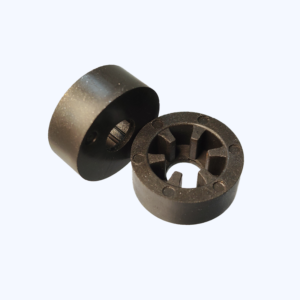
Non-contact Induction Provides Ultimate Reliability
No Mechanical Wear During Operation
One of the greatest advantages of Hall induction is that there is no physical contact between the magnetic ring and the sensor. Traditional mechanical switches rely on metal contacts and springs, which can fail over time due to fatigue, oxidation, or jamming.
Hall induction completely eliminates these problems. In applications requiring frequent movement, such as smart locks, door/window sensors, and drawer detection systems, the operational lifespan is significantly longer than that of mechanical switches. This greatly improves overall product durability and reduces maintenance costs.
Excellent Resistance to Environmental Interference
Hall sensors are typically sealed inside plastic or metal housings, while the magnetic ring remains an independent component. Because of this structure, the system is highly resistant to dust, oil, humidity, and corrosive gases.
For example, in smart oven doors exposed to heavy kitchen fumes or bathroom smart mirror cabinets operating in humid conditions, Hall induction maintains stable performance where mechanical or optical sensors may fail. This makes the technology highly suitable for harsh household and industrial environments.
Immune to Light Interference
Unlike infrared and photoelectric sensors, Hall induction does not depend on light. It operates reliably under strong sunlight, complete darkness, or even through non-metallic barriers.
This feature is especially valuable in smart wardrobes, curtain motors, and concealed control systems where lighting conditions constantly change. Stable detection performance can be maintained without additional shielding or calibration.
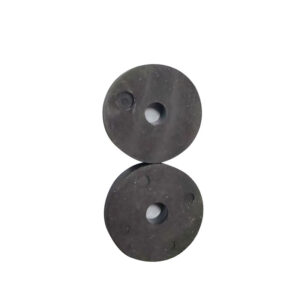
Ultra-low Power Consumption for Battery-powered Devices
Microamp-level Standby Current
Modern Hall switch chips are designed for extremely low energy consumption. Many devices operate with standby currents as low as 0.5µA to 5µA.
This ultra-low power requirement allows battery-powered smart devices to achieve very long service life. For instance:
- Smart door contact sensors can run for 2–3 years using a single button battery
- Smart lock sensor systems add almost no noticeable power burden
- Wireless smart home devices benefit from longer maintenance cycles
Low power operation has become a major reason why Hall induction technology is widely adopted in IoT products.
Event-driven Wake-up Function
Some advanced Hall sensors support interrupt output functionality. The sensor remains in sleep mode until a magnetic field change occurs, such as when a door opens or a lock rotates.
Only then does the sensor wake up the main control chip. This event-driven design significantly reduces total system power consumption and improves battery efficiency in compact smart devices.
High Design Flexibility for Compact Products
Flexible Mounting Positions
Hall induction systems offer generous installation tolerance. The magnetic ring can be installed on moving parts such as hinges, knobs, or sliding rails, while the Hall sensor remains fixed on the PCB.
Even with a sensing gap ranging from 2 mm to 10 mm, stable operation can still be achieved. This flexibility is extremely important in smart lock bolt detection systems, where minor machining errors should not cause sensing failure.
Support for In-plane Detection
Traditional Hall sensors usually require the magnetic field to pass vertically through the chip surface. However, advanced planar Hall sensors and 3D Hall sensors can detect magnetic fields parallel to the chip.
This enables engineers to design ultra-thin smart locks, compact control panels, and slim consumer electronics. The sensor can remain flat on the PCB while the magnetic field approaches from the side, dramatically reducing structural height.
Accurate Multi-position Detection
A linear Hall sensor combined with a multipole magnetic ring can provide highly accurate rotational angle detection. For example, an 8-pole-pair magnetic ring can achieve angle resolution as precise as 0.1°.
This technology can replace multiple mechanical gear switches and greatly simplify product design. Common applications include:
- Smart fan speed adjustment knobs
- Smart oven mode selection dials
- Electronic rotary controllers
- Precision positioning systems
Calibration-free and Maintenance-free Operation
Compared with capacitive and inductive proximity sensors, Hall induction is far less affected by temperature, humidity, or surface material variations.
After factory calibration, the system can maintain stable long-term operation without frequent adjustment. Users do not need to recalibrate thresholds or clean optical surfaces regularly. This significantly improves user experience while lowering maintenance requirements.
High Safety and Zero Electromagnetic Radiation
Hall induction works through passive magnetic field detection and does not emit electromagnetic waves, visible light, or ultrasonic radiation.
Because of this, the technology does not interfere with Wi-Fi, Bluetooth, Zigbee, or other wireless communication systems. It is also completely harmless to the human body, making it highly suitable for smart home products and consumer electronics.
Balanced Cost Performance for Mass Production
Low Material Cost
In large-scale manufacturing, the total cost of a standard Hall switch chip combined with a compact NdFeB magnetic ring is often lower than that of complex mechanical switch systems or advanced capacitive touch modules.
Manufacturers benefit from:
- Simplified mechanical structures
- Reduced assembly complexity
- Lower maintenance costs
- Longer product lifespan
- Higher production consistency
This balanced cost-performance ratio makes Hall induction an attractive solution for both entry-level and premium smart devices.
Typical Applications of Hall Induction Technology
Today, Hall induction technology is widely used in many intelligent products, including:
- Smart locks
- Door and window sensors
- Smart ovens
- Smart mirror cabinets
- Smart fans
- Curtain motors
- Home appliances
- Automotive electronics
- Industrial automation systems
As smart products continue to become smaller, thinner, and more energy-efficient, Hall induction combined with magnetic ring technology will continue to expand into new application areas.
Conclusion
Hall induction technology offers a powerful combination of reliability, low power consumption, compact design flexibility, and long-term stability. By eliminating mechanical wear and improving environmental resistance, Hall sensors and magnetic rings provide a modern sensing solution perfectly suited for today’s smart devices.
Whether used in smart homes, industrial systems, or consumer electronics, Hall induction helps manufacturers create products that are more durable, energy-efficient, and user-friendly.
If you are looking for high-performance magnetic rings and precision magnetic solutions for Hall induction applications, visit Highkos to explore professional magnetic component solutions for smart devices and industrial applications.
FAQ
What is Hall induction technology?
Hall induction technology uses Hall sensors to detect magnetic field changes generated by permanent magnets. It enables non-contact position sensing and motion detection in electronic devices.
Why are Hall sensors better than mechanical switches?
Hall sensors have no physical contact during operation, which eliminates wear, oxidation, and mechanical fatigue. This greatly improves durability and reliability.
Are Hall sensors energy efficient?
Yes. Many Hall sensors consume only microamp-level standby current, making them ideal for battery-powered smart devices.
What industries use Hall induction technology?
Hall induction is widely used in smart home products, automotive electronics, industrial automation, consumer electronics, and IoT devices.
What type of magnets are used with Hall sensors?
NdFeB magnetic rings are commonly used because they provide strong magnetic fields, compact size, and excellent sensing performance.