NEWS

magnetic ring performance

How Magnetic Ring Performance Affects Sensor Accuracy and Reliability

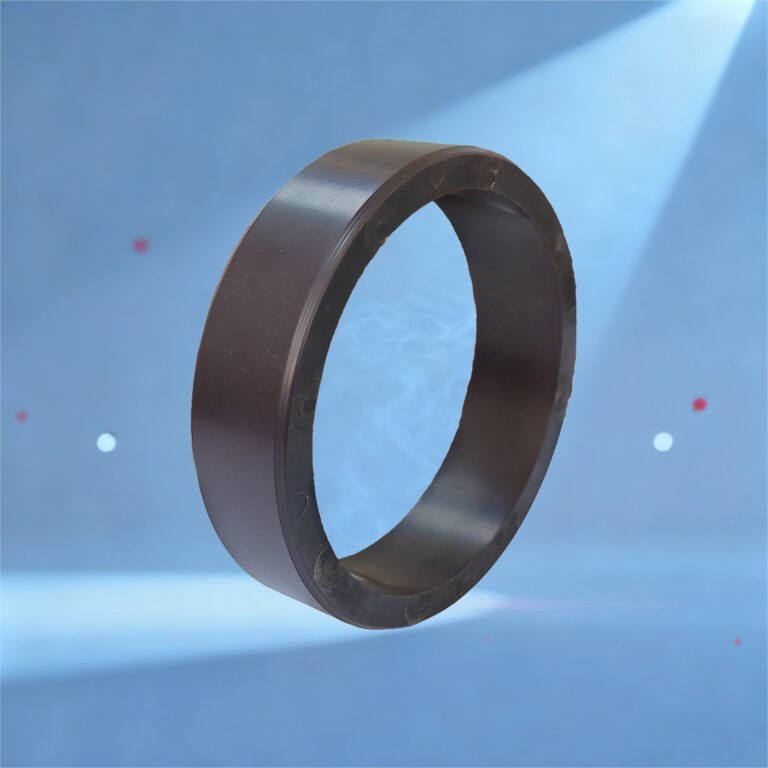
Magnetic ring performance is a critical factor in modern sensor technology. Sensors used in industrial automation, automotive systems, household appliances, and smart devices rely on magnetic fields to detect movement, position, speed, and electrical current. When the magnetic ring provides stable and consistent magnetic characteristics, sensors can achieve higher accuracy and more reliable operation. At HIGHKOS MAGNET, we develop magnetic solutions designed to support demanding sensing applications. Learn more about our products and services at https://www.highkos.com/. Why Magnetic Ring Performance Matters A magnetic ring acts as the source of the magnetic field that a sensor detects. The quality of this magnetic field directly influences signal quality, measurement precision, and overall system reliability. Strong magnetic output and uniform magnetic distribution help sensors produce accurate and repeatable results. Several factors contribute to the effectiveness of a magnetic ring, including material selection, magnetization accuracy, manufacturing precision, and dimensional consistency. Optimizing these factors improves sensing performance while reducing the possibility of measurement errors. Magnetic Field Strength and Distribution One of the most important aspects of magnetic ring performance is magnetic field strength. Sensors depend on a stable magnetic field to detect changes accurately. If the magnetic field is weak or unevenly distributed, sensor readings

multipole magnetic strip

Multipole Magnetic Strip: Features, Applications, and Benefits

As automation and intelligent technologies continue to advance, reliable sensing components are becoming increasingly important. The multipole magnetic strip is widely recognized as an effective solution for position detection, speed monitoring, and motion control. With its alternating magnetic pole structure, the multipole magnetic strip provides accurate feedback while maintaining excellent durability and long-term performance. From industrial automation to smart appliances and automotive systems, this magnetic sensing technology helps improve efficiency, precision, and reliability. As manufacturers seek more advanced non-contact sensing solutions, the demand for the multipole magnetic strip continues to grow. What Is a Multipole Magnetic Strip? A multipole magnetic strip is a magnetic material magnetized with multiple alternating north and south poles along its surface. Unlike conventional magnets that have only one north pole and one south pole, this design creates a repeating magnetic pattern that can be detected by Hall sensors and magnetic readers. The distance between adjacent poles, known as the pole pitch, can be customized according to specific application requirements. Different pole pitches provide different sensing resolutions, allowing engineers to optimize system performance. The versatility of the multipole magnetic strip makes it suitable for a wide variety of sensing, positioning, and motion-control applications. How Magnetic Sensing

magnetic rings

Three Core Applications of Magnetic Rings in Household Appliances

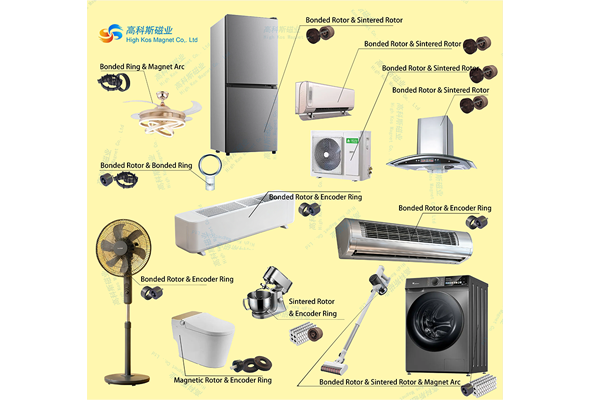
Magnetic rings are widely used in modern household appliances because they provide stable, accurate, and reliable sensing performance. When combined with Hall sensor technology, magnetic rings help appliances achieve intelligent control without physical contact. This non-contact sensing solution improves safety, enhances durability, and supports precise monitoring functions in many smart home devices. Learn more about magnetic technology solutions at High Kos Today, magnetic rings in household appliances are commonly applied in safety protection systems, motor speed monitoring, and liquid flow measurement. Their ability to operate accurately in humid, dusty, and high-temperature environments makes them an ideal choice for modern smart appliances. Acting as a Safety Guard: Detecting Closed Doors and Lids Working Principle A magnetic ring or small magnet is mounted on movable components such as blender lids, washing machine doors, or refrigerator doors. The Hall sensor is fixed on the main body of the appliance. When the lid or door is fully closed, the magnetic ring aligns with the Hall sensor and generates a magnetic signal. Once the lid or door is opened, the magnetic signal disappears immediately, and the control system cuts off power or activates an alarm. This magnetic induction solution provides fast response and reliable safety

multipolar magnets

Best Multipolar Magnets Guide for Modern Magnetic Applications

What are multipolar magnets Multipolar magnets are advanced magnetic components designed with multiple alternating north and south poles distributed across a single magnetic surface. Compared with traditional two-pole magnets, this structure provides more precise magnetic field control and improved operational performance. These magnetic solutions are widely used in electric motors, automation systems, sensors, medical devices, and electronic equipment. The unique pole arrangement improves rotational smoothness, positioning accuracy, and energy efficiency in various applications. Because of their compact structure and strong magnetic capabilities, multipolar magnetic systems have become increasingly important in modern industrial and technological development. Key benefits of multipolar magnets One major advantage of multipolar magnets is enhanced magnetic precision. The alternating pole configuration allows smoother motion control and more stable rotational performance in motor-driven systems. Another important benefit is higher energy efficiency. Optimized magnetic field distribution helps reduce power loss while improving torque output and operational responsiveness. Compact equipment design is also easier to achieve because strong magnetic performance can be generated within limited space. This is especially useful for miniature motors, smart electronics, and automated devices. In addition, advanced magnetic structures help reduce vibration and operational noise, improving system stability and overall user experience. Applications of multipolar magnets

multipolar magnets

Best Multipolar Magnets Guide for Precision Magnetic Systems

What are multipolar magnets Multipolar magnets are advanced magnetic components designed with multiple alternating north and south poles across a single magnetic surface. Unlike traditional magnets that only contain one north pole and one south pole, these magnets provide more complex magnetic field distribution for higher precision and performance. This magnetic technology is widely used in motors, sensors, automation systems, medical equipment, and electronic devices. The multiple pole configuration improves rotational stability, positioning accuracy, and overall system efficiency. Because of their compact structure and strong magnetic control capabilities, multipolar magnetic solutions have become increasingly important in modern industrial applications. Key benefits of multipolar magnets One of the main advantages of multipolar magnets is precise magnetic field control. The alternating pole arrangement allows smoother motion, improved positioning accuracy, and better responsiveness in motor systems. Another important benefit is higher efficiency. Multipolar magnetic structures help reduce energy loss while improving torque performance and operational stability. Compact equipment design is also possible because strong magnetic performance can be achieved in smaller spaces. This is especially valuable in electronics, automation equipment, and miniature motor systems. In addition, these magnetic systems help reduce vibration and operational noise, improving long-term reliability and user experience. Applications of

fan magnet

Best Fan Magnet Guide for Efficient Cooling Systems

What is a fan magnet A fan magnet is an essential magnetic component used inside electric fans, cooling systems, and motor-driven airflow equipment. It helps generate the magnetic field required for motor operation, allowing fan blades to rotate efficiently and maintain stable airflow. Fan magnets are widely used in ceiling fans, computer cooling fans, industrial ventilation systems, automotive cooling equipment, and household appliances. Their performance directly affects motor efficiency, noise levels, energy consumption, and operational lifespan. Modern magnetic technology has significantly improved the durability and efficiency of cooling systems, making high-quality magnetic components increasingly important across many industries. Key benefits of fan magnet technology One major advantage of a fan magnet is improved energy efficiency. Strong and stable magnetic performance allows motors to operate with lower power consumption while maintaining consistent airflow output. Another important benefit is reduced operating noise. High-quality magnetic components help minimize vibration during motor rotation, resulting in smoother and quieter fan performance. Durability is also a key factor. Advanced magnetic materials provide strong resistance to heat, wear, and long-term operational stress, helping extend the lifespan of fan motors. In addition, efficient magnetic systems improve motor reliability in continuous-use applications such as industrial cooling equipment and computer

do fans have magnets

Do Fans Have Magnets? Understanding How Electric Fans Work

Many people ask, do fans have magnets inside them? The answer is yes. Most modern electric fans use magnets as part of their motor system to create movement and maintain stable operation. Whether it is a ceiling fan, computer cooling fan, industrial ventilation system, or automotive radiator fan, magnetic technology plays an important role in how these devices function. Magnets allow fan motors to convert electrical energy into mechanical rotation efficiently. Without magnetic force, electric fan motors would not be able to spin the blades smoothly or maintain consistent airflow. How Fan Motors Use Magnets To understand do fans have magnets, it is important to understand how electric motors work. Most fan motors contain two key parts: Electromagnetic coils Permanent magnets When electricity passes through the coils, a magnetic field is created. This magnetic field interacts with the permanent magnets inside the motor, causing the rotor to spin. The spinning rotor then drives the fan blades to generate airflow. This process allows electric fans to operate continuously while maintaining stable speed and energy efficiency. Do Fans Have Magnets in Ceiling Fans? Ceiling fans are one of the most common examples when discussing do fans have magnets. Traditional ceiling fans use

high-strength magnets

High-Strength Magnets: Driving Green Energy and Advanced Technology

Introduction: The Strategic Importance of High-Strength Magnets High-strength magnets, especially NdFeB (Neodymium Iron Boron) permanent magnets, are among the most important functional materials in modern industry. With global trends shifting toward electrification, energy efficiency, and automation, these magnets have become indispensable across a wide range of high-tech and industrial applications. From electric vehicles to renewable energy systems and precision medical equipment, high-strength magnets enable smaller, lighter, and more efficient designs. Their role in supporting the global green transition continues to expand rapidly. For more industrial magnetic solutions, visit https://www.highkos.com/ Power and Energy Sector: The Core Driver of Green Transition The power and energy industry is currently the largest and fastest-growing application field for high-strength magnets. As countries invest heavily in renewable energy and electrification, demand for NdFeB magnets continues to rise. New Energy Vehicles (EVs) Each high-performance electric vehicle typically requires 2–5 kilograms of NdFeB magnets in its drive motor system. These magnets enable compact motor designs with high torque density, improved efficiency, and better acceleration performance. In addition, premium EV models focusing on long driving range and fast response often require even higher magnet performance. As a result, NdFeB magnets have become a critical component in the global shift

magnetic rings

Temperature Stability and Long-Term Reliability of Ferrite Magnetic Rings

Ferrite magnetic rings are essential components in modern electronic and electrical systems. They are widely used in switching power supplies, EMI filters, inductors, transformers, communication equipment, automotive electronics, industrial automation systems, and renewable energy devices. As electronic equipment becomes more compact and operates under increasingly demanding environments, the stability and reliability of magnetic materials become more important than ever. Among various magnetic materials, ferrite magnetic rings are highly valued for their excellent temperature stability, long-term durability, predictable magnetic behavior, and outstanding manufacturing consistency. Through advanced material formulation and precision sintering technology, modern ferrite cores can maintain stable performance under both extreme temperatures and continuous long-term operation. This article explains the temperature stability, aging characteristics, batch consistency, and overload stability of ferrite magnetic rings while highlighting their engineering value in practical applications. Temperature Stability of Ferrite Magnetic Rings Temperature has a direct influence on magnetic materials. As temperature changes, magnetic permeability, impedance, and inductance may also change. However, high-quality ferrite magnetic rings are specifically designed to minimize these variations and provide stable operation across a wide temperature range. Key Indicators of Temperature Stability Two major indicators are commonly used to evaluate the temperature stability of ferrite magnetic rings: Curie Temperature (Tc)

ceiling fan magnetic field

Ceiling Fan Magnetic Field: How Magnetic Technology Improves Modern Fans

Modern ceiling fans rely on advanced motor technology to deliver quiet operation, stable airflow, and improved energy efficiency. One of the most important elements behind this performance is the ceiling fan magnetic field. By using permanent magnets and electromagnetic interaction, today’s ceiling fans can achieve smoother rotation, lower power consumption, and longer service life compared with traditional fan systems. As smart home appliances continue to evolve, understanding the role of the ceiling fan magnetic field helps manufacturers and consumers appreciate how modern fan motors achieve high efficiency and reliable operation. What Is a Ceiling Fan Magnetic Field? A ceiling fan magnetic field refers to the magnetic force generated inside the fan motor during operation. This magnetic field is created through the interaction between permanent magnets and electromagnetic coils. In modern brushless DC motors and high-efficiency fan systems, the ceiling fan magnetic field controls rotor movement without direct mechanical contact. This design improves operational stability while reducing friction and wear. The magnetic field continuously changes direction as electricity flows through the motor coils, causing the rotor to rotate smoothly and generate airflow. How the Ceiling Fan Magnetic Field Works Interaction Between Magnets and Coils Inside the motor, permanent magnets are mounted

Hall induction

Why Hall Induction Is Becoming the Core Technology of Smart Devices

As smart homes and intelligent consumer electronics continue to evolve, manufacturers are looking for sensing technologies that offer higher reliability, lower power consumption, and longer service life. Traditional mechanical switches and optical sensing methods often struggle in environments with dust, humidity, vibration, or frequent operation. This is where Hall induction technology stands out. By combining Hall sensors with magnetic rings, modern devices can achieve non-contact detection, accurate position sensing, and maintenance-free operation. From smart locks and intelligent ovens to curtain motors and smart fans, Hall induction is rapidly becoming a preferred solution across industries. Non-contact Induction Provides Ultimate Reliability No Mechanical Wear During Operation One of the greatest advantages of Hall induction is that there is no physical contact between the magnetic ring and the sensor. Traditional mechanical switches rely on metal contacts and springs, which can fail over time due to fatigue, oxidation, or jamming. Hall induction completely eliminates these problems. In applications requiring frequent movement, such as smart locks, door/window sensors, and drawer detection systems, the operational lifespan is significantly longer than that of mechanical switches. This greatly improves overall product durability and reduces maintenance costs. Excellent Resistance to Environmental Interference Hall sensors are typically sealed inside plastic

strong magnets

Core Applications of Strong Magnets in Power Conversion, Industry, and Precision Technology

Strong magnets are a fundamental enabling material in modern engineering. By replacing traditional excitation methods with high-performance permanent magnetic fields, they significantly enhance energy efficiency, power density, and system stability across multiple industries. For more technical solutions and magnetic material applications, you can also visit Highkos Official Website. Motors and Generators: The Core of Power and Energy Conversion Motors and generators represent the largest application field of strong magnets. Their core value lies in replacing traditional electric excitation with permanent magnetic fields, allowing much higher efficiency and power density within the same volume. This technology enables more compact, efficient, and powerful energy conversion systems while reducing overall energy losses. New Energy Vehicle Drive Motors The electric vehicle industry is currently the fastest-growing application area for strong magnets. High-performance NdFeB magnets (such as 52SH grade) are widely used in drive motors because they can generate extremely strong magnetic fields in limited space. This enables: Higher torque output Improved energy efficiency Compact motor design Enhanced driving performance As a result, strong magnets have become a core material for modern electric vehicle drive systems. Industrial Servo Motors and Robotics In industrial automation, strong magnets are essential components of high-precision servo motors and robotic

Scroll to Top