
Introduction
A multipole ring magnet is a precision-engineered magnetic component designed with multiple alternating north and south poles distributed evenly along a circular structure. This configuration generates a highly structured magnetic field that is essential for modern sensing, motion feedback, and automation systems.
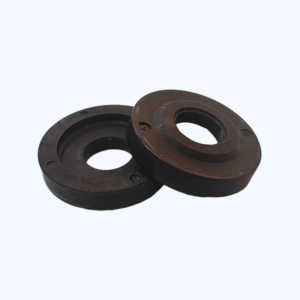
In advanced industrial environments, accuracy, stability, and repeatability are critical. The multipole ring magnet developed by HIGHKOS MAGNET is widely used in applications requiring precise angular detection and stable magnetic signal output.
Structure and Design Characteristics
Unlike traditional single-pole magnets, a multipole ring magnet features a segmented magnetic structure. Each pole is magnetized in an alternating N-S pattern, forming a continuous magnetic waveform around the ring.
Key structural features include:
- Evenly distributed magnetic poles around the circumference
- Customizable pole count depending on resolution requirements
- High symmetry for stable rotational performance
- Consistent magnetic flux transition between poles
The precision of pole arrangement directly influences the accuracy of sensor feedback systems.
Working Principle
The multipole ring magnet operates by generating a repeating magnetic field pattern. When the ring rotates, sensors such as Hall effect devices detect changes in magnetic polarity as each pole passes.
This allows the system to convert magnetic variations into electrical signals, enabling real-time measurement of:
- Angular position
- Rotational speed
- Direction of movement
A higher number of poles increases measurement resolution, making it suitable for high-end servo and encoder systems.
Advantages of Multipole Ring Magnets
High-Precision Feedback
Multipole design enables extremely accurate angular position detection, essential for robotics and motion control systems.
Stable Magnetic Signal Output
The symmetrical pole distribution ensures consistent signal patterns during rotation, reducing measurement errors.
Non-Contact Operation
Since sensing is based on magnetic fields, there is no physical contact, minimizing wear and improving system lifespan.
High Durability
Multipole ring magnets perform reliably under harsh industrial conditions such as vibration, dust, and temperature variation.
Industrial Applications
Multipole ring magnets are widely used in precision engineering and automation systems, including:
- Servo motor feedback systems
- Brushless DC motors (BLDC)
- Magnetic encoders
- Robotics joint angle sensing
- Automotive electronic control systems
- CNC machine positioning systems
- Industrial automation equipment
These applications require stable, repeatable, and high-resolution magnetic signals for accurate control.
Role in Modern Sensor Systems
When combined with Hall sensors or magnetic encoders, multipole ring magnets provide continuous real-time feedback. This is critical for closed-loop control systems used in robotics and precision machinery.
Key benefits include:
- Improved measurement accuracy
- Reduced electromagnetic interference
- Faster response time in control systems
- Enhanced system stability during high-speed operation
Material and Manufacturing Considerations
The performance of a multipole ring magnet depends on several engineering factors:
- Magnetic material selection (ferrite or NdFeB)
- Pole magnetization accuracy
- Geometric symmetry of the ring
- Temperature resistance and stability
- Surface magnetic flux consistency
High manufacturing precision ensures long-term reliability and stable performance in demanding environments.
Future Development Trends
As industrial automation continues to evolve, multipole ring magnets are expected to move toward higher pole density and improved signal resolution. This will allow even more precise motion control in robotics, AI-driven manufacturing, and smart industrial systems.
In addition, advancements in magnetization technology will further reduce signal noise and improve consistency in high-speed applications.
Engineering Importance
In modern engineering systems, multipole ring magnets are not only magnetic components but also key elements of precision feedback systems. Their role directly affects system accuracy, efficiency, and reliability.
Proper selection of pole count, material type, and structural design is essential to achieving optimal performance in specific applications.
Conclusion
The multipole ring magnet is a core component in modern precision motion and sensing systems. Its multi-pole structure enables accurate position detection, stable magnetic field distribution, and reliable performance in industrial automation.
With advanced manufacturing expertise from HIGHKOS MAGNET, these magnets are widely applied in robotics, automotive systems, CNC machinery, and high-precision sensor technologies.
For more technical information, visit: https://www.highkos.com/