
Introduction
In modern precision engineering systems, the stability of the magnetic field plays a critical role in ensuring accurate sensing, motion control, and energy transfer. A stable magnetic field refers to a spatial magnetic environment that remains uniform, symmetrical, and predictable over time. Depending on whether the magnet is static or rotating, the field maintains either a constant distribution or a strictly defined dynamic pattern.
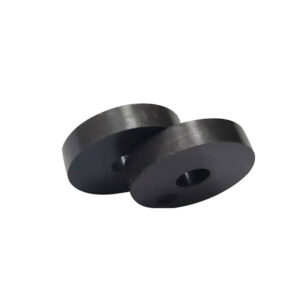
High-performance magnetic rings developed by HIGHKOS MAGNET are designed to provide highly stable magnetic field structures for demanding applications such as sensors, encoders, and advanced industrial systems.
What Is a Stable Magnetic Field?
A stable magnetic field is defined by three key characteristics:
First, spatial uniformity, meaning the magnetic flux distribution remains even around the ring structure.
Second, directional consistency, ensuring that the field orientation does not randomly fluctuate at any fixed point.
Third, temporal stability, where the field remains constant in time for static magnets or follows precise periodic behavior for rotating magnetic systems.
This stability is essential for systems that depend on predictable electromagnetic behavior.
Core Functions of Stable Magnetic Fields
Precision Measurement Reference
Stable magnetic fields serve as a foundational reference in high-accuracy measurement systems. Devices such as Hall sensors, magnetic encoders, and fluxgate magnetometers rely on consistent magnetic input to maintain calibration accuracy.
A stable magnetic ring acts like a “magnetic ruler,” providing a known reference field that allows instruments to measure displacement, angle, or speed with high precision.
Contactless Levitation and Driving Systems
In magnetic levitation and coupling systems, stability is directly linked to performance quality. Magnetic bearings and magnetic couplings use the repulsive and attractive forces generated by stable magnetic rings to maintain rotor position without physical contact.
This results in:
- Reduced mechanical wear
- Lower vibration levels
- Minimal noise output
- Improved system lifespan
The uniform magnetic field ensures smooth and efficient energy transfer even under high-speed operation.
High-Precision Beam Control
Advanced scientific equipment such as particle accelerators, electron microscopes, and traveling-wave tubes require extremely stable magnetic environments.
Even minor fluctuations in the magnetic field can cause:
- Electron beam deviation
- Image distortion
- Loss of focusing accuracy
By using carefully designed magnetic ring assemblies, engineers can achieve controlled beam deflection and precise particle guidance.
High-Precision Position Detection
Multi-pole magnetic rings, which feature alternating N and S poles arranged around the surface, are widely used in robotics and servo motor systems.
These systems require:
- Consistent pole spacing
- Uniform magnetic flux amplitude
- Highly stable field geometry
When combined with Hall sensors, the magnetic ring enables real-time angle detection of rotor position. This allows servo systems to achieve high-resolution motion control and stable feedback loops.
Practical Applications
Stable magnetic field technology is widely applied across multiple advanced industries, including:
- High-precision angle and position sensors
- Magnetic resonance imaging (MRI) systems requiring large-scale uniform fields
- Maglev transportation systems and levitation track magnets
- CNC machine tool magnetic encoders
- Mass spectrometers and analytical instruments
In all these systems, field stability directly determines accuracy, efficiency, and operational reliability.
Engineering Value of Stable Magnetic Rings
The performance of a magnetic system is not determined only by magnetic strength, but also by field consistency and structural symmetry.
Stable magnetic rings offer:
- Predictable magnetic flux distribution
- Reduced signal noise in sensors
- Higher system calibration accuracy
- Improved long-term operational stability
These advantages make them essential components in modern automation, medical equipment, and precision instrumentation.
Conclusion
The stability of magnetic fields is a fundamental requirement for modern high-precision technologies. From sensing and measurement to levitation and beam control, stable magnetic rings provide the reliable electromagnetic foundation needed for advanced systems.
As industries continue to demand higher accuracy and efficiency, solutions provided by manufacturers like HIGHKOS MAGNET play an increasingly important role in enabling next-generation magnetic applications.
For more technical solutions and product information, visit: https://www.highkos.com/