
As automation, robotics, and smart manufacturing continue to evolve, the need for accurate and reliable sensing technologies is increasing. Multipole magnets have become an important component in modern positioning, speed detection, and motion-control systems. Their unique magnetic structure enables precise signal generation, helping equipment operate with greater efficiency and accuracy.
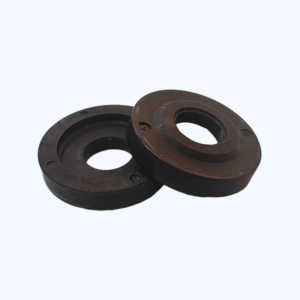
Today, these advanced magnetic components are widely used in industrial machinery, automotive systems, household appliances, and medical equipment. Their ability to deliver stable performance under demanding conditions makes them a preferred choice for many engineers and manufacturers.
What Are Multipole Magnets?
Multipole magnets are magnetic components that contain multiple alternating north and south poles arranged across a surface or around a circular structure. Unlike conventional magnets with only one north pole and one south pole, this configuration creates a repeating magnetic field pattern.
The alternating pole arrangement allows sensors to detect movement, position, direction, and speed with high accuracy. Depending on the application, manufacturers can customize pole count, pole pitch, magnetic strength, and material type to meet specific performance requirements.
Because of their flexibility and precision, these magnetic components are widely used in modern sensing systems.
How Multipole Magnets Work
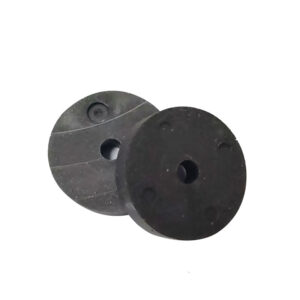
The operation of multipole magnets is based on alternating magnetic fields. As a sensor moves along the magnetic surface, or as the magnet rotates past a stationary sensor, changing magnetic signals are generated.
Hall sensors or magnetic readers detect these changes and convert them into electronic signals. Control systems then process the information to determine speed, position, displacement, or rotational direction.
Since the sensing process does not require physical contact, the system experiences minimal wear. This contributes to longer service life and reduced maintenance costs.
Key Benefits
High Accuracy
The alternating magnetic pole structure provides detailed magnetic field transitions, enabling precise measurement and reliable motion feedback.
Long Service Life
Because the sensing process is contactless, mechanical friction is eliminated. This helps extend equipment lifespan and improve reliability.
Environmental Durability
These magnetic solutions can perform effectively in environments exposed to dust, moisture, oil, vibration, and temperature fluctuations.
Flexible Design Options
Manufacturers can customize dimensions, magnetic strength, and pole configurations according to application requirements.
Cost-Effective Performance
Compared with some alternative sensing technologies, magnetic systems often provide excellent reliability while maintaining lower operating costs.
Industrial Automation Applications
Automation equipment depends on accurate position feedback and movement control to achieve consistent production quality. Magnetic sensing systems are commonly integrated into automated machinery, conveyor systems, and positioning equipment.
Accurate feedback helps improve manufacturing efficiency while reducing positioning errors. As smart factories continue to expand, magnetic technologies are becoming increasingly important in industrial environments.
Motor and Encoder Systems
Rotary encoders and motor-control systems frequently utilize alternating magnetic field patterns to monitor speed and position. Reliable feedback allows motors to operate more efficiently and supports precise motion control.
These technologies are commonly found in servo systems, robotics, electric motors, and automated production equipment where accurate movement tracking is essential.
Household Appliance Applications
Modern household appliances increasingly rely on magnetic sensing solutions to improve performance and efficiency. Washing machines use magnetic feedback to monitor drum speed, while air conditioners and fans benefit from precise motor control.
Kitchen appliances may also incorporate magnetic detection technology for safety monitoring and operational management.
For more information about custom magnetic solutions, visit High Kos.
Automotive Applications
Automotive manufacturers use advanced magnetic components in systems requiring accurate speed and position detection. Electric motors, steering mechanisms, and seat adjustment systems all benefit from reliable magnetic feedback.
Because these solutions maintain stable performance under vibration and changing temperatures, they are well suited for demanding automotive environments.
Medical Equipment Applications
Medical devices often require highly accurate positioning and movement control. Magnetic sensing technology provides stable and repeatable performance for laboratory equipment, imaging systems, and automated healthcare devices.
Its reliability and precision make it an important technology in modern medical applications.
Selecting the Right Magnetic Solution
Several factors should be evaluated when choosing magnetic components:
- Pole count requirements
- Pole pitch specifications
- Magnetic field strength
- Operating temperature range
- Environmental conditions
- Sensor compatibility
- Available installation space
Careful selection helps ensure optimal performance and long-term reliability.
Future Development Trends
As automation, robotics, electric vehicles, and intelligent devices continue to grow, demand for advanced magnetic technologies is expected to increase. Improvements in magnetic materials and manufacturing processes are enabling higher performance and more compact designs.
These developments will continue expanding the role of magnetic sensing systems across numerous industries.
Conclusion
Multipole magnets remain a valuable solution for applications requiring accurate position detection, reliable speed monitoring, and precise motion control. Their combination of accuracy, durability, customization flexibility, and environmental resistance makes them suitable for a wide variety of industries.
From industrial automation and motor systems to household appliances, automotive equipment, and medical devices, multipole magnets continue to support the development of smarter, more efficient technologies.
FAQ
What are multipole magnets?
Multipole magnets are magnetic components with multiple alternating north and south poles that create repeating magnetic field patterns for sensing and positioning applications.
What are the main advantages of these magnetic components?
They provide high accuracy, non-contact operation, long service life, environmental durability, and flexible customization options.
Where are they commonly used?
Typical applications include industrial automation, encoder systems, robotics, household appliances, automotive equipment, and medical devices.
Can they be customized?
Yes. Manufacturers can customize pole count, dimensions, magnetic strength, materials, and pole pitch according to specific application requirements.
For custom magnetic products and engineering support, visit High Kos Official Website.