NEWS

rotor water pump

How to Source High-Quality Neodymium NdFeB Magnets from Manufacturers

Author | High Kos Magnet Updated | December 2025 Sourcing neodymium NdFeB magnets is a critical decision for manufacturers, engineers, and procurement managers across industries such as motors, electronics, automotive, medical devices, and industrial automation. While neodymium NdFeB magnets are known for their exceptional magnetic strength, not all suppliers deliver the same level of quality, consistency, and technical support. Choosing the wrong manufacturer can lead to unstable performance, premature demagnetization, dimensional inconsistencies, or even supply chain risks. This guide explains how to source high-quality neodymium NdFeB magnets from manufacturers, what criteria truly matter, and how to avoid common procurement pitfalls. What Is Neodymium NdFeB and Why Quality Matters Neodymium NdFeB (Neodymium-Iron-Boron) magnets are the strongest commercially available permanent magnets. Their superior magnetic energy density allows designers to reduce size and weight while maintaining high performance. However, the quality of neodymium NdFeB magnets depends heavily on: Raw material purity Manufacturing process control Magnet grade consistency Coating and corrosion protection Engineering and quality assurance systems High-quality neodymium NdFeB magnets ensure stable magnetic properties, long service life, and predictable performance under real working conditions. Key Challenges When Sourcing Neodymium NdFeB Magnets Many buyers assume all neodymium NdFeB magnets with the same grade perform equally.

rotor water pump

Ferrite Magnet Grades Explained: Y30, Y35, Y40 and More

Author | High Kos Magnet Updated | December 2025 Ferrite magnets remain one of the most important and widely used permanent magnetic materials in modern manufacturing. Despite the rapid development of rare-earth magnets, ferrite magnets continue to dominate many industrial and commercial applications because they offer an outstanding balance of cost efficiency, mechanical durability, and long-term magnetic stability. From automotive components and industrial motors to consumer electronics and household appliances, ceramic magnets provide reliable and consistent magnetic performance at scale, making them especially suitable for high-volume production and long-term use. One of the most significant advantages of ceramic magnets is their predictability throughout the entire product lifecycle. The raw materials used in ferrite magnets are abundant and widely available, which helps manufacturers avoid supply chain disruptions and sharp price fluctuations. In addition, ferrite magnet manufacturing processes are well established and highly mature, ensuring stable quality and repeatable performance. Their magnetic properties remain reliable over long operating lifetimes, even under continuous use or varying environmental conditions. This makes ferrite magnets an ideal choice for manufacturers who prioritize supply chain security, consistent pricing, and dependable product performance. As application requirements become more demanding, understanding ferrite magnet grades—such as Y30, Y35, and Y40—becomes increasingly

Single-Pole Absolute Encoder

How to Choose the Right NdFeB Magnets for Your Project in 2025

Author | High Kos Magnet Updated | December 2025 In 2025, global manufacturing and product innovation are being reshaped by rising expectations for energy efficiency, compact system design, and long-term operational reliability. As industries continue to evolve toward smarter, lighter, and more sustainable solutions, the role of high-performance magnetic materials has become increasingly critical. Across key sectors such as electric vehicles, renewable energy systems, industrial automation, medical equipment, and consumer electronics, ndfeb magnets have emerged as one of the most indispensable functional materials. Their outstanding magnetic strength enables engineers to deliver powerful and stable performance while significantly reducing component size, overall weight, and energy consumption. This combination of strength and efficiency supports modern design trends, including miniaturization, system integration, and improved energy utilization. At the same time, selecting the right ndfeb magnets has become far more complex than in the past. Fluctuations in rare-earth raw material prices, stricter global environmental regulations, and growing customer expectations for longer product lifespans mean that magnet selection can no longer rely on a single factor such as grade or unit price. Instead, engineers and procurement teams must take a holistic approach, carefully evaluating the operating environment, thermal conditions, mechanical stress, manufacturing processes, and long-term performance

rotor water pump

Neodymium Iron Boron Density vs Magnetic Strength: Engineering Trade-Offs Explained

Author | High Kos Magnet Updated | December 2025 Understanding NdFeB magnet density in Modern Magnet Engineering NdFeB magnet density is a fundamental physical parameter that directly influences the performance, weight, and reliability of high-performance permanent magnets. In modern engineering applications—especially motors, automation equipment, consumer electronics, and automotive systems—understanding neodymium iron boron density is essential for making informed design and sourcing decisions. Neodymium iron boron (NdFeB) magnets are known for their exceptional magnetic strength, but density plays a critical role in how that strength is utilized. Engineers must carefully balance NdFeB magnet density against magnetic strength, mechanical integrity, and cost. A higher density often indicates better magnetic particle packing, but it may also increase weight and affect thermal behavior. In this article, we explore the engineering trade-offs between neodymium iron boron density and magnetic strength, helping OEMs, designers, and procurement teams choose the most suitable magnet solution for their applications. What Is NdFeB magnet density? Definition of NdFeB magnet density NdFeB magnet density refers to the mass per unit volume of NdFeB magnetic material, typically measured in g/cm³. For most sintered NdFeB magnets, the NdFeB magnet density ranges from 7.4 to 7.6 g/cm³, while bonded or injection-molded NdFeB magnets have a

rotor water pump

How to Choose the Right Multipole Magnet for Your Application in 2025

Author | High Kos Magnet Updated | December 2025 As industries continue to pursue higher precision, compact structures, and energy efficiency, the multipole magnet has become an indispensable component in modern electromechanical systems. From motors and encoders to sensors, automotive assemblies, and medical devices, choosing the right multipole magnet directly impacts system accuracy, stability, and lifecycle cost. In 2025, multipole magnet selection is no longer a simple material decision. Engineers and procurement professionals must consider magnet material, pole configuration, magnetization accuracy, environmental conditions, and manufacturing capability as an integrated whole. In addition, supply chain stability and long-term technical support have become increasingly important, especially for global OEM customers. This guide provides a comprehensive, practical framework to help you choose the most suitable multipole magnet for your specific application while balancing performance, cost, and reliability. Understanding Multipole Magnet Fundamentals for Modern Applications A multipole magnet is a permanent magnet engineered with multiple alternating north and south poles distributed along its surface. Compared with traditional bipolar magnets, a multipole magnet generates a more uniform and controllable magnetic field, enabling higher resolution, smoother motion, and more precise signal output. In practical engineering scenarios, a multipole magnet allows designers to precisely manage magnetic flux within

rotor magnet

How Magnetic Platens Injection Moldin Work on Injection Molding Machines: A Technical Guide

Author | Highkos Magnet Updated | December 2025 Introduction to Clamping force using magnetic platens Technology In modern injection molding manufacturing, productivity, safety, and flexibility are critical competitive advantages. Traditional mechanical clamping systems often limit mold change speed, increase downtime, and add unnecessary operational risks. As a result, Clamping force using magnetic platens systems have become an increasingly popular solution for injection molding machines worldwide. Magnetic platens injection moldin technology replaces mechanical clamping with powerful electromagnetic force, allowing molds to be mounted and released quickly while maintaining precise holding strength during the molding process. This technical guide explains how Clamping force using magnetic platens systems work, their core components, operating principles, safety mechanisms, and why they are transforming injection molding operations across industries. What Are Clamping force using magnetic platens Systems? Definition of Clamping force using magnetic platens Magnetic platens injection moldin systems are advanced mold clamping solutions that use electromagnetic force to secure molds directly onto the machine platens. Instead of relying on bolts, clamps, or hydraulic mechanisms, the magnetic platen generates uniform magnetic attraction across the mold surface. This technology enables: Faster mold installation and removal Improved machine uptime Enhanced operator safety Greater flexibility for high-mix production environments Magnetic platens

rotor magnet

How to Choose the Right Magnet Material for Ceiling Fan Motors in 2025

Author | High Kos Magnet Updated | December 2025 Introduction: Why Choosing the Right Ceiling Fan Magnets Matters More Than Ever As the global home appliance industry continues to move toward energy efficiency, low noise, and intelligent control, ceiling fan motor design is undergoing rapid transformation. In 2025, manufacturers are no longer competing solely on appearance or price—motor performance and reliability have become decisive factors, and at the center of these factors are ceiling fan magnets. Ceiling fan magnets directly determine motor efficiency, torque output, thermal stability, and service life. With the increasing adoption of BLDC motors, stricter energy regulations, and higher consumer expectations for quiet operation, selecting the right magnet material is now a strategic decision rather than a simple component choice. A well-chosen magnet solution can significantly reduce power consumption, minimize noise, and enhance long-term product stability. This guide provides a complete and practical overview of how to choose the right ceiling fan motor magnets in 2025, helping manufacturers, OEMs, and engineers make informed decisions that balance performance, cost, and scalability. Understanding Ceiling Fan Magnets and Their Role in Motor Performance What Are Ceiling Fan Magnets? Ceiling fan magnets are permanent magnets specifically designed for use in ceiling

magnetic multipole

Exploring Higher-Order Magnetic Multipoles in Magnetic Resonance Imaging (MRI): Revolutionizing Medical Imaging Technology

Author |Highkos Magnet Updated | December 2025 Introduction to Multipolar magnetic field in MRI Magnetic Resonance Imaging (MRI) is one of the most advanced medical imaging technologies available today, offering detailed images of internal body structures without the use of ionizing radiation. Traditional MRI technology primarily utilizes dipole magnetic fields, but advancements in higher-order magnetic multipoles are pushing the boundaries of what MRI can achieve. This article will explore how Multipolar magnetic field, particularly higher-order multipoles, are being incorporated into MRI technology to improve image quality, reduce noise, and provide more accurate diagnoses. What Are Magnetic Multipoles? To understand their impact on MRI, it’s important to first define what magnetic multipoles are. A Multipolar magnetic field refers to a configuration of magnetic poles greater than the standard dipole (north and south poles). Higher-order Multipolar magnetic field include quadrupoles, octupoles, and other configurations, each having distinct characteristics that influence how magnetic fields behave. These configurations are increasingly utilized in modern MRI systems to create more complex magnetic field gradients that can enhance image resolution and contrast. Monopole: A theoretical concept with a single magnetic pole. Dipole: A magnetic field with two poles (north and south). Higher-Order Multipoles: Magnetic fields with more

ferrite magnets

The Role of Injection Molded Magnets in Electric Motors in 2025

Author | Highkos Magnet Updated | December 2025 Table of Contents Introduction: Why Injection Molded Magnets are Crucial in Electric Motors The Evolution of Injection Molded Magnets in Electric Motors Key Benefits of Injection Molded Magnets in Electric Motor Design Cost-Effectiveness and Scalability Flexibility in Design and Customization Performance Efficiency in Electric Motors How Injection Molded Magnets Improve Motor Efficiency in 2025 Enhancing Torque and Power Density Reducing Weight and Space Injection Molded Magnets and Sustainability in Electric Motors Future Trends: What’s Next for Injection Molded Magnets in Electric Motors Why High Kos Magnet Is the Best Partner for Your Electric Motor Projects Frequently Asked Questions (FAQ) Conclusion: Partner with High Kos Magnet for Optimized Electric Motors 1. Introduction: Why Injection Molded Magnets Are Crucial in Electric Motors Injection molded magnets are gaining significant attention in electric motor design and production, especially in 2025. As the world transitions to cleaner, more efficient technologies, electric motors are at the forefront of this change. These motors are integral to industries ranging from automotive to robotics and consumer electronics. Injection molded magnets offer unique advantages, making them an ideal choice for manufacturers seeking optimized performance in electric motors. In this article, we explore

The 136th Canton Fair Achieves Carbon Neutrality, China’s’ First Exhibition ‘Outlines Green and Low Carbon Background

On October 17, 2024, the 136th Canton Fair held a green time and space event, announcing that the fair had achieved carbon neutrality for the first time in its history. Wang Baosen, Secretary of the Party Group and Director of the Guangzhou Ecological Environment Bureau, presented the 136th Canton Fair Carbon Neutrality Certificate to Su Bin, Deputy Director of the China Foreign Trade Center.   Issuing the Carbon Neutrality Certificate for the 136th Canton Fair Pioneering domestic green exhibitions The Canton Fair, known as the “First Exhibition in China”, actively responds to the national strategy of peaking carbon emissions and achieving carbon neutrality, and deeply implements the concept of green and low-carbon exhibitions. Based on 100% green exhibition layout, this year’s Canton Fair actively and effectively reduces carbon emissions, explores the creation of zero carbon exhibitions, and offsets carbon emissions throughout the entire process through the purchase of local carbon reduction projects in Guangzhou, achieving carbon neutrality goals for the first time and pioneering domestic green exhibitions. This reflects the responsibility and commitment of the Canton Fair as a large-scale exhibition, and plays an important demonstration role in the green development of the global exhibition industry, effectively driving the green

What are the important arrangements made by President Xi Jinping for convening this symposium again in 2025?

On the morning of February 17th, a highly anticipated symposium was held in Beijing. General Secretary Xi Jinping attended a symposium on private enterprises and delivered an important speech. This is the second time since the 18th National Congress of the Communist Party of China that General Secretary Xi Jinping has delivered an important speech at a symposium on private enterprises. What is the General Secretary’s analysis and judgment on the development of the private economy in the new era and new journey, and what important deployments has he made? Political News Eye “interprets for you. What is the significance of holding this symposium again?   Supporting the development of private economy is a consistent policy of the Central Committee of the Communist Party of China and a major issue valued by the General Secretary. He once said, “I have always supported private enterprises and have worked in places where the private economy is relatively developed In March 2016, General Secretary Xi Jinping visited members of the Democratic Alliance for the Betterment and Progress of China and the Federation of Industry and Commerce who attended the National Committee of the Chinese People’s Political Consultative Conference, clarifying the policies and guidelines

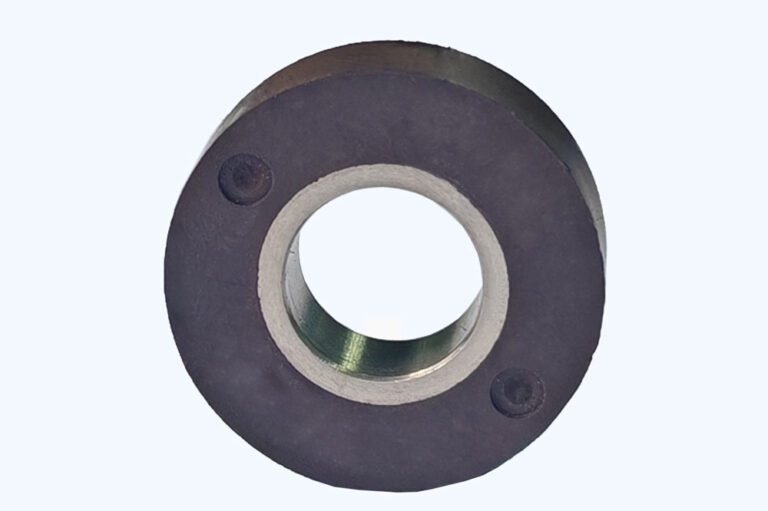
Injection molded ferrite magnetic ring revolutionizes ceiling fan technology: moving towards an efficient, silent, and intelligent future.

The innovation of injection molded ferrite magnetic rings in the field of ceiling fans is mainly reflected in the improvement of motor efficiency, energy saving and noise reduction, and the enhancement of system reliability. The following are the key innovation points it brings:   1. Efficient and energy-saving motor system -Injection molded ferrite magnetic rings are widely used in brushless DC motors (BLDC), which replace traditional AC induction motors in ceiling fans and significantly improve energy efficiency. For example, Midea Industrial Technology’s “Ultra Efficient Ferrite Fan Motor System” achieves efficient operation across the entire area and significantly reduces energy consumption through the optimization of ferrite materials. -The “Innovative Low Carbon Ceiling Fan” from the Industrial Technology Research Institute uses a permanent magnet brushless motor combined with ferrite technology, which consumes less than half of the power of traditional ceiling fans while maintaining high energy efficiency at low speeds, Assist in achieving global energy conservation and carbon reduction goals.   2. Noise reduction and stability improvement -The high-frequency impedance characteristics of ferrite magnetic rings can effectively suppress electromagnetic interference (EMI), reduce electromagnetic noise during motor operation, and make the ceiling fan run quieter. -The injection molded ferrite rotor can improve the

Scroll to Top