
Injection-molded magnets are advanced composite functional materials that integrate thermoplastic polymer moldability and stable permanent magnetic properties. They effectively break the shape limitations of traditional sintered magnets, supporting customized complex structural molding while retaining reliable magnetic stability. Thanks to their lightweight, high precision, strong corrosion resistance and low-cost mass production advantages, these magnets are widely deployed in automotive drive motors, smart home appliances, precision sensors, office automation equipment and new energy electronic devices Maglastic.
Magnetization is the core and final determining process that endows non-magnetic injection-molded magnet blanks with formal magnetic functionality. Rational selection of injection molded magnet magnetization directly affects key product indicators including magnetic energy product, pole position accuracy, magnetic field uniformity and long-term service life. In modern industrial mass production, injection molded magnet magnetization is divided into two mature technical routes: in-mold magnetization and post-molding (external) magnetization. Combined with the anisotropic and isotropic properties of magnetic raw materials, manufacturers can match targeted magnetization modes to meet diverse industrial application scenarios.
Material Adaptability for Injection Molded Magnet Magnetization
All mainstream industrial magnetization solutions for injection-molded magnets are categorized into two non-overlapping process systems, each with independent process logic, equipment configuration, precision advantages and applicable production scenarios. The following is an in-depth analysis of their working principles, pros and cons and typical application ranges.
1. In-Mold Magnetization: Integrated Molding & Magnetization Process
In-mold magnetization is a highly integrated one-stop injection molded magnet magnetization process optimized for high-precision magnet components. The core working principle is to embed customized high-precision permanent magnet assemblies inside professional injection molds in advance. During production, after magnetic composite molten materials are injected, shaped and cooled in the mold cavity, the built-in magnetic assembly outputs a stable directional magnetic field to complete one-step injection molded magnet magnetization. Demolded parts are fully magnetized finished products with no secondary processing required, making this process ideal for high-end precision magnet production.
This integrated process realizes synchronous completion of molding and magnetization, eliminating intermediate transfer and positioning links. Its prominent advantages are reflected in two core dimensions: production efficiency and machining accuracy. On the one hand, it simplifies the production flow thoroughly, cancels the independent secondary magnetization procedure, saves manual handling and equipment debugging time, and significantly improves the overall production cycle efficiency of a single product. On the other hand, the workpiece is fixed in a closed mold cavity during magnetization, with zero displacement and positioning deviation, realizing ultra-high-precision magnetic pole alignment. It perfectly meets the strict tolerance requirements of high-end precision parts for magnetic pole angle, position and spacing accuracy, and completely avoids the positioning errors and magnetic field offset problems that easily occur in post-molding magnetization.
However, the technical limitations of in-mold magnetization are also obvious. The embedded magnetization structure increases the difficulty of mold design, processing and debugging, resulting in extremely high mold manufacturing costs and early-stage equipment investment. In addition, the mold and magnetization assembly are highly customized for specific products, with poor versatility, so this process is only suitable for long-term, stable and large-scale mass production of single-variant products, and is not friendly to small-batch and customized flexible production.
At present, in-mold magnetization is mainly applied to high-precision core components in high-end fields, including automotive high-precision sensor rotors, stepping motor rotors, micro precision magnetic induction parts and other complex functional components with strict magnetic performance and dimensional accuracy requirements.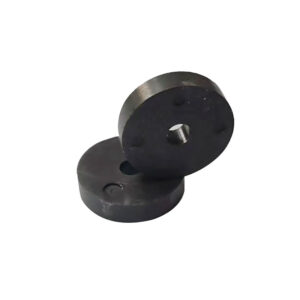
2. Post-Molding (External) Magnetization: Separated Flexible Production Process
Post-molding magnetization, also known as external magnetization, is the most popular and cost-effective injection molded magnet magnetization technology in the current industry, covering over 80% of commercial magnet production. This flexible injection molded magnet magnetization method completely separates injection molding and magnetization into two independent procedures. Manufacturers first produce non-magnetized magnet blanks via standard injection molding, conduct dimensional and appearance inspection, then place qualified blanks into professional pulse magnetization equipment. Intense instantaneous pulsed magnetic fields rearrange internal magnetic domains to achieve stable and standardized magnetization effects Amazing Magnets.
The biggest advantage of external magnetization lies in excellent production flexibility and cost controllability. Since molding and magnetization are two independent processes, manufacturers can adjust production schedules according to order demand, realize batch centralized magnetization and unified quality inspection, and greatly reduce the difficulty of production management and quality control. Meanwhile, this process adopts universal standard magnetization equipment and general fixtures, which does not require high-cost customized mold transformation, effectively reducing early-stage equipment investment and production threshold, and is suitable for small-batch, multi-variant and flexible customized production.
The inherent shortcomings of post-molding magnetization cannot be ignored. The additional independent magnetization process increases the overall production cycle and labor input. For multi-pole symmetrical magnetized products such as multi-pole magnetic rings and magnetic discs, the matching magnetization fixtures need to achieve micron-level precision and high dimensional consistency, otherwise it is easy to cause uneven magnetic field distribution and inconsistent pole spacing of finished products, affecting the assembly and operation stability of downstream equipment.
This process has extremely high compatibility and covers almost all standard and conventional special-shaped injection-molded magnet products, including motor magnetic rings, equipment magnetic handles, transmission magnetic rollers, sensing magnetic strips and other general industrial magnetic components.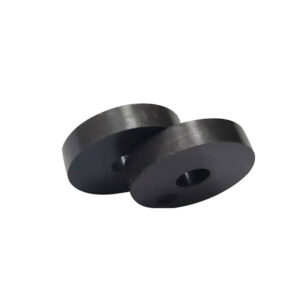
Industrial Selection Rules for Injection Molded Magnet Magnetization
The scientific selection of injection molded magnet magnetization solutions must fully consider the inherent physical and magnetic characteristics of raw materials. The anisotropy and isotropy of injection-molded magnetic materials are core factors restricting injection molded magnet magnetization effects, determining magnetization direction diversity, magnetic field stability and ultimate magnetic performance of finished industrial magnets.
Anisotropic Injection-Molded Magnets
Anisotropic magnetic materials require the application of a fixed directional orientation magnetic field during the injection molding and filling stage. Under the action of the orientation magnetic field, the internal magnetic powder particles are arranged in a single fixed direction, forming a stable magnetic orientation structure. After molding and cooling, the material has an optimal magnetization direction consistent with the particle orientation.
Only when magnetization is carried out along the preset orientation can the material exert the maximum magnetic energy product and obtain the best magnetic field strength and stability. Anisotropic injection-molded magnets have outstanding magnetic performance, high magnetic density and stable magnetic field uniformity, and are the preferred materials for high-performance motor parts and precision sensing components. However, their magnetization direction is fixed and non-adjustable, with low flexibility, and can only adopt matching directional magnetization processes.
Isotropic Injection-Molded Magnets
Different from anisotropic materials, isotropic injection-molded magnetic materials have no fixed magnetic particle orientation in the molding process, and the internal magnetic powder is randomly distributed without optimal magnetization direction. This feature enables the material to support arbitrary directional magnetization after molding, with extremely high process flexibility.
In actual industrial production, post-molding external magnetization is almost the only feasible process for isotropic injection-molded magnets. Manufacturers can freely adjust the magnetization direction, pole number and magnetic field distribution according to product design requirements to meet diversified personalized application needs. The disadvantage is that the overall magnetic energy product and magnetic field strength of isotropic materials are lower than those of anisotropic materials, so they are mostly used in general industrial scenarios with low magnetic performance requirements.
Industrial Application & Selection Guide
To sum up, in-mold injection molded magnet magnetization adapts to large-scale, single-variant, high-precision and high-performance production scenarios, perfectly matching high-end anisotropic magnetic materials. In contrast, post-mold injection molded magnet magnetization serves multi-batch, customized and cost-sensitive production demands, acting as the mainstream process for low-cost isotropic magnet products. Reasonable matching of materials and magnetization technologies effectively balances product performance, manufacturing cost and production efficiency.
Future Trends of Injection Molded Magnet Magnetization Technology
The two core injection molded magnet magnetization technologies have unique advantages and fixed applicable industrial boundaries. Driven by the rapid development of new energy vehicles, smart manufacturing and precision electronic industries, downstream markets raise higher standards for magnet precision, consistency and customization. In the future, technological iteration of injection molded magnet magnetization will focus on combining in-mold high-precision magnetization and flexible multi-pole post-mold magnetization, further expanding the application scope of high-performance injection-molded magnetic components.