
Magnetic components play an essential role in modern industrial products. From electric motors and household appliances to automotive electronics, water pumps, robotics and medical equipment, permanent magnets and magnetic assemblies help convert electrical energy into mechanical movement, detect position, transmit signals and support precise control. As equipment becomes more compact and integrated, manufacturers increasingly need magnetic parts designed around specific application requirements rather than standard off-the-shelf products.
For engineering teams and purchasing managers, sourcing Custom Magnetic Components involves more than selecting a magnet with sufficient magnetic strength. Material composition, component geometry, pole configuration, magnetization direction, dimensional tolerances and operating conditions all influence the final result. A component must also fit the customer’s assembly process and support consistent production.
High Kos Magnet focuses on magnetic materials and customized magnetic products, including injection-molded and sintered magnet solutions. Its product portfolio covers magnetic rings, motor rotors and other components for industrial applications.
This guide explores the key considerations involved in designing and sourcing customized magnetic parts, helping OEM and ODM manufacturers make informed decisions about material selection, engineering development and supplier evaluation.
1. Understanding Custom Magnetic Components in Industrial Manufacturing
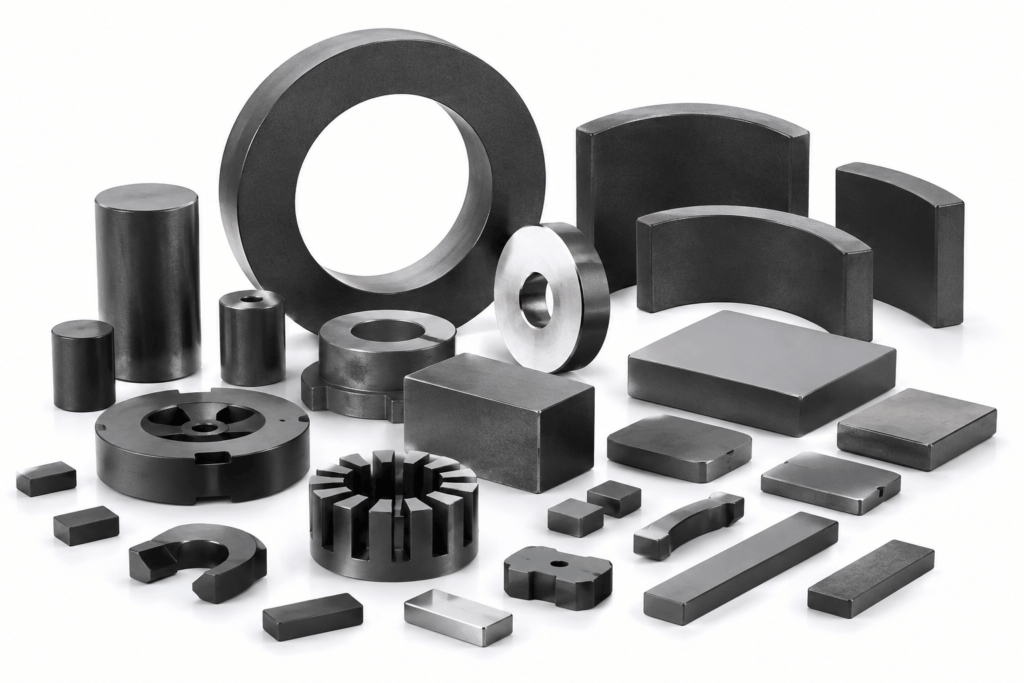
Custom Magnetic Components are magnetic parts or assemblies developed to meet the functional, dimensional and operating requirements of a particular product. Unlike standard magnets, which are generally supplied in predefined shapes and specifications, customized parts are designed around the customer’s equipment and application.
They may be used to generate magnetic fields, interact with motor windings, provide position feedback or support sensing and control functions. Depending on the design, a customized component can be a standalone permanent magnet, a magnetic ring, a rotor or an integrated molded assembly.
Common Types of Custom Magnetic Components
Different applications require different magnetic structures. Common examples include:
- Magnetic rings: Used in motors, encoders, sensors and rotational detection systems.
- Motor rotors: Integrate permanent magnets into a rotating structure to support motor operation.
- Injection-molded magnetic parts: Combine magnetic material with a binder to create application-specific shapes.
- Sintered magnets: Used where the selected magnetic material and required magnetic performance suit the application.
- Multi-pole magnetic components: Feature specific pole arrangements for motors, sensors and magnetic signal detection.
- Customized magnetic assemblies: Combine magnetic elements with supporting mechanical structures according to the equipment design.
The appropriate product depends on the working principle of the finished equipment. Buyers should define the component’s function before selecting its material or manufacturing process.
Why Standard Magnets May Not Be Enough
A standard magnet may provide the required magnetic properties but still fail to meet the mechanical or assembly requirements of a particular product. For example, a compact motor may require a specific ring diameter, pole arrangement and mounting structure. A sensor system may need a magnetic pattern that produces a defined signal as the component rotates.
Customized development allows the magnetic part to be designed around these requirements. It can also help engineering teams consider component integration, assembly efficiency and production consistency at an earlier stage.
2. Materials Used for Custom Magnetic Components
Material selection is one of the first technical decisions in a customized magnetic project. Different magnetic materials have different characteristics, manufacturing requirements and cost structures. The best option depends on the required magnetic performance, component geometry, temperature, mechanical conditions and operating environment.
Injection-Molded Ferrite
Injection-molded ferrite combines ferrite magnetic powder with a polymer binder. The mixture is processed through injection molding to create magnetic parts with application-specific shapes.
This process can be considered when a product requires complex geometry, integrated structures or customized dimensions. It is used in selected motor components, magnetic rings and other equipment applications.
High Kos offers an injection-molded ferrite product range. Buyers can evaluate this material category when developing magnetic components that require a molded structure. Actual suitability should be confirmed through technical review of the design and operating conditions.
Sintered Ferrite
Sintered ferrite is a permanent magnet material used in various motor and industrial applications. It is worth considering when the magnetic and mechanical requirements are compatible with the characteristics of the material and its manufacturing process.
For OEM projects, buyers should evaluate the required magnetic properties, component shape, dimensions and assembly method together. A material should not be selected based only on its general advantages; it must satisfy the requirements of the finished product.
Explore High Kos’s sintered ferrite products for an overview of this product category.
NdFeB and Bonded Magnetic Materials
Neodymium iron boron (NdFeB) magnets are commonly considered in applications where strong magnetic performance is required within a limited space. They are available in different manufacturing forms, including sintered and bonded types.
Bonded magnets combine magnetic powder with a binder and can be formed into customized geometries through suitable manufacturing processes. Their design flexibility makes them relevant to selected magnetic rings, rotors and precision components.
The choice between ferrite, NdFeB and bonded materials should consider the complete application, including magnetic requirements, operating temperature, corrosion protection, mechanical structure and cost targets. High Kos provides further information about its ferrite and NdFeB magnet manufacturing.
3. Design Considerations for Custom Magnetic Components
A successful customized magnetic part begins with a clear understanding of the equipment in which it will operate. Engineering teams should evaluate magnetic, mechanical and environmental requirements together instead of treating them as separate decisions.
Geometry and Dimensional Tolerances
Component dimensions influence assembly compatibility and the position of the magnetic field relative to other parts. Important dimensions may include outer diameter, inner diameter, thickness, length, mounting features and interfaces with shafts or housings.
For components used in motors or precision equipment, dimensional deviations can affect the air gap, alignment or assembly process. Customers should identify critical dimensions on their drawings and clarify which tolerances require inspection.
Magnetic Strength and Pole Configuration
Magnetic strength is only one part of a component’s magnetic specification. The number of poles, pole pitch, magnetization direction and magnetic field distribution may also be important.
For example, a magnetic ring used in a motor may require a multi-pole arrangement, while a sensing component may need a specific magnetic pattern to generate the intended signal. The magnetization method must match the design and the requirements of the equipment.
High Kos explains this process in its technical article about multi-pole magnetic ring magnetization.
Temperature and Operating Environment
Magnetic components may operate under changing temperatures, vibration, moisture, chemical exposure or mechanical loading. These conditions can influence material selection and the design of protective structures.
Automotive and industrial applications may have different operating environments from household appliances or small electronic devices. Buyers should provide realistic operating conditions and expected service requirements during the quotation and development stages.
Mechanical Integration and Assembly
The magnetic part must work with surrounding components. This may involve a rotor shaft, housing, bearing, impeller, stator or sensor.
A design that simplifies assembly may help reduce production complexity, but integration should not compromise the required magnetic or mechanical performance. Drawings and physical samples can help the supplier understand how the component fits into the complete system.
4. Industrial Applications of Custom Magnetic Components
Customized magnetic parts are used across many industries. Although the underlying magnetic principles are similar, the functional requirements vary according to the equipment and operating environment.
Household Appliances
Household appliances use magnetic components in motors, pumps, fans, sensors and other internal mechanisms. Applications may include washing machines, refrigerators, air-conditioning equipment, water dispensers and smart home devices.
In these products, compact dimensions, stable operation, assembly compatibility and production consistency can be important. Customization helps manufacturers adapt magnetic structures to different appliance platforms and motor designs.
Automotive and New Energy Vehicles
Automotive systems use magnetic components in selected motors, actuators, sensors and electronic control systems. New energy vehicles also incorporate electrically driven equipment for thermal management and other auxiliary functions.
These applications may involve vibration, temperature changes and demanding service conditions. Material selection and component design should therefore be evaluated against the requirements of the relevant vehicle system.
For further application information, see High Kos’s article on automotive ferrite magnets.
Water Pumps and Fluid Equipment
Water pumps and fluid-handling systems may use magnetic rotors to drive impellers or other rotating mechanisms. Depending on the pump structure, the magnetic component may need specific dimensions, magnetization patterns and protective arrangements.
A customized design can help the component fit the pump assembly and work with the selected motor architecture. Buyers should provide information about the fluid environment, operating temperature, speed and mechanical interfaces.
Industrial Automation and Robotics
Robots, automated production lines and motion-control equipment use motors, sensors and positioning systems. Magnetic rings, rotors and sensing components may support rotational movement, speed detection and position feedback.
In these applications, magnetic consistency and dimensional accuracy can influence the performance of the complete system. The supplier should understand the intended function of the component and the requirements of the surrounding electronics and mechanical assembly.
Medical Equipment, Drones and Power Tools
Selected medical devices use magnetic components in compact motors, pumps and sensing systems. Drones and model aircraft may require lightweight magnetic parts for small motors and related mechanisms, while power tools use magnetic components in electric drive systems.
Each application has its own technical and validation requirements. Manufacturers should confirm material suitability, mechanical reliability and any relevant industry-specific requirements before approving a design for production.
5. Manufacturing Custom Magnetic Components
The manufacturing process depends on the selected material, component geometry and production requirements. A customized project may involve several stages, from initial engineering review to tooling, forming, magnetization and final inspection.
Engineering Review and Material Selection
The supplier first reviews the customer’s drawings, samples and application information. This stage helps identify the required magnetic material, manufacturing process, component structure and critical dimensions.
If the customer has not finalized the material, the engineering team may discuss suitable options based on the intended function and operating environment. Final selection should be confirmed through technical evaluation and, where necessary, testing.
Tooling and Component Forming
Some customized components require dedicated tooling. Depending on the selected process, manufacturing may involve injection molding, sintering, machining or other suitable forming operations.
Tooling design should consider the component geometry, dimensional requirements and production process. Early communication about design limitations can help reduce unnecessary changes during development.
Magnetization and Inspection
After forming and any required finishing operations, a component may undergo magnetization according to its specified pole arrangement and direction.
Inspection requirements should be defined before production. Depending on the design, checks may include dimensional measurement, visual inspection, magnetic testing and verification of relevant assembly interfaces.
High Kos describes its injection-molded component capabilities and application examples in its article about injection-molded magnetic components.
6. How to Choose a Supplier for Custom Magnetic Components
Selecting a supplier is a technical and commercial decision. Buyers should evaluate whether the manufacturer can understand the application, support product development and maintain consistent production.
Review Material and Manufacturing Capabilities
Ask which magnetic materials and manufacturing processes the supplier can support. A supplier’s product range should be relevant to the component you intend to develop.
It is also useful to understand whether the manufacturer can coordinate tooling, forming, machining, assembly and magnetization where these processes are required.
Evaluate Engineering Communication
A capable supplier should be able to review drawings, clarify missing technical details and discuss potential manufacturing considerations. Clear communication is particularly important when the component is part of a new motor or equipment platform.
Before beginning development, confirm how design revisions, samples, technical approvals and production specifications will be managed.
Understand Quality Control
Quality requirements should be established according to the component’s function. Buyers can ask how the supplier controls material consistency, dimensional accuracy, magnetization and finished-product inspection.
For ongoing OEM production, it is also important to clarify acceptance criteria, inspection records and procedures for handling nonconforming products.
Consider Long-Term Supply Requirements
A supplier should be evaluated not only on prototype development but also on its ability to support repeat orders. Discuss estimated demand, production planning, packaging, delivery expectations and communication procedures.
For customized parts, a clear technical specification and an agreed approval process help both parties maintain consistency between samples and subsequent production batches.
7. Starting a Custom Magnetic Components Project with High Kos
High Kos Magnet focuses on magnetic materials and customized magnetic products, including injection-molded and sintered magnet solutions. Its website presents product categories such as magnetic rings, motor rotors, water pump rotors and related motor components.
For OEM and ODM projects, a useful starting point is to provide the technical information that defines the component’s function. This helps the manufacturer understand the design before discussing material options and production feasibility.
When contacting High Kos, prepare the following information where available:
- Application: Describe the finished equipment and the role of the magnetic component.
- Drawings or samples: Provide 2D drawings, 3D files or an existing physical sample.
- Material preference: Indicate whether ferrite, NdFeB or another material is being considered.
- Magnetic requirements: Include pole number, magnetization direction and relevant magnetic specifications.
- Operating conditions: Explain temperature, speed, vibration, moisture and other environmental factors.
- Order information: Share estimated quantities, prototype needs and expected production schedule.
- Quality requirements: Identify critical dimensions, inspection criteria and required documentation.
The more complete the project information, the easier it is to evaluate whether a proposed design and manufacturing process are appropriate.
Conclusion: Develop the Right Custom Magnetic Components
Customized magnetic parts are important to the performance and integration of modern motors, sensors, pumps and precision equipment. Choosing the right solution requires a balanced evaluation of magnetic material, geometry, magnetization, mechanical structure, operating environment and production requirements.
For appliance manufacturers, automotive suppliers, pump producers, automation companies, medical equipment developers and overseas OEM/ODM brands, a reliable manufacturing partner can help turn application requirements into practical magnetic component designs.
High Kos Magnet provides magnetic product solutions covering injection-molded and sintered magnets, magnetic rings and motor-related components. If you are developing a new product or looking for a supplier for a customized magnetic project, share your drawings, samples and technical requirements with the High Kos team.
Contact High Kos Magnet today to discuss your custom magnetic component requirements and explore a solution designed around your product, application and production goals.
FAQ About Custom Magnetic Components
1. What are Custom Magnetic Components?
They are magnetic parts or assemblies designed to meet specific application requirements. Examples include magnetic rings, motor rotors, injection-molded magnets and customized magnetic assemblies.
2. Which materials are used in customized magnetic products?
Common options include ferrite, NdFeB and bonded magnetic materials. The appropriate material depends on magnetic performance, geometry, temperature, operating environment and cost considerations.
3. Can magnetic components be manufactured according to customer drawings?
Many customized components can be developed from engineering drawings, 3D models or physical samples, subject to manufacturing feasibility. Customers should provide critical dimensions and magnetic requirements for review.
4. What information is needed to request a quotation?
Provide the application, drawings or samples, material preference, dimensions, pole configuration, operating conditions, estimated quantity and inspection requirements.
5. Why is magnetization important?
Magnetization establishes the magnetic pole arrangement and direction of a component. It must match the intended motor, sensor or equipment design to achieve the required magnetic interaction.
6. How do I choose a reliable magnetic component supplier?
Evaluate the supplier’s material knowledge, manufacturing processes, engineering communication, inspection methods, customization experience and ability to support repeat production. Confirm project-specific requirements before approving mass production.