
As modern motors, automotive electronics, sensors and industrial equipment become smaller and more sophisticated, magnetic components must deliver reliable performance while meeting increasingly demanding design requirements. Bonded NdFeB magnets are an important option for applications that require a combination of strong magnetic properties, flexible component geometry and manufacturing versatility.
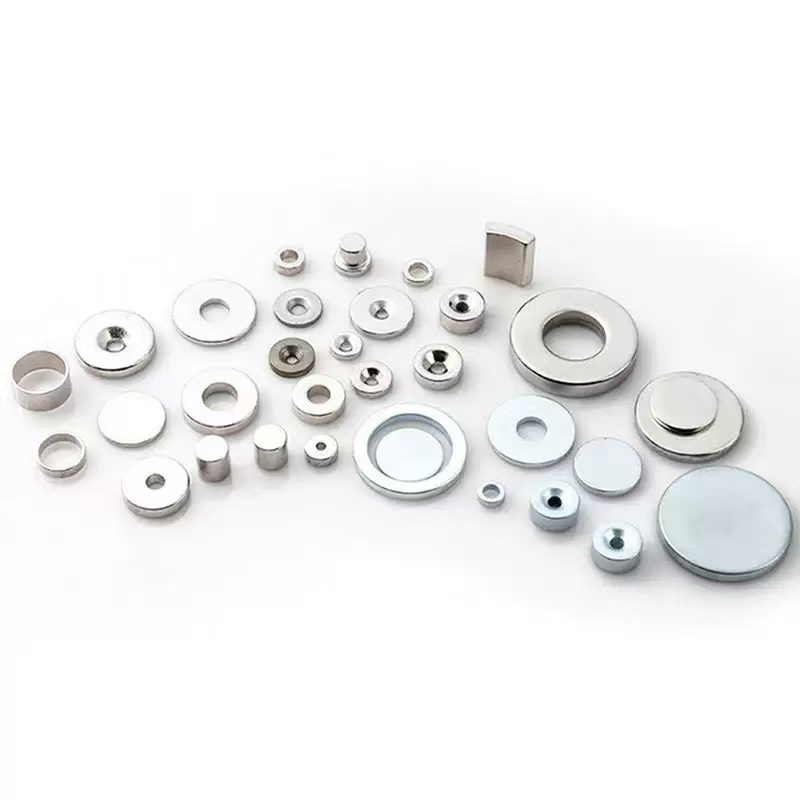
Unlike conventional sintered neodymium magnets, bonded NdFeB magnets combine neodymium-iron-boron magnetic powder with a polymer binder. This manufacturing approach allows magnetic materials to be formed into different shapes through processes such as compression molding or injection molding. Depending on the selected material formulation and production method, bonded magnets can support complex geometries, multipole magnetization and integrated magnetic components.
For motor manufacturers, automotive component suppliers, electronics companies and industrial equipment producers, selecting the right bonded NdFeB magnets requires consideration of magnetic performance, temperature conditions, mechanical properties, corrosion protection and production cost.
High Kos Magnet provides magnetic material and component solutions, including ferrite magnets, injection-molded NdFeB, sintered NdFeB and bonded NdFeB product categories. This article explains the characteristics, manufacturing methods, advantages, applications and selection considerations of bonded NdFeB magnets.
1. What Are Bonded NdFeB Magnets?
Bonded NdFeB magnets are permanent magnetic materials made by combining NdFeB powder with a polymer binder. NdFeB stands for neodymium, iron and boron, the principal elements in this high-performance rare-earth magnetic material.
The magnetic powder provides the magnetic properties, while the binder holds the particles together and gives the finished component its mechanical form.
This structure distinguishes bonded NdFeB magnets from sintered NdFeB magnets. Sintered magnets are manufactured by compacting and sintering magnetic powder, while bonded magnets use a binder-based forming process.
The binder content and manufacturing method influence the final magnetic energy, density, mechanical strength and dimensional characteristics.
Main Characteristics of Bonded NdFeB Magnets
Bonded NdFeB magnets offer several characteristics that make them useful in specialized magnetic applications:
- High magnetic potential: NdFeB powder provides stronger magnetic performance than many conventional ferrite formulations.
- Flexible component geometry: Bonding processes can produce rings, arcs, segments and other application-specific shapes.
- Multipole magnetization: Suitable bonded magnet designs can be magnetized with multiple alternating poles.
- Manufacturing versatility: Compression molding and injection molding support different component structures and production requirements.
- Potential for integrated components: Injection-molded designs can incorporate selected inserts or structural features.
- Electrical resistivity: The binder and particle structure can provide higher electrical resistivity than many solid sintered magnet components, which may help reduce certain eddy-current losses.
The actual performance of bonded NdFeB magnets depends on the magnetic powder, binder, forming process, magnetization method and component design. Buyers should evaluate technical data for the specific material rather than assume all bonded magnets have identical properties.
2. How Are Bonded NdFeB Magnets Manufactured?
The manufacturing process has a direct influence on the quality and performance of bonded NdFeB magnets. Two common production approaches are compression bonding and injection molding.
Compression Bonding
In compression bonding, NdFeB magnetic powder is mixed with a suitable binder and placed into a mold. Pressure is applied to form the material into the required shape, followed by curing or other necessary processing steps.
Compression bonding can be considered for components such as rings, discs, blocks and customized magnetic shapes.
The process is useful when the product geometry and production requirements are compatible with compression molding. Material formulation, powder distribution, molding pressure and curing conditions all influence the finished component.
Injection Molding
Injection molding combines magnetic powder with a thermoplastic binder to create a compound that can flow into a mold cavity under controlled processing conditions.
This process is particularly useful when the design requires complex geometry, integrated structural features or a large number of repeatable components.
Injection molded NdFeB magnets are one category of bonded magnetic products. However, not all bonded NdFeB magnets are injection molded. Compression-bonded and injection-molded products have different process characteristics and should be selected according to the application.
Learn more about High Kos’s Injection Molded NdFeB product category.
Magnetization and Final Inspection
After forming, the magnet may undergo magnetization to establish the required magnetic direction or pole arrangement.
Depending on the application, magnetization can include axial, radial or multipole configurations. The required magnetic pattern should be defined before production because it influences the magnetizing fixture and inspection method.
Typical inspection considerations include:
- Component dimensions and tolerances
- Surface appearance and molding quality
- Magnetic flux or field strength
- Magnetization direction
- Pole count and pole-position consistency
- Mechanical integrity
- Batch-to-batch performance consistency
For motor and sensor applications, magnetic testing should reflect the actual working conditions, including the intended air gap and sensor position.
3. Key Advantages of Bonded NdFeB Magnets
The main reason manufacturers consider bonded NdFeB magnets is their ability to combine useful magnetic performance with flexible manufacturing options.
Flexible Shape and Design Freedom
Traditional sintered magnets can be manufactured in many shapes, but their hardness and brittleness may create additional machining and assembly considerations.
Bonded NdFeB magnets can support a broader range of molded geometries, depending on the process and material formulation. Rings, arcs, curved components and other customized shapes can be considered during product development.
This flexibility is valuable for compact motors, magnetic encoders and assemblies with limited installation space.
Suitable for Multipole Magnetization
Many motors and sensing systems require magnets with multiple alternating north and south poles.
Bonded NdFeB magnets can be designed for specific pole arrangements, making them useful in magnetic rings, position sensors and encoder systems.
Accurate magnetization is essential. Pole count, pole spacing, magnetic field strength and waveform consistency should all be matched to the customer’s motor or sensing system.
Potential for Lower Eddy-Current Losses
The electrical resistivity of bonded magnetic materials is generally higher than that of many solid sintered magnet components because of the binder and particle structure.
In certain motor designs, this can help reduce eddy-current losses associated with changing magnetic fields.
However, the actual benefit depends on frequency, geometry, material formulation and motor architecture. It should be confirmed through electromagnetic analysis or application testing rather than treated as a guaranteed efficiency improvement.
Integration with Other Components
Injection-molded bonded NdFeB materials can be used in selected designs where magnetic material is molded around inserts or combined with structural features.
This can simplify some assembly processes and help manufacturers develop compact magnetic components.
The feasibility of insert molding depends on the material, insert design, mold structure and operating conditions.
Design Flexibility for Customized Production
Bonded NdFeB magnets are available in different material formulations and can be developed for application-specific requirements.
For OEM projects, this means engineers can evaluate geometry, magnetization, magnetic output and assembly requirements together instead of selecting a magnet based only on a standard catalog shape.
4. Bonded NdFeB Magnets vs. Sintered NdFeB Magnets
Bonded and sintered NdFeB magnets use the same general magnetic material family, but their manufacturing methods create different performance and design characteristics.
| Comparison | Bonded NdFeB Magnets | Sintered NdFeB Magnets |
|---|---|---|
| Main composition | NdFeB powder and polymer binder | Sintered NdFeB magnetic material |
| Manufacturing | Compression bonding or injection molding | Powder compaction and sintering |
| Magnetic performance | Generally lower for comparable material systems | Generally higher |
| Shape flexibility | Strong potential for molded complex shapes | Shape depends on forming and machining limitations |
| Mechanical characteristics | Depends on binder and formulation | Hard and relatively brittle |
| Multipole design | Suitable for selected multipole configurations | Also supports multipole magnetization |
| Typical considerations | Geometry, binder, process and magnetic output | Magnetic grade, machining, coating and assembly |
When Should You Choose Bonded NdFeB Magnets?
Bonded NdFeB magnets are worth evaluating when a project requires:
- Complex or customized magnetic geometry
- Multipole magnetic rings
- Compact magnetic components
- Integration with selected plastic structures
- Repeatable production of molded shapes
- A balance between magnetic output and manufacturing flexibility
When Are Sintered NdFeB Magnets More Suitable?
Sintered NdFeB magnets are often preferred when the design requires high magnetic energy density and maximum magnetic output within a limited space.
They are commonly evaluated for high-performance motors and other applications where magnetic strength is a primary requirement.
Explore High Kos’s Sintered NdFeB product category to compare the available manufacturing options.
The best choice depends on the complete application. A bonded magnet may provide better design flexibility, while a sintered magnet may offer stronger magnetic performance. Neither process is universally better.
5. Applications of Bonded NdFeB Magnets
Bonded NdFeB magnets are used in applications where magnetic performance, compact dimensions and component geometry must be considered together.
Compact Motors and BLDC Motors
Brushless DC motors are widely used in household appliances, automotive auxiliary systems, industrial equipment and compact electronic devices.
Bonded NdFeB magnets may be used in selected rotor structures and magnetic rings where the design benefits from molded geometry and customized pole arrangements.
For these applications, engineers should evaluate rotor dimensions, magnetic field distribution, rotational speed, operating temperature and mechanical stability.
Magnetic Encoders and Position Sensors
Magnetic encoders use magnetic field changes to detect rotational position, speed or movement.
Bonded NdFeB magnetic rings can be developed with multiple alternating poles to generate signals detected by Hall-effect sensors or other magnetic sensing technologies.
Important design considerations include:
- Pole count and pole spacing
- Magnetic field strength at the sensor
- Ring concentricity
- Air-gap distance
- Pole-to-pole consistency
- Operating temperature
High Kos explains these requirements in its article about Induction Magnetic Rings.
Automotive Electronics and Actuators
Automotive systems use compact motors and magnetic sensing components in various auxiliary functions.
Potential applications include selected actuator systems, electric water pumps, cooling equipment and position-sensing assemblies.
Automotive projects require careful evaluation of temperature exposure, vibration, corrosion protection, mechanical durability and production consistency.
The selected bonded NdFeB magnets must meet the specific validation requirements of the final automotive component.
Industrial Automation and Robotics
Industrial automation systems use motors, encoders and motion-control equipment to manage precise movement.
Bonded NdFeB magnets may be considered for compact magnetic sensing components and selected motor applications where multipole patterns or customized geometries are required.
For these applications, magnetic waveform consistency and dimensional stability can be as important as peak magnetic strength.
Medical and Precision Electronic Equipment
Some medical instruments and precision electronic devices use compact motors, sensors and magnetic assemblies.
Bonded NdFeB magnets may be evaluated where a small component needs a customized magnetic shape or controlled pole arrangement.
The final material must be selected according to the equipment’s operating environment, reliability requirements and any applicable regulatory or customer specifications.
6. Important Factors When Selecting Bonded NdFeB Magnets
Choosing bonded NdFeB magnets should begin with the application requirements. A magnet with strong magnetic output may still be unsuitable if its temperature capability, geometry or mechanical properties do not match the system.
Define the Required Magnetic Performance
The required magnetic properties should be based on the working magnetic circuit rather than a general preference for stronger magnets.
Engineers should define the required flux, magnetic field strength, air gap and magnetization direction.
Where possible, provide the motor or sensor design information so the supplier can evaluate whether the proposed material is suitable.
Consider Operating Temperature
Temperature affects permanent magnet performance. Bonded NdFeB magnets must be selected according to the expected operating and storage conditions.
The polymer binder also has its own temperature limitations. Therefore, buyers should request the relevant material data and confirm the allowable temperature range for the finished component.
Evaluate Corrosion Protection
NdFeB magnetic powder is sensitive to corrosion. The binder may provide some degree of separation between magnetic particles, but it should not be assumed to provide complete protection in every environment.
Moisture, chemicals, temperature cycling and other environmental conditions can influence long-term performance.
For demanding applications, discuss suitable coatings, encapsulation, sealing or other protective measures with the manufacturer.
Confirm Mechanical Requirements
Mechanical strength and dimensional stability depend on the magnetic powder, binder, forming method and component design.
Buyers should provide information about assembly pressure, vibration, rotational speed, impact exposure and other mechanical loads.
For rotating components, concentricity, retention and balance requirements should be clearly defined.
Review Production Volume and Total Cost
Tooling, material consumption, manufacturing cycle, inspection requirements and annual demand all influence the total cost of bonded NdFeB magnets.
For high-volume production, a suitable molded design may offer manufacturing benefits. For smaller production quantities or simpler geometries, another process may be more economical.
A complete cost evaluation should consider tooling investment, unit price, assembly requirements and expected product life.
7. Custom Bonded NdFeB Magnets from High Kos
High Kos Magnet focuses on magnetic material research, development and manufacturing, with product categories covering injection-molded ferrite, injection-molded NdFeB, sintered NdFeB and bonded NdFeB.
The company’s website provides a dedicated Bonded NdFeB product category, alongside other neodymium magnet options.
For a customized bonded NdFeB magnet project, the most useful starting point is a clear technical specification.
Customers can prepare the following information:
- Product drawing or physical sample.
- Required magnet dimensions and tolerances.
- Intended application and assembly structure.
- Required magnetic performance.
- Magnetization direction and pole configuration.
- Operating temperature and environmental conditions.
- Estimated order quantity and production requirements.
If the project involves a magnetic ring, motor component or sensor assembly, additional information about the air gap, sensor position and working speed can help clarify the technical requirements.
High Kos also provides information about its broader NdFeB and ferrite magnet manufacturing capabilities.
Contact the High Kos team through the official website to discuss material selection, customized magnetic geometry and project requirements.
Conclusion: Choosing the Right Bonded NdFeB Magnets
Bonded NdFeB magnets provide a useful combination of neodymium-based magnetic performance and flexible manufacturing options. By combining magnetic powder with a polymer binder, manufacturers can develop components with customized geometries, multipole magnetization and potential integration with other structures.
Compared with sintered NdFeB magnets, bonded NdFeB magnets generally offer lower magnetic performance but greater flexibility for selected molded designs. Their suitability depends on the required magnetic output, operating temperature, corrosion protection, mechanical conditions and production volume.
For motor manufacturers, automotive suppliers, sensor developers and industrial equipment companies, successful magnet selection requires evaluating the complete application rather than comparing magnetic strength alone.
If you are looking for customized bonded NdFeB magnets for motors, magnetic rings, encoders or precision equipment, contact High Kos Magnet. Share your drawings, samples and technical requirements to discuss a suitable magnetic component solution.
Frequently Asked Questions About Bonded NdFeB Magnets
1. What are bonded NdFeB magnets made of?
Bonded NdFeB magnets are made from neodymium-iron-boron magnetic powder combined with a polymer binder. The powder provides magnetic properties, while the binder holds the material together and supports the required component shape.
2. Are bonded NdFeB magnets stronger than sintered NdFeB magnets?
Generally, no. Sintered NdFeB magnets usually provide higher magnetic performance because they contain a greater proportion of magnetic material. Bonded NdFeB magnets offer other advantages, including manufacturing flexibility and the ability to produce selected complex geometries.
3. What is the difference between compression-bonded and injection-molded NdFeB magnets?
Compression-bonded NdFeB magnets are formed by pressing a powder-binder mixture in a mold. Injection-molded NdFeB magnets use a thermoplastic binder and an injection process to fill a mold cavity. The two processes have different design, material and production characteristics.
4. Can bonded NdFeB magnets be made into magnetic rings?
Yes. Bonded NdFeB materials can be used to manufacture magnetic rings for selected motor and sensing applications. The design should define the ring dimensions, magnetic output, pole count and magnetization pattern.
5. Are bonded NdFeB magnets suitable for motors?
They can be suitable for selected compact motors, BLDC motors and other permanent-magnet systems. Engineers should evaluate the motor’s torque requirements, temperature, rotational speed, magnetic circuit and available installation space.
6. Do bonded NdFeB magnets need corrosion protection?
Protection requirements depend on the material formulation and operating environment. NdFeB is susceptible to corrosion, so moisture exposure, chemicals and other environmental factors should be considered. Suitable coating or encapsulation may be necessary for demanding applications.
7. Can High Kos provide customized bonded NdFeB magnets?
High Kos lists Bonded NdFeB as one of its neodymium magnet product categories. For a specific project, customers should provide drawings, samples, dimensions, magnetic requirements and application information so the available solution and technical specifications can be confirmed.