
Introduction
As motor control systems move toward higher precision and smarter position feedback, absolute magnetic encoders are becoming increasingly important in servo motors, robotics, industrial automation and other precision applications.
Among these technologies, Multi-Track Magnetic Encoder Rings use two or more concentric magnetic tracks to determine the absolute angular position of a rotating shaft. A typical vernier-type dual-track design combines a coarse track with a fine track. The coarse track provides unique absolute position information, while the fine track improves angular subdivision and position accuracy.
However, achieving high absolute accuracy is not determined by the magnetic ring alone. Magnetizing quality, track concentricity, assembly eccentricity, air-gap stability, Hall sensor performance and decoding algorithms all influence the final encoder performance.
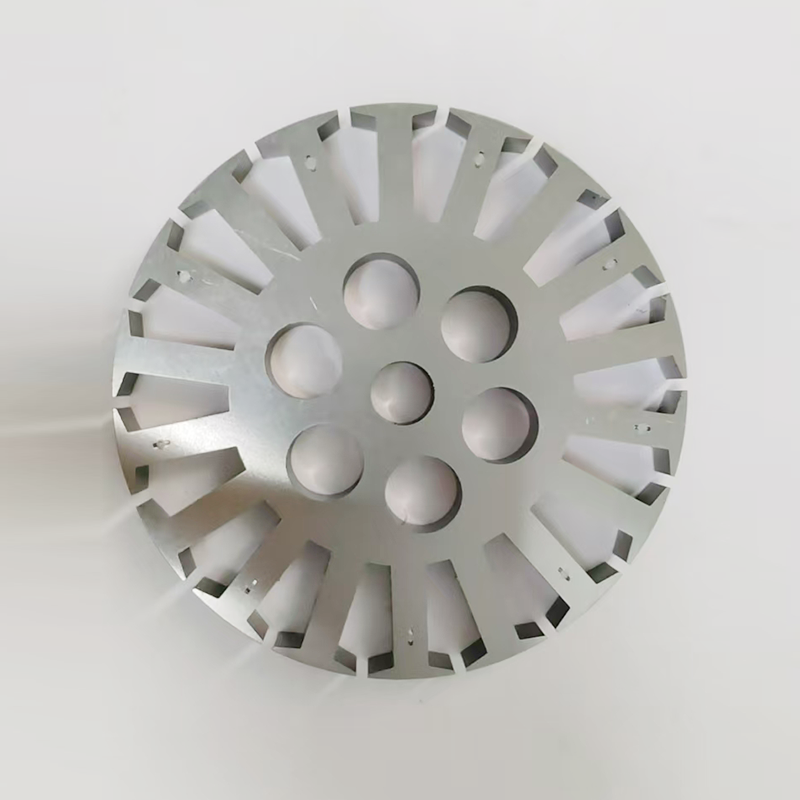
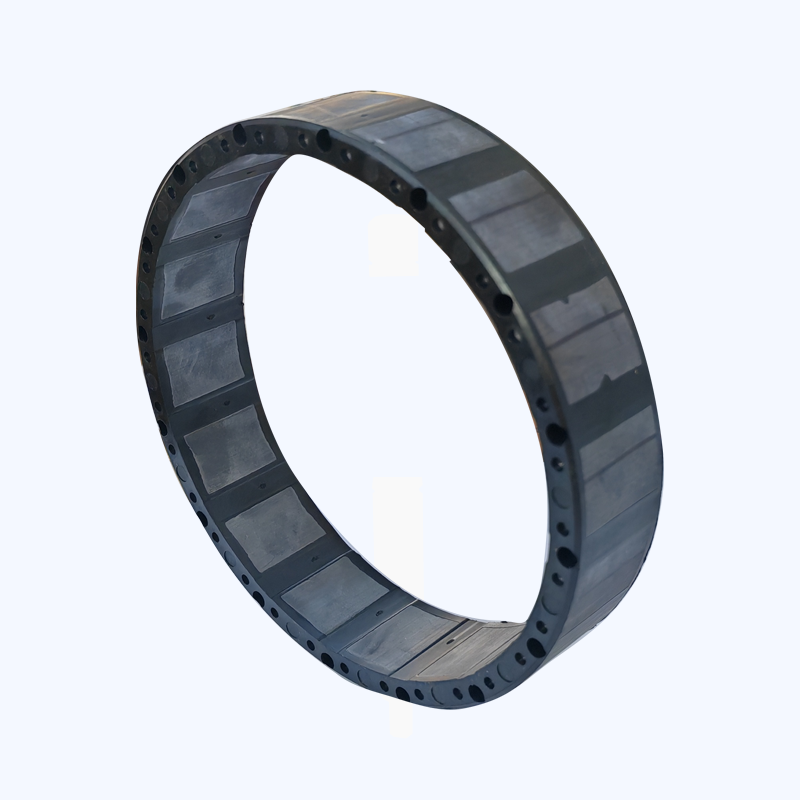
What Is a Multi-Track Magnetic Encoder Ring?
A multi-track magnetic encoder ring is a permanent magnetic component designed for absolute angular position sensing.
In a typical dual-track vernier structure, two concentric magnetic tracks are magnetized with different pole arrangements. The two tracks generate separate magnetic signals that are detected by Hall sensors.
The encoder controller compares the signals from the two tracks and uses their phase relationship to calculate the unique angular position of the rotor.
This approach provides an important advantage over a conventional single-track encoder: the system can determine the absolute position of the shaft immediately after power-on without requiring a reference movement.
Coarse Track and Fine Track
The two tracks perform different functions.
The coarse track provides position uniqueness. It allows the encoder to identify where the rotor is located within one complete mechanical revolution.
The fine track provides additional angular subdivision. It improves the precision of the calculated position and helps the system determine smaller changes in shaft angle.
This division of functions is the foundation of vernier-type absolute position sensing.
How Does a Vernier-Type Dual-Track Encoder Work?
The operating principle is based on comparing the magnetic signals generated by two tracks with different periodic characteristics.
As the magnetic ring rotates, each track produces a periodic magnetic signal. Because the pole arrangements of the two tracks differ slightly, their relative phase changes according to the rotor position.
The encoder electronics analyze this phase relationship to determine the absolute mechanical angle.
Absolute Position at Power-On
One of the main benefits of the coarse track is its ability to provide a unique position code immediately after power-on.
The controller does not need to rotate the motor to find a mechanical reference point.
This makes multi-track magnetic encoders suitable for applications where immediate position information is important, including:
- Servo motors
- Robotic joints
- CNC equipment
- Industrial automation
- Precision positioning systems
Fine Position Subdivision
While the coarse track identifies the general position, the fine track contributes to angular subdivision.
The quality of the fine-track magnetic waveform therefore has a direct influence on the final angular error.
A distorted sine-cosine signal, for example, can introduce periodic errors into the calculated position.
What Determines Multi-Track Encoder Accuracy?
The overall accuracy of a multi-track magnetic encoder is determined by the complete sensing system rather than the magnetic ring alone.
Important factors include:
- Magnetic ring magnetizing accuracy
- Track-to-track concentricity
- Assembly eccentricity
- Radial runout
- Air-gap variation
- Axial tilt
- Hall sensor performance
- Signal processing
- Position calculation algorithms
- System-level calibration
This means that a highly accurate magnetic ring cannot automatically guarantee the same accuracy at the complete encoder level.
Key Error Sources in Multi-Track Magnetic Encoder Rings
Compared with single-track magnetic encoders, dual-track systems introduce several additional sources of error.
Inter-Track Magnetizing Error
Inter-track magnetizing error is one of the most important process factors in a vernier-type dual-track magnetic ring.
The inner and outer magnetic tracks must maintain accurate concentricity and consistent pole pitch.
Errors in pole pitch, track concentricity or magnetic-field isolation can cause problems during vernier decoding.
Typical consequences include:
- Periodic angular offsets
- Position fluctuations
- Absolute-position code jumps
- Increased decoding error
For this reason, precise magnetizing equipment and strict process control are essential for high-accuracy multi-track rings.
Radial Eccentricity and Runout
Eccentricity occurs when the magnetic ring is not perfectly aligned with the motor shaft.
During rotation, the radial displacement produces a periodic change in the magnetic field detected by the sensor.
For example, a Φ60 mm magnetic ring with approximately 0.05 mm radial runout can introduce an angular error on the order of ±0.1°, depending on the magnetic structure and sensing geometry.
This demonstrates why mechanical assembly accuracy is just as important as magnetic manufacturing accuracy.
Sub-Division Error
Sub-Division Error, commonly referred to as SDE, is another important accuracy factor.
SDE is associated with imperfections in the magnetic waveform, particularly on the fine track.
Possible causes include:
- Uneven pole-pair distribution
- Magnetizing non-uniformity
- Magnetic field distortion
- Air-gap variation
- Sensor positioning errors
These factors can generate high-frequency periodic errors in the calculated angular position.
Air-Gap Deviation and Axial Tilt
The distance between the magnetic ring and Hall sensor has a direct influence on signal amplitude.
In a multi-track system, both tracks must maintain stable air-gap conditions.
If the ring tilts axially, one track may produce a stronger signal than the other. This amplitude imbalance can affect the vernier calculation and reduce absolute position accuracy.
Maintaining consistent air-gap geometry is therefore essential for precision applications.
Thermal Demagnetization
Temperature is another factor that must be considered when designing magnetic encoder rings.
Ferrite materials have a temperature-dependent remanence. A typical remanence temperature coefficient can be approximately −0.19%/°C, meaning that magnetic flux density changes as temperature varies.
In a dual-track system, temperature-related changes can alter the amplitude relationship between the two magnetic tracks.
An encoder ASIC may use automatic gain control to compensate for part of this variation, but electronic compensation cannot completely eliminate magnetic-field changes originating from the magnetizing process.
Magnetic Ring Accuracy vs Complete Encoder Accuracy
One of the most important concepts in magnetic encoder design is that magnetic ring accuracy is not the same as complete-unit accuracy.
A precisely manufactured magnetic ring may achieve excellent standalone performance, but the final encoder accuracy also depends on the sensor and mechanical assembly.
Standalone Magnetic Ring Accuracy
Precisely magnetized NdFeB multi-track rings can achieve approximately ±0.05° to ±0.1° under suitable conditions.
Common bonded or injection-molded magnetic rings may typically achieve approximately ±0.2° to ±0.4°, depending on material, structure, magnetizing process and inspection method.
These values should be regarded as engineering reference ranges rather than universal specifications.
Complete Encoder Accuracy
After the magnetic ring is assembled with the sensor, additional error sources can appear.
These include:
- Sensor mounting deviation
- Shaft eccentricity
- Air-gap variation
- Axial tilt
- Signal distortion
- Algorithmic error
- Temperature effects
System-level calibration and compensation can reduce some of these errors.
Therefore, the accuracy specification of the complete encoder should always be evaluated separately from the standalone magnetic ring.
Why Increasing Pole-Pair Count Does Not Guarantee Higher Accuracy
It may seem logical that increasing the number of magnetic pole pairs should automatically improve encoder resolution and accuracy.
In practice, this is not always the case.
As pole-pair count increases, the requirements for magnetizing precision become significantly stricter.
The manufacturing process must maintain:
- Accurate pole pitch
- High track concentricity
- Stable magnetic amplitude
- Low inter-track interference
- Consistent air-gap conditions
Small manufacturing deviations become more significant as magnetic periods become shorter.
Therefore, simply increasing pole-pair count cannot provide unlimited improvements in absolute accuracy.
Multi-Track Magnetic Encoder Rings for High-Precision Applications
High-precision multi-track magnetic encoder rings are particularly suitable for applications requiring immediate absolute position information and reliable operation.
Servo Motors
Servo motors require accurate rotor feedback for closed-loop control.
A dual-track magnetic encoder can provide both absolute position identification and fine angular subdivision.
Industrial Robotics
Robotic joints need accurate position feedback while operating under vibration and repeated acceleration.
Magnetic encoder systems provide a compact and robust sensing solution.
CNC Machines
CNC equipment requires accurate angular feedback to maintain machining precision.
Multi-track magnetic encoders can provide absolute position information without relying on optical components.
Industrial Automation
Automated production equipment often requires fast position feedback after system startup.
The absolute sensing capability of multi-track encoders helps reduce initialization time and improves control reliability.
What Is Required to Achieve ±0.05° Accuracy?
Achieving approximately ±0.05° absolute accuracy requires optimization of the entire encoder system.
A high-quality magnetic ring alone is not sufficient.
Precision Magnetizing
The magnetic tracks must be magnetized with highly accurate pole pitch, concentricity and magnetic amplitude.
Accurate Mechanical Assembly
The magnetic ring must be mounted concentrically with the rotating shaft.
Radial runout and axial tilt should be strictly controlled.
Stable Air Gap
The sensor-to-ring air gap must remain within the specified range throughout rotation.
System-Level Calibration
Factory or system-level calibration can compensate for amplitude mismatch, offset, phase deviation and other predictable errors.
Only by combining these factors can the complete encoder approach the accuracy requirements of high-end motion-control applications.
Resolution Does Not Equal Accuracy
Another important distinction is the difference between encoder resolution and absolute accuracy.
For example, a magnetic encoder may use a 17-bit hardware resolution, which theoretically divides one revolution into approximately 131,072 digital positions.
However, this does not mean that the encoder can achieve 17-bit absolute accuracy.
In practical systems, mechanical tolerances, magnetic errors, sensor noise and signal-processing limitations reduce the usable accuracy.
As a general engineering example, a 17-bit resolution system may provide practical absolute accuracy closer to approximately 13–14 effective bits, depending on the complete system design.
Therefore, encoder specifications should always distinguish between:
- Resolution
- Repeatability
- Absolute accuracy
- SDE
- Hysteresis
These parameters describe different aspects of encoder performance.
How Highkos Supports Multi-Track Magnetic Encoder Applications
Highkos specializes in customized magnetic components for motor position sensing, magnetic encoders and precision motion-control systems.
Our magnetic component capabilities include:
- Multi-track magnetic encoder rings
- Vernier-type dual-track rings
- Hall sensing magnetic rings
- Multi-pole magnetic rings
- Injection molded magnetic components
- Permanent ferrite magnetic rings
- Customized magnetization solutions
- OEM and ODM manufacturing
For high-precision applications, Highkos can work with customers on magnetic material selection, ring dimensions, pole configuration and magnetization requirements to develop magnetic components suited to the complete encoder design.
Frequently Asked Questions
What is a multi-track magnetic encoder ring?
A multi-track magnetic encoder ring is a permanent magnetic component containing two or more concentric magnetic tracks. In a vernier-type design, the tracks work together to provide absolute rotor position and fine angular subdivision.
What is the difference between the coarse track and fine track?
The coarse track provides position uniqueness and allows the system to identify the absolute rotor position after power-on. The fine track provides additional angular subdivision and contributes to position accuracy.
Does a 17-bit encoder provide 17-bit accuracy?
No. Resolution and accuracy are different specifications. A 17-bit encoder can theoretically provide 17-bit resolution, but the actual absolute accuracy is affected by the magnetic ring, sensor, mechanical assembly, air gap and calibration.
Can a magnetic ring alone achieve ±0.05° accuracy?
Not necessarily. Achieving approximately ±0.05° complete-system accuracy requires a precisely magnetized ring, controlled assembly coaxiality, stable air-gap conditions, accurate sensing and system-level calibration.
Why is concentricity important in dual-track magnetic rings?
Poor concentricity between the two magnetic tracks can introduce periodic errors and position-code jumps during vernier decoding. High track-to-track concentricity is therefore critical for accurate absolute position sensing.
Does increasing pole-pair count always improve encoder accuracy?
No. A higher pole-pair count can increase sensing resolution, but it also creates stricter requirements for pole-pitch accuracy, magnetizing concentricity, track isolation and air-gap control.
Conclusion
Multi-track magnetic encoder rings provide an effective solution for absolute angular position sensing in modern motor systems. By combining a coarse magnetic track with a fine track, vernier-type dual-track encoders can determine absolute position immediately after power-on while providing fine angular subdivision.
However, high encoder accuracy depends on the complete system. Magnetic ring magnetization, track concentricity, shaft runout, air-gap stability, sensor performance and digital compensation all contribute to the final result.
For applications targeting high absolute accuracy, the most effective approach is not simply to increase pole-pair count or magnetic resolution. Instead, manufacturers need to optimize the magnetic ring, mechanical assembly, sensing electronics and calibration process as one complete system.