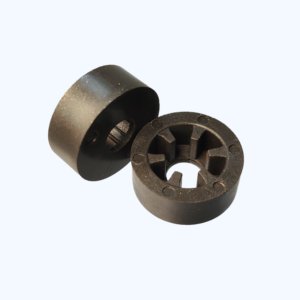
Permanent magnet demagnetization is one of the most critical challenges in modern electromagnetic design. Permanent magnets are widely used in electric motors, sensors, actuators, loudspeakers, and industrial automation systems. When permanent magnet demagnetization occurs, magnetic flux decreases, efficiency drops, torque weakens, and long-term system stability is affected.
If you are looking for high-performance magnetic solutions, you can explore more products and technical resources on our official website: https://www.highkos.com/
Understanding how to reduce permanent magnet demagnetization is essential for improving product reliability and extending service life in engineering applications.
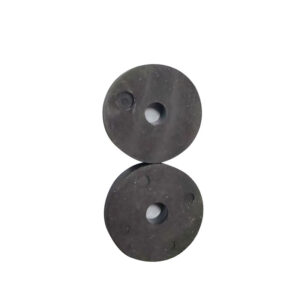
Optimize Magnet Shape and Dimensions
Magnet geometry plays a fundamental role in permanent magnet demagnetization. The demagnetization factor is strongly influenced by shape, especially the length-to-diameter ratio (L/D). Slender magnets with a higher L/D ratio generally exhibit lower demagnetization factors and more stable magnetic fields.
In practical applications, elongated cylinders, rectangular bars, and strip-shaped magnets are preferred because they distribute magnetic flux more efficiently and reduce pole concentration. In contrast, flat discs or short, thick blocks tend to accumulate strong surface poles, which increases internal demagnetizing fields.
For custom engineering requirements, optimized magnet geometry can significantly improve performance without increasing material cost. You can learn more about magnet customization options here: https://www.highkos.com/
Adopt Closed Magnetic Circuit Structures
Closed magnetic circuit design is one of the most effective methods to reduce permanent magnet demagnetization. By using soft magnetic materials such as iron, silicon steel, or permalloy, the magnetic flux is guided through a closed loop instead of leaking into air.
This structure reduces magnetic reluctance and eliminates exposed surface poles, which significantly weakens the demagnetizing field. Common configurations include ring-shaped assemblies, U-shaped cores, and horseshoe structures. These are widely used in motors, transformers, magnetic sensors, and audio systems.
Closed magnetic circuits not only improve efficiency but also enhance long-term magnetic stability under continuous operation and high load conditions.
Rational Splicing and Combination of Magnets
Proper magnet assembly design can greatly reduce permanent magnet demagnetization risk. When multiple magnets are arranged in series with the same magnetization direction, the effective magnetic path length increases, reducing the overall demagnetization factor.
This method is widely used in large-scale motor systems and industrial magnetic assemblies where a single magnet cannot provide sufficient field strength. However, improper stacking or misalignment may create uneven field distribution, which can increase localized stress and reduce performance.
Therefore, precise alignment and structural optimization are essential for maintaining magnetic stability. For engineering-grade solutions, visit: https://www.highkos.com/
Reduce Operating Air Gap and Minimize Magnetic Reluctance
Air gap is a key factor affecting permanent magnet demagnetization. A larger air gap increases magnetic reluctance, reduces magnetic efficiency, and strengthens demagnetizing fields at the magnet ends.
Reducing air gaps improves flux density and system efficiency. In addition, soft magnetic materials can be used to guide magnetic flux and reduce leakage. In real-world engineering, even small improvements in air gap control can significantly enhance overall performance.
In applications where large air gaps cannot be avoided, selecting high-coercivity magnets becomes necessary to maintain stability under increased magnetic stress.
Select High-Coercivity Materials
High coercivity (Hcj) is the most direct material-based solution to permanent magnet demagnetization. Coercivity defines a magnet’s ability to resist external reverse magnetic fields. Higher coercivity means stronger resistance to demagnetization.
High-performance magnets are especially important in electric motors, automotive systems, and high-load industrial environments. In high-temperature conditions, coercivity decreases significantly, which increases demagnetization risk. Therefore, selecting appropriate magnet grades ensures stable long-term performance and reduces failure rates.
Avoid Strong Reverse External Magnetic Fields
External magnetic interference is a common but often underestimated cause of permanent magnet demagnetization. During installation, transportation, and operation, magnets may be exposed to reverse magnetic fields generated by coils, electrical systems, or nearby magnets.
These external fields can combine with internal demagnetizing fields and push the magnet beyond its stable operating region. To reduce this risk, proper spacing, controlled assembly processes, and soft magnetic shielding materials should be used where necessary.
Temperature Control and Thermal Stability
Temperature has a significant impact on permanent magnet performance. As temperature increases, coercivity decreases, making magnets more vulnerable to demagnetization.
In high-temperature environments, selecting heat-resistant magnet grades such as UH, AH, and SH series is essential. Additionally, thermal management systems such as heat sinks or conductive mounting structures can help maintain stable operating conditions.
Soft magnetic pole shoes or sheets can also be attached to redistribute magnetic flux, reduce surface pole concentration, and improve overall magnetic efficiency.
Conclusion
Permanent magnet demagnetization can be effectively controlled through a combination of design optimization and material selection. Key strategies include optimizing magnet shape, adopting closed magnetic circuits, improving magnet assembly design, reducing air gaps, selecting high-coercivity materials, avoiding reverse magnetic fields, and maintaining proper temperature control.
By applying these engineering strategies, permanent magnet stability can be significantly improved, resulting in higher efficiency, better performance, and longer service life across applications such as motors, sensors, and industrial equipment.
For more professional magnetic solutions, product catalogs, and technical support, visit: