
Post-molding magnetization is a mainstream secondary magnetization process for injection molded magnets, which refers to magnetizing finished polymer magnetic parts after injection molding and shaping. Unlike in-mold magnetization that completes magnetization during molding, this independent post-processing magnetization technology features high flexibility, low mold cost, and strong adaptability to diversified product designs.
Widely used in new energy vehicle motors, precision sensors, smart home electronic components and industrial automation equipment, post-molding magnetization can customize accurate pole distribution and magnetic field strength according to product magnetic circuit design. To meet different industrial application demands, there are 4 typical post-molding magnetization modes in the industry, and scientific mode selection directly determines the final magnetic performance and service stability of magnetic parts. You can check professional magnetic processing standards via magnet magnetization process specifications.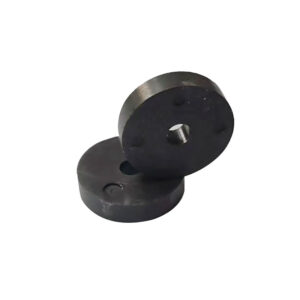
4 Common Post-Molding Magnetization Field Modes (Principles & Applications)
Based on product shape, magnetic circuit layout and terminal application requirements, post-molding magnetization is divided into axial, radial, multi-pole and partial magnetization four core modes, each with unique technical characteristics and applicable scenarios.
1. Axial Magnetization
Axial magnetization means the magnetizing magnetic field runs parallel to the central axis of the molded magnet product, with N and S poles evenly distributed on the top and bottom end faces of the workpiece. This magnetization mode features uniform magnetic field distribution and simple process debugging, which is the most basic and widely used magnetization type for regular symmetrical magnetic parts.
It is perfectly suitable for disc-shaped, cylindrical and ring-shaped injection-molded magnets, which are commonly applied in small fan motors, magnetic isolation parts and conventional fixed magnetic components. The axial magnetization process has low requirements for customized fixtures, with stable batch production consistency and high production efficiency.
2. Radial Magnetization
Radial magnetization is a magnetic field forming mode that extends along the workpiece radius direction, further divided into inner-diameter radial magnetization and outer-diameter radial magnetization. After professional magnetization treatment, magnetic flux lines stably emerge from the inner circular surface or outer circular surface of the product, forming a radial radiation magnetic field structure.
This mode is core supporting technology for motor magnetic components, widely adopted in motor stator rings, rotor rings and annular magnetic induction parts. Different from axial magnetization, radial magnetization needs to match targeted magnetic field orientation to ensure the uniform radiation of magnetic flux, effectively improving the operational efficiency and magnetic induction sensitivity of motor equipment.
3. Multi-Pole Magnetization
Multi-pole magnetization is a high-precision magnetization mode that forms multiple alternating N and S poles on the circumferential surface or end faces of magnetic parts. The number of magnetic poles can be flexibly customized from 2 poles to dozens of poles according to product design standards, which is the most mainstream magnetization demand for high-precision injection-molded magnets used in precision motors and induction sensors.
This technology has extremely high requirements for magnetizing fixture design and coil precision. It usually needs customized magnetizing coils and precise magnetic circuit calibration to avoid pole spacing deviation and magnetic field imbalance. With the upgrading of precision electronic equipment, multi-pole magnetization has become the core process to improve the detection accuracy and response speed of sensor components.
4. Partial Magnetization
Partial magnetization is a differentiated magnetization process that only completes magnetization in designated areas or specific angular ranges of the product, while the remaining areas maintain unmagnetized original state. Breaking through the limitation of full-area magnetization, this mode can form localized independent magnetic induction regions on a single magnetic part.
It is mainly applied in special industrial sensors, safety induction components and customized magnetic parts with regional magnetic performance requirements. The localized magnetic field design can effectively avoid magnetic signal interference between different areas of the product, ensuring the accuracy and stability of equipment signal induction and safety triggering.
Key Factors to Select Post-Molding Magnetization Method
In actual industrial batch production, there is no one-size-fits-all magnetization mode. Manufacturers need to comprehensively evaluate product characteristics, material attributes, production scale and performance standards to select the optimal post-molding magnetization solution, and distinguish it fromin-mold magnetization technology for reasonable process matching.
1. Product Shape & Structural Complexity
For magnetic parts with complex irregular shapes and extremely strict pole positioning tolerance requirements, in-mold magnetization is more suitable to ensure overall forming and magnetization precision. For regular disc-shaped, cylindrical and annular workpieces with simple structures and low positioning deviation requirements, post-molding magnetization is the most cost-effective mainstream choice with flexible operation and low failure rate.
2. Magnetic Material Performance Type
Magnetic materials are divided into anisotropic and isotropic types with completely different magnetization adaptation rules. Anisotropic magnetic materials require preset magnetic orientation during injection molding, which can be perfectly matched with integrated in-mold magnetization orientation magnetic field. Isotropic materials have no fixed magnetic orientation limitation, supporting flexible switching of axial, radial, multi-pole and partial post-molding magnetization modes.
3. Production Batch & Scale
In-mold magnetization requires high mold customization cost, so it is only suitable for long-term stable mass production to amortize equipment and mold costs. Post-molding external magnetization has lower early investment and simpler fixture replacement, which is more suitable for small-batch, multi-variety and customized production scenarios, greatly shortening product trial production cycle and reducing production costs.
4. Terminal Magnetic Performance Requirements
For products requiring high magnetic energy product, high magnetic field uniformity and stable magnetic output, anisotropic materials are usually adopted, matched with high-precision post-molding magnetization orientation calibration to ensure accurate magnetic field distribution. For conventional general magnetic parts with low performance requirements, flexible post-molding magnetization modes can meet production standards.
Industry Summary & Development Trend
Post-molding magnetization is a systematic and comprehensive magnetic processing technology covering material science, mold design, magnetic circuit engineering and precision equipment control. The four core magnetization modes complement each other, covering almost all application scenarios of injection-molded magnets in civil, industrial and new energy fields. Its core technical goal is to realize full, uniform and accurate magnetization of magnetic powder in polymer matrix, meeting the stringent magnetic field distribution and performance standards of terminal equipment.
With the rapid development of new energy vehicles, intelligent manufacturing and precision sensing technology, the industry has continuously improved requirements for magnetization precision, pole spacing accuracy and production efficiency of injection-molded magnets. This further drives the continuous upgrading of post-molding magnetization equipment, fixture customization technology and magnetic field calibration technology, making post-molding magnetization more intelligent, precise and efficient, and expanding its application scope in high-end precision manufacturing fields.