
Author | High Kos Magnet
Updated | December 2025
As industries continue to pursue higher precision, compact structures, and energy efficiency, the multipole magnet has become an indispensable component in modern electromechanical systems. From motors and encoders to sensors, automotive assemblies, and medical devices, choosing the right multipole magnet directly impacts system accuracy, stability, and lifecycle cost.
In 2025, multipole magnet selection is no longer a simple material decision. Engineers and procurement professionals must consider magnet material, pole configuration, magnetization accuracy, environmental conditions, and manufacturing capability as an integrated whole. In addition, supply chain stability and long-term technical support have become increasingly important, especially for global OEM customers. This guide provides a comprehensive, practical framework to help you choose the most suitable multipole magnet for your specific application while balancing performance, cost, and reliability.
Understanding Multipole Magnet Fundamentals for Modern Applications
A multipole magnet is a permanent magnet engineered with multiple alternating north and south poles distributed along its surface. Compared with traditional bipolar magnets, a multipole magnet generates a more uniform and controllable magnetic field, enabling higher resolution, smoother motion, and more precise signal output.
In practical engineering scenarios, a multipole magnet allows designers to precisely manage magnetic flux within limited space. This is especially valuable in compact devices where performance requirements increase while available installation space decreases. As product miniaturization accelerates in 2025, the multipole magnet has become a preferred solution for balancing accuracy, efficiency, and mechanical integration across industries such as automation, robotics, and consumer electronics. Its ability to deliver repeatable magnetic behavior also simplifies system calibration and improves long-term consistency.

Why Multipole Magnet Selection Matters More in 2025
In 2025, global manufacturing trends emphasize intelligent control, digital feedback, and energy optimization. Under these conditions, the multipole magnet plays an active role in overall system performance rather than acting as a passive component. Improper multipole magnet selection often leads to unstable signals, excessive calibration effort, torque ripple, and reduced system efficiency.
Moreover, product life cycles are becoming shorter, leaving less room for design errors. A correctly selected multipole magnet helps reduce development iterations and ensures smooth transition from prototype to mass production. For industries facing strict regulatory requirements, such as automotive and medical devices, early optimization of multipole magnet performance significantly reduces certification risks and long-term maintenance costs.
Multipole Magnet Material Selection: Injection vs Sintered Magnets
Material selection is the foundation of multipole magnet performance. Different materials offer distinct advantages depending on application requirements, operating environment, and cost targets.
Injection Molded Multipole Magnet
Injection molded multipole magnets, including injection ferrite and injection NdFeB, are widely used due to their excellent dimensional consistency and design flexibility. These multipole magnets allow complex geometries to be molded directly, reducing assembly steps and improving production efficiency. Their mechanical strength and corrosion resistance make them ideal for sensors, small motors, and electronic components produced in high volumes.
In addition, injection molded multipole magnets support tight tolerances and high repeatability, which is essential for automated assembly lines. Their ability to integrate metal inserts or shafts further expands design freedom for engineers.
Sintered Multipole Magnet
Sintered multipole magnets provide higher magnetic energy and stronger field output. They are well suited for demanding applications requiring high torque, strong magnetic force, and better temperature resistance. Sintered multipole magnets are commonly used in automotive motors, industrial automation equipment, and high-performance drive systems.
While sintered magnets require additional surface treatment to improve corrosion resistance, their superior magnetic performance makes them indispensable in applications where power density and stability are critical. Understanding the trade-offs between injection molded and sintered multipole magnets ensures optimal material selection.
Multipole Magnet Pole Number and Pole Accuracy
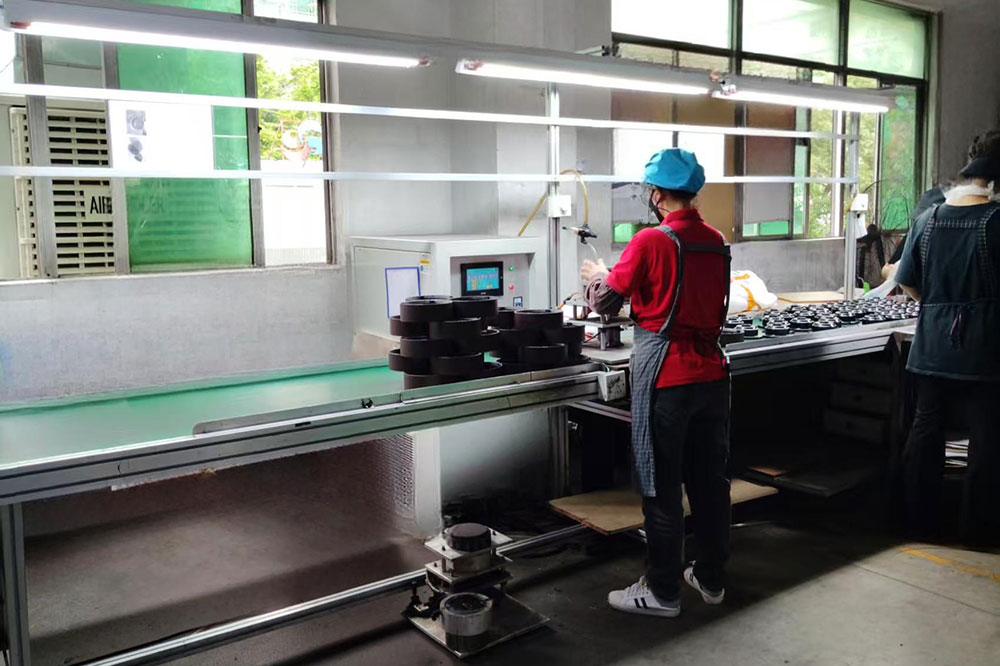
The number of poles in a multipole magnet directly affects resolution, smoothness, and system responsiveness. Higher pole counts enable finer signal transitions and improved control accuracy, which are critical in encoders and precision motors.
However, increasing pole count also raises manufacturing complexity. Even small variations in pole spacing or pole strength can cause signal distortion and performance inconsistency. Therefore, selecting an appropriate pole number must be paired with a manufacturer capable of maintaining tight pole pitch tolerance. Accurate pole distribution ensures that the multipole magnet delivers consistent performance throughout its operational life, especially in high-speed or high-precision applications.
Radial vs Axial Multipole Magnet Magnetization
Magnetization direction plays a crucial role in how a Magnet with multiple poles integrates into a system.
Radial Magnet with multiple poles magnetization arranges poles around the circumference, making it ideal for rotary applications such as motors and encoders. This configuration provides uniform magnetic interaction and smooth rotational feedback.
Axial Magnet with multiple poles magnetization distributes poles along the axial direction and is commonly used in linear sensing or compact designs where axial magnetic interaction is required. Choosing the correct magnetization method ensures efficient use of magnetic flux and avoids performance losses caused by mismatched field orientation.
Precision Magnetization for Multipole Magnet Performance
Precision magnetization is a defining factor in Magnet with multiple poles quality. Advanced magnetization equipment ensures consistent pole boundaries, uniform field strength, and accurate magnetic patterns.
In high-precision applications such as medical devices, servo motors, and high-resolution sensors, even minor magnetization deviations can lead to unacceptable performance fluctuations. A reliable Magnet with multiple poles supplier invests in advanced magnetizing fixtures, simulation tools, and inspection systems to guarantee repeatable magnetic performance that meets application requirements.
Temperature Resistance of Multipole Magnet Materials
Temperature has a significant influence on multipole magnet stability. Prolonged exposure to high temperatures can cause partial demagnetization, reducing system efficiency and accuracy over time.
Understanding the operating temperature range of your application allows proper selection of multipole magnet material and grade. Sintered multipole magnets with higher coercivity are preferred in high-temperature environments, while injection molded multipole magnets perform well in moderate temperature ranges where dimensional stability and mechanical strength are equally important. Proper thermal evaluation ensures long-term reliability under real-world conditions.
Corrosion Resistance and Surface Protection for Multipole Magnets
Temperature has a significant influence on multipole magnet stability. Prolonged exposure to high temperatures can cause partial demagnetization, reducing system efficiency and accuracy over time.
Understanding the operating temperature range of your application allows proper selection of multipole magnet material and grade. Sintered multipole magnets with higher coercivity are preferred in high-temperature environments, while injection molded multipole magnets perform well in moderate temperature ranges where dimensional stability and mechanical strength are equally important. Proper thermal evaluation ensures long-term reliability under real-world conditions.
Dimensional Accuracy in Multipole Magnet Applications
Temperature has a significant influence on multipole magnet stability. Prolonged exposure to high temperatures can cause partial demagnetization, reducing system efficiency and accuracy over time.
Understanding the operating temperature range of your application allows proper selection of multipole magnet material and grade. Sintered multipole magnets with higher coercivity are preferred in high-temperature environments, while injection molded multipole magnets perform well in moderate temperature ranges where dimensional stability and mechanical strength are equally important. Proper thermal evaluation ensures long-term reliability under real-world conditions.
Magnetic Field Testing for Multipole Magnet Reliability
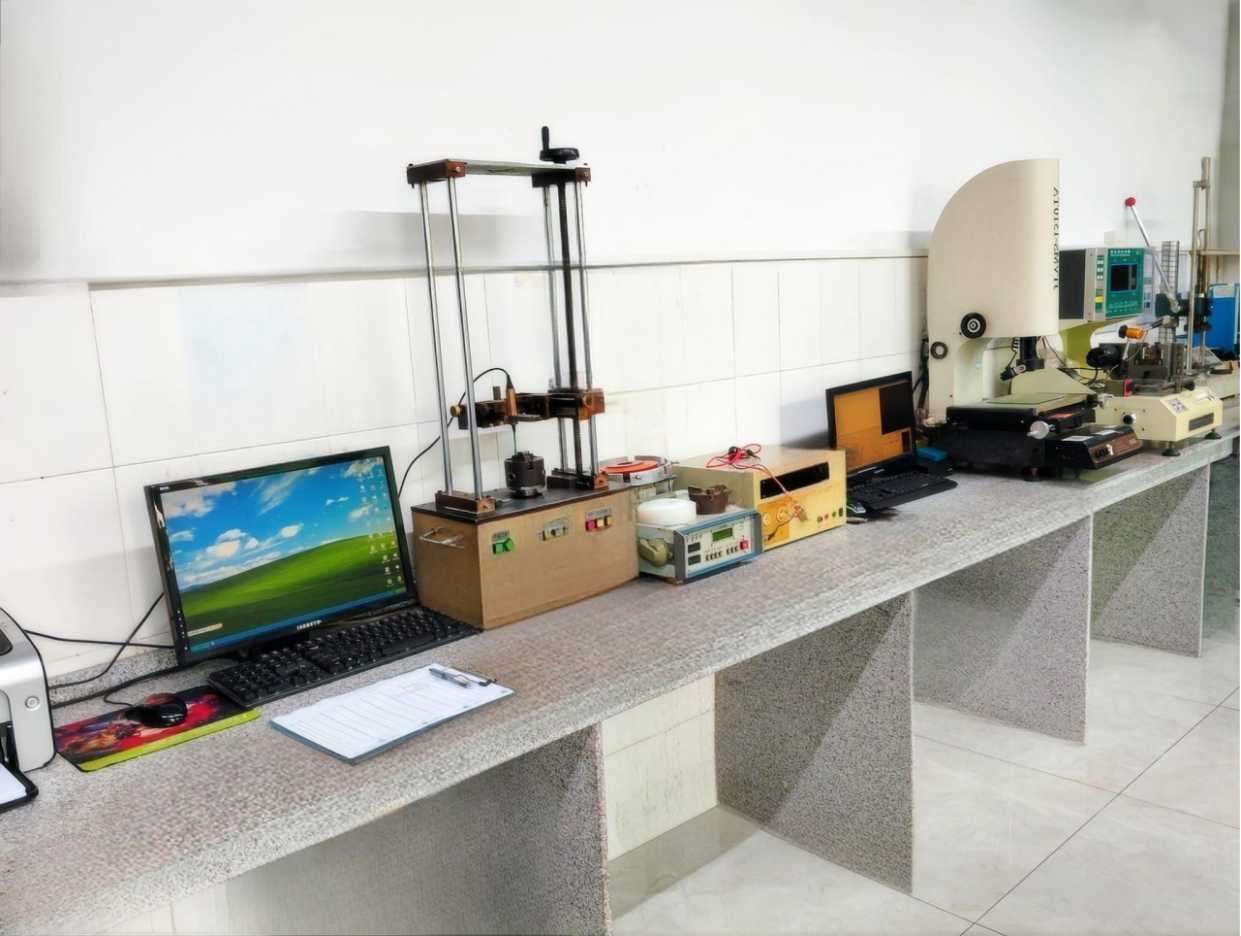
Magnetic field testing verifies the functional integrity of a multipole magnet beyond visual and dimensional inspection. Modern testing systems map magnetic flux density, pole position, and field uniformity in detail.
By implementing automated magnetic inspection for every production batch, reliable manufacturers ensure that each multipole magnet meets defined performance standards. This proactive approach minimizes field failures, improves traceability, and provides customers with greater confidence in long-term product performance.
When to Choose Custom Multipole Magnet Design
Custom multipole magnet solutions are ideal when standard products cannot meet specific space constraints, performance targets, or system integration requirements. In many advanced applications, off-the-shelf magnets may limit design flexibility or fail to deliver the required magnetic accuracy. Customization allows precise optimization of material composition, pole configuration, magnetization pattern, and overall geometry to better match real operating conditions and functional demands.
Through early-stage collaboration, experienced manufacturers can help engineers evaluate technical feasibility, identify potential challenges, and reduce development risks before mass production. This cooperative approach enables design adjustments at an early phase, helping to avoid costly redesigns later. Custom multipole magnet design often results in improved system efficiency, more compact and optimized packaging, and better thermal and mechanical performance. Additionally, tailored magnetic solutions provide greater design freedom and enhanced product differentiation, allowing companies to remain competitive in markets where performance, reliability, and innovation are critical.
Cost Considerations for Multipole Magnet Customization
Although custom magnet with multiple poles solutions may involve initial tooling, design, and development costs, they often lead to significant long-term savings. By optimizing the magnetic design specifically for the application, custom Magnet with multiple poles can simplify overall system architecture, reduce the number of auxiliary components, and shorten assembly time. This streamlined integration helps lower manufacturing complexity and reduces the likelihood of assembly errors or performance inconsistencies.
From a lifecycle cost perspective, investing in a custom magnet with multiple poles solution frequently results in lower total cost of ownership. Improved magnetic efficiency and reliability reduce maintenance requirements, minimize warranty claims, and extend product lifespan. In addition, custom designs can enhance system performance, allowing manufacturers to differentiate their products and achieve faster return on investment. While the upfront cost may be higher, the long-term economic and operational benefits often outweigh the initial expenditure, especially in high-volume or long-term production programs.
Multipole Magnet in Motors and Drives
In motor applications, magnet with multiple poles play a crucial role in improving torque uniformity, reducing vibration, and enhancing overall energy efficiency. By creating a smoother magnetic field distribution, Magnet with multiple poles designs help minimize torque ripple during motor operation, resulting in quieter performance and improved mechanical stability. These advantages are particularly valuable in electric vehicles, industrial automation equipment, and precision motion control systems, where smooth operation and high efficiency are essential for performance and reliability.
Multipole magnets also support compact motor designs by enabling higher power density without increasing overall system size. This allows engineers to design smaller, lighter motors while maintaining or even improving output performance. In addition, the improved magnetic efficiency helps reduce heat generation, extending motor lifespan and lowering maintenance requirements. As modern engineering continues to demand higher efficiency, reduced energy consumption, and compact structures, Magnet with multiple poles solutions have become a key enabler for next-generation motor and drive technologies.
Multipole Magnet in Sensors and Encoders
Magnet with multiple poles are essential in sensing and encoder systems where stable, repeatable, and highly accurate magnetic signals are required. Their alternating pole structure creates a uniform and predictable magnetic field, which is critical for maintaining consistent signal output over time. This uniform field distribution significantly improves signal clarity, reduces electrical noise, and minimizes interference caused by external magnetic disturbances, resulting in more reliable system performance.
In high-resolution encoder applications, magnet with multiple poles enable precise position and speed feedback by providing finely spaced magnetic transitions that sensors can accurately detect. This capability supports smooth and precise motion control in robotics, CNC machinery, and automated production lines. Additionally, Magnet with multiple poles designs help reduce signal jitter and calibration drift, improving long-term stability. As automation systems become faster and more precise, the role of Magnet with multiple poles in sensors and encoders continues to expand, making them a critical component for achieving high accuracy and repeatability in modern motion control applications.
Multipole Magnet in Automotive and Medical Devices
Automotive and medical applications demand exceptional reliability, safety, and long service life. Magnet with multiple poles used in these sectors must withstand wide temperature fluctuations, continuous vibration, and long-term operation without performance degradation. In automotive systems such as electric power steering, sensors, and drive motors, stable magnetic output is critical for precise control and system safety. In medical devices, consistent magnetic performance directly affects measurement accuracy and patient safety.
Careful material selection, precise magnetization, and strict quality control ensure that Magnet with multiple poles comply with stringent industry standards and regulatory requirements. High-quality manufacturing processes help deliver consistent magnetic performance throughout the product lifespan, reducing maintenance needs and supporting dependable operation in critical applications.
Common Mistakes When Choosing a Multipole Magnet
A common mistake when selecting a Magnet with multiple poles is focusing solely on magnetic strength while overlooking magnetization accuracy, pole consistency, and environmental operating conditions. In real applications, even a strong magnet can fail to deliver stable performance if pole alignment or magnetic uniformity is insufficient. Another frequent issue is choosing suppliers without adequate magnet with multiple poles manufacturing experience, which often leads to inconsistent quality, extended lead times, or unexpected performance variations.
Avoiding these pitfalls requires a comprehensive evaluation approach that considers material selection, magnetization capability, quality control processes, and long-term reliability. Close collaboration with a knowledgeable magnet with multiple poles supplier who understands real-world application challenges helps ensure correct design decisions, reduces development risk, and improves overall system performance.

Why Choose High Kos Magnet as Your Multipole Magnet Partner
Zhongshan High Kos Electronics Technology Co., Ltd. specializes in the R&D, production, and sales of magnet with multiple poles solutions, covering both injection molded magnets and sintered magnets. Backed by advanced manufacturing equipment and a skilled technical team, High Kos Magnet provides full-spectrum magnetic support, from early-stage design consultation and material selection to precision manufacturing and large-scale mass production.
Our advantages include advanced precision magnetization technology, strict quality control systems, flexible customization capabilities, and a stable, reliable supply chain serving global customers. We focus on understanding real application requirements and delivering tailored magnetic solutions. Whether your application requires injection molded Magnet with multiple poles for complex designs or high-performance sintered magnet with multiple poles for demanding environments, High Kos Magnet consistently delivers reliable, cost-effective solutions that support long-term product success.
FAQ: Multipole Magnet Selection
What is a Magnet with multiple poles used for?
A Magnet with multiple poles is used in motors, sensors, encoders, automotive systems, and medical devices where precise magnetic field control is required.
How do I choose the right pole number for a Magnet with multiple poles?
Pole number depends on resolution and performance requirements. Higher pole counts improve accuracy but require higher manufacturing precision.
Are injection molded Magnet with multiple poles suitable for high-volume production?
Yes, injection molded Magnet with multiple poles are ideal for mass production with consistent quality and complex shapes.
Can multipole magnets be customized?
Yes, custom multipole magnets can be designed to match specific material, geometry, and magnetization requirements.
Conclusion: Making the Right Multipole Magnet Choice in 2025
Choosing the right Magnet with multiple poles in 2025 requires a holistic evaluation of material properties, magnetization precision, environmental conditions, and manufacturing capability. Each of these factors directly influences magnetic stability, system accuracy, and overall product reliability. A well-matched Magnet with multiple poles not only improves performance but also reduces unnecessary design iterations and operational issues.
By partnering with an experienced supplier, you gain access to professional engineering support, consistent quality control, and reliable production capacity. This collaboration helps minimize technical risks, ensures smooth transition from design to mass production, and delivers long-term value for your application. Ultimately, a carefully selected Magnet with multiple poles contributes to better product competitiveness, lower lifecycle costs, and sustainable business growth in an increasingly demanding market.
Ready to Choose the Right Multipole Magnet for Your Application?
At High Kos Magnet, we help customers transform complex magnetic requirements into reliable solutions.
📩 Contact us today to discuss your project and receive expert guidance on selecting the ideal Magnet with multiple poles for your application in 2025 and beyond.