Automotive actuators are essential components in modern vehicle systems. They convert electrical energy into controlled mechanical movement and are widely used in seat adjustment, power windows, door mechanisms, HVAC systems, thermal management, and other automotive applications. Behind many of these compact motion-control systems are specialized magnetic components that support motor operation and position detection.
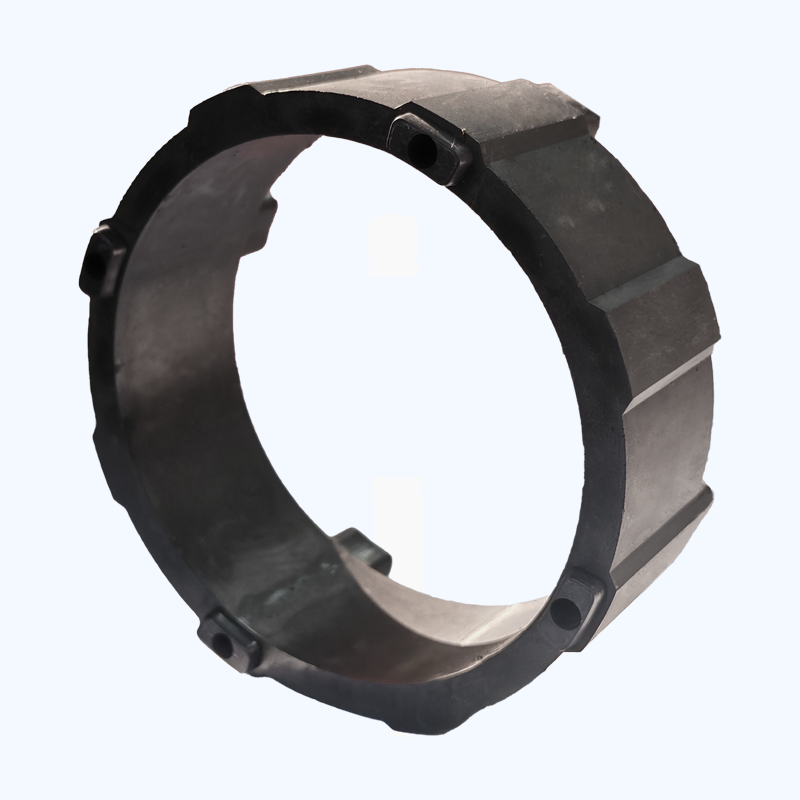
Magnetic Parts for Automotive Actuators include permanent magnets, magnetic rings, rotor magnets, multipole magnetic components, and encoder magnetic rings. Depending on the actuator structure, these components may generate the magnetic field required for motor operation or provide feedback signals for speed and position control.
As automotive systems continue to demand compact structures, stable operation, and consistent manufacturing quality, selecting suitable magnetic components has become an important part of actuator development. Material properties, magnetic strength, pole configuration, dimensional accuracy, temperature resistance, and production consistency all influence the final performance.
This article explores the applications, material options, manufacturing processes, and selection factors of Magnetic Parts for Automotive Actuators, helping automotive component manufacturers and engineering teams evaluate suitable magnetic solutions.
1. What Are Magnetic Parts for Automotive Actuators?
Magnetic Parts for Automotive Actuators are permanent-magnet components or magnetic sensing elements integrated into automotive motion-control systems. Their specific functions depend on the actuator’s motor architecture and control requirements.
In general, magnetic components used in automotive actuators can be divided into two main categories.
Magnetic Parts for Motor Operation
In permanent-magnet motors, magnets provide the magnetic field that interacts with the electromagnetic field generated by the motor windings. This interaction produces the force required to rotate the motor and drive the actuator mechanism.
Common motor-related magnetic components include:
- Ferrite magnetic arcs and segments
- Permanent magnetic rings
- Injection-molded magnetic rotors
- Inner rotor magnetic components
- Outer rotor magnetic components
- Customized magnetic assemblies
The geometry, magnetic properties, and magnetization direction must match the motor’s magnetic circuit. An unsuitable magnetic component may affect motor performance, installation compatibility, and overall operating stability.
Magnetic Parts for Position and Speed Detection
Some automotive actuators require feedback to identify rotational position, speed, or movement direction.
In these applications, a multipole magnetic ring or encoder magnetic ring can work with a compatible Hall-effect sensor. As the magnetic ring rotates, alternating magnetic poles pass the sensing point and generate changing magnetic signals. The controller processes these signals to monitor the motor’s movement.
Unlike motor-driving magnets, encoder magnetic rings primarily provide sensing signals rather than producing the main driving force.
For this reason, Magnetic Parts for Automotive Actuators should be selected according to their actual function. Motor magnets and sensing rings have different magnetic design requirements and should not be treated as interchangeable components.
2. Common Applications of Magnetic Parts for Automotive Actuators
Automotive actuators are used in many vehicle subsystems. Each application has different requirements for motor size, movement accuracy, operating temperature, and environmental protection.
Electric Seat Adjustment Systems
Electric seat adjustment systems use compact motors and transmission mechanisms to control seat movement. Motors may drive forward and backward adjustment, seat height adjustment, and other positioning functions.
Permanent magnets can form part of the motor assembly, while magnetic sensing components may support rotational feedback in designs requiring position or movement monitoring.
When selecting Magnetic Parts for Automotive Actuators for seat systems, manufacturers should consider:
- Available motor installation space
- Magnetic performance requirements
- Rotor dimensions and alignment
- Required feedback accuracy
- Operating noise and vibration
The selected component should fit the motor structure and support consistent actuator operation.
Power Window and Door Actuators
Power windows and selected door mechanisms use electric motors to control opening, closing, and positioning.
These compact actuator systems may use permanent magnetic rings or rotor magnets in their motor assemblies. Depending on the control architecture, magnetic sensing rings may also provide rotational feedback.
Dimensional consistency is important because the magnetic component must fit the motor housing and mechanical transmission structure. For mass production, repeatable geometry and magnetic properties can help reduce assembly variation.
HVAC and Airflow Control Actuators
Automotive HVAC systems use actuators to adjust air distribution, ventilation doors, and related mechanisms.
Compact motors provide the movement required to change airflow direction and position. Magnetic components may support motor operation or provide sensing signals for controlled adjustment.
For these applications, engineers should evaluate component size, magnetic field characteristics, temperature conditions, and the required movement resolution.
Thermal Management and Pump Systems
Automotive thermal management systems use electrically driven pumps and control mechanisms to manage fluid circulation.
Depending on the motor design, permanent magnetic rotor components may be used in pump assemblies, while magnetic sensing rings can support rotational detection.
High Kos provides injection-molded ferrite components and water pump rotor-related product options. Automotive engineers can review the Injection Molded Ferrite Product Category when evaluating magnetic structures for compact motor and pump applications.
Other Automotive Auxiliary Actuators
Magnetic components may also be used in compact motor systems for mirrors, fluid control, ventilation, and other auxiliary functions.
The design requirements vary according to the actuator’s operating principle. Therefore, Magnetic Parts for Automotive Actuators should be evaluated based on the specific motor structure, sensor arrangement, available space, and working environment rather than selected only by product category.
3. Types of Magnetic Parts Used in Automotive Actuators
Understanding the different magnetic component structures helps engineering teams identify suitable options for their actuator designs.
Permanent Magnetic Arcs and Segments
Magnetic arcs and segments are used in motor structures where individual curved magnets are arranged around a rotor or stator.
Sintered ferrite is a common material option for conventional motor applications. Component dimensions, arc angles, pole arrangements, and magnetization directions are determined by the motor’s magnetic circuit.
Important design considerations include:
- Inner and outer radius
- Arc angle and thickness
- Pole arrangement
- Magnetic properties
- Assembly positioning
- Dimensional tolerances
The component geometry should be designed according to the motor’s actual requirements.
Injection-Molded Magnetic Rings
Injection-molded magnetic rings combine magnetic powder with a polymer binder and are formed through an injection molding process.
This process can support complex geometries and multipole magnetic structures. Depending on the design, it may also allow the magnetic component to be integrated with other structural elements.
Potential advantages include design flexibility, integration opportunities, and suitability for customized magnetic geometries.
Injection-molded magnetic rings can be considered for selected compact motors and sensing assemblies. Their magnetic performance should be checked against the actuator’s requirements.
Learn more about High Kos’s Injection Molded Magnetic Components.
Magnetic Rotors and Inner Rotor Components
Magnetic rotors are important parts of permanent-magnet motor structures. Depending on the motor architecture, the magnetic component may be formed as a ring, integrated rotor, or customized assembly.
An inner rotor is positioned inside the surrounding stator structure. Its magnetic design, concentricity, and mechanical dimensions affect the relationship between the rotor and stator.
For actuator manufacturers, the key considerations include rotor geometry, shaft positioning, magnetic pole configuration, and installation tolerances.
High Kos also offers an Injection-Molded Motor Outer Rotor Product Category for customers evaluating different motor structures.
Encoder and Multipole Magnetic Rings
Encoder magnetic rings are designed for magnetic sensing applications. They contain multiple magnetic poles arranged according to a specified magnetization pattern.
When the ring rotates near a compatible Hall sensor, the changing magnetic field produces electrical signals that can be used for rotational position or speed detection.
For Magnetic Parts for Automotive Actuators used in sensing systems, pole count, pole spacing, magnetic uniformity, and sensor air gap are especially important.
4. Material Selection for Automotive Actuator Magnetic Components
Material selection affects magnetic performance, temperature behavior, corrosion resistance, mechanical structure, and production cost. Different automotive actuator designs may require different material solutions.
Sintered Ferrite
Sintered ferrite is commonly used in permanent-magnet motor applications.
It offers a practical combination of magnetic properties, corrosion resistance, and cost. It can be manufactured into arcs, rings, and other geometries according to the motor structure.
Sintered ferrite may be suitable when the actuator design can accommodate its magnetic characteristics and requires a cost-conscious permanent-magnet solution.
Injection-Molded Ferrite
Injection-molded ferrite combines ferrite magnetic powder with a polymer binder.
Its main advantage is the ability to form complex geometries and customized structures. It can be considered when Magnetic Parts for Automotive Actuators require integrated designs, special shapes, or multipole magnetic configurations.
However, injection-molded ferrite generally has different magnetic characteristics from dense sintered ferrite. Engineers should evaluate the actual magnetic output and ensure that it meets the motor or sensing requirements.
Bonded NdFeB
Bonded neodymium-iron-boron (NdFeB) combines NdFeB magnetic powder with a binder. It can provide stronger magnetic performance than ferrite in suitable designs while supporting customized component geometries.
This material may be considered for compact motors or sensing applications where higher magnetic output is required within limited installation space.
Its selection should also account for operating temperature, corrosion protection, mechanical requirements, and total manufacturing cost.
For additional material information, see High Kos’s article on Injection-Bonded Magnets.
5. Important Design Factors for Magnetic Parts for Automotive Actuators
Selecting a magnetic material is only one part of actuator development. Engineers must also consider how the component interacts with the motor, sensor, controller, and mechanical assembly.
Magnetic Strength and Flux Distribution
For motor-driving magnets, magnetic properties influence the magnetic field within the motor air gap.
For sensing rings, the magnetic field must fall within the operating range of the selected Hall sensor. Insufficient magnetic field strength may result in unreliable detection, while excessive magnetic field strength may affect sensor output.
The required magnetic performance should be defined according to the motor design or sensor datasheet.
Pole Count and Magnetization Accuracy
Pole configuration determines the magnetic field distribution and, for sensing rings, the number of magnetic transitions detected during rotation.
A higher pole count may provide more frequent signal changes, but it also increases the requirements for magnetization accuracy and pole uniformity.
The appropriate configuration depends on rotational speed, required signal resolution, sensor capability, and controller processing requirements.
Dimensional Accuracy and Concentricity
Automotive actuators often have compact structures and limited installation space. Dimensional deviations can affect mechanical clearance, rotor alignment, and the air gap between a magnetic ring and its sensor.
For rotating components, concentricity is particularly important. Poor alignment may cause the distance between the magnet and sensor to fluctuate during rotation, potentially affecting signal stability and operating noise.
Temperature and Environmental Resistance
Automotive components may experience temperature fluctuations, vibration, humidity, dust, and exposure to fluids.
The selected magnetic material should maintain suitable performance under the intended operating conditions. Engineers should evaluate temperature characteristics, possible demagnetization risks, corrosion behavior, and compatibility with surrounding materials.
The complete actuator assembly should be validated under representative operating conditions.
6. Manufacturing and Quality Control for Automotive Magnetic Parts
Manufacturing consistency is essential when magnetic components are used in automotive actuator production. Variations in geometry, magnetic properties, or magnetization can influence assembly compatibility and system performance.
Material and Process Control
The manufacturing process should be selected according to the required component geometry and magnetic characteristics.
Sintering may be appropriate for conventional ferrite arcs and rings, while injection molding can support complex shapes and integrated structures.
The process should be evaluated for dimensional repeatability, magnetic performance, production volume, and secondary processing requirements.
Precision Magnetization
Magnetization is a critical production step for permanent magnetic components.
For multipole magnetic rings, the magnetization fixture and process must match the required pole arrangement. Pole position and magnetic field distribution should be inspected according to the component’s intended function.
For sensing rings, it is also useful to evaluate the resulting signal with the intended Hall sensor.
Dimensional and Magnetic Inspection
A quality inspection plan for Magnetic Parts for Automotive Actuators may include:
- Inner and outer diameter measurement
- Thickness and dimensional tolerance inspection
- Concentricity measurement
- Magnetic flux or field distribution testing
- Pole position and magnetization checks
- Visual inspection
- Assembly compatibility verification
Inspection requirements should be defined with the customer according to the component’s function and application.
Prototype and Production Validation
Before approving a customized magnetic component, manufacturers should evaluate samples in the actual actuator assembly whenever possible.
This helps identify potential issues involving installation, magnetic air gap, signal behavior, temperature, and mechanical alignment.
Prototype testing should be followed by production validation to confirm that the selected design can be manufactured consistently.
7. How to Choose a Manufacturer of Magnetic Parts for Automotive Actuators
Choosing a suitable magnetic component manufacturer requires evaluating more than the quoted unit price. Automotive actuator manufacturers should consider the supplier’s material options, customization capabilities, manufacturing process, and technical communication.
Important evaluation factors include:
Application understanding: The manufacturer should understand whether the component is used for motor drive, rotor assembly, position sensing, or another actuator function.
Material selection: The supplier should be able to evaluate ferrite, injection-molded ferrite, and suitable NdFeB options according to the application.
Customization capabilities: Confirm whether the manufacturer can work with technical drawings, component dimensions, pole configurations, magnetization directions, and assembly requirements.
Production consistency: Ask how dimensional accuracy and magnetic characteristics are inspected and controlled across production batches.
Sample evaluation: Discuss prototype requirements and how the component will be validated in the actual motor or actuator assembly.
Technical communication: Clear communication about drawings, tolerances, materials, and testing requirements can reduce development uncertainty.
High Kos focuses on injection-molded and sintered magnetic components, including magnetic rings, rotors, and sensing-related products. Its product range provides a starting point for customers evaluating customized magnetic component solutions.
Conclusion
Magnetic Parts for Automotive Actuators support important functions in automotive motor operation and motion-control systems. Depending on the actuator architecture, these components may include permanent magnetic arcs, injection-molded magnetic rings, customized rotors, and multipole encoder rings.
The correct selection depends on the motor structure, sensing requirements, magnetic performance, operating environment, and manufacturing process. Material choice, pole configuration, magnetization accuracy, dimensional tolerances, and quality inspection should all be considered as part of the complete actuator system.
For automotive component manufacturers, a successful magnetic component project begins with clearly defined technical requirements and effective communication with the manufacturer.
High Kos provides magnetic component options for motor and sensing applications. Contact the team with your drawings, technical specifications, or sample requirements to discuss customized Magnetic Parts for Automotive Actuators for your next project.
FAQ: Magnetic Parts for Automotive Actuators
1. What are Magnetic Parts for Automotive Actuators used for?
They are used to generate magnetic fields for motor operation or provide magnetic signals for position and speed detection. Common examples include permanent magnets, magnetic rotors, multipole rings, and encoder magnetic rings.
2. What is the difference between a motor magnet and an encoder magnetic ring?
A motor magnet provides the magnetic field required for motor operation. An encoder magnetic ring generates changing magnetic fields that a compatible sensor can detect for position or speed feedback. Their magnetic design requirements are different.
3. Which magnetic materials are suitable for automotive actuator applications?
Sintered ferrite, injection-molded ferrite, and bonded NdFeB may be considered depending on the required magnetic performance, component geometry, temperature conditions, corrosion exposure, and cost target.
4. Why is pole accuracy important in automotive magnetic sensing rings?
Pole accuracy affects the magnetic transitions detected by the sensor. Inconsistent pole positions or magnetic strength may reduce signal stability and affect the reliability of position or speed feedback.
5. Can injection-molded magnetic rings be customized?
Yes. Injection molding can support customized geometries and selected multipole structures. The final design should be evaluated according to magnetic performance, dimensional requirements, and the intended application.
6. What information is needed to customize magnetic parts for automotive actuators?
Useful information includes the application, component drawings, dimensions, material requirements, magnetic properties, pole count, magnetization direction, operating temperature, environmental conditions, and expected production volume.
7. How can manufacturers evaluate magnetic component quality?
Evaluation may include dimensional inspection, concentricity measurement, magnetic field testing, pole configuration checks, visual inspection, and validation in the actual actuator assembly.