
A Permanent Magnet Pump Rotor is an essential component in many modern fluid handling systems. From household water circulation and heating equipment to new energy vehicle cooling systems, industrial water treatment, and precision fluid transfer equipment, permanent magnet pump rotors help convert motor energy into the mechanical movement required for pumping.
As equipment manufacturers continue to focus on energy efficiency, compact structures, low operating noise, and long service life, the design of the Permanent Magnet Pump Rotor is becoming increasingly important. Different applications require different rotor structures, magnetic materials, magnetization patterns, and environmental resistance.
For pump manufacturers, motor developers, and industrial equipment companies, choosing a suitable Permanent Magnet Pump Rotor requires understanding the working environment, fluid characteristics, temperature, rotational speed, and expected operating conditions.
This article explores the major applications of permanent magnet pump rotors, their material and structural development, and the key factors to consider when selecting a customized magnetic rotor.
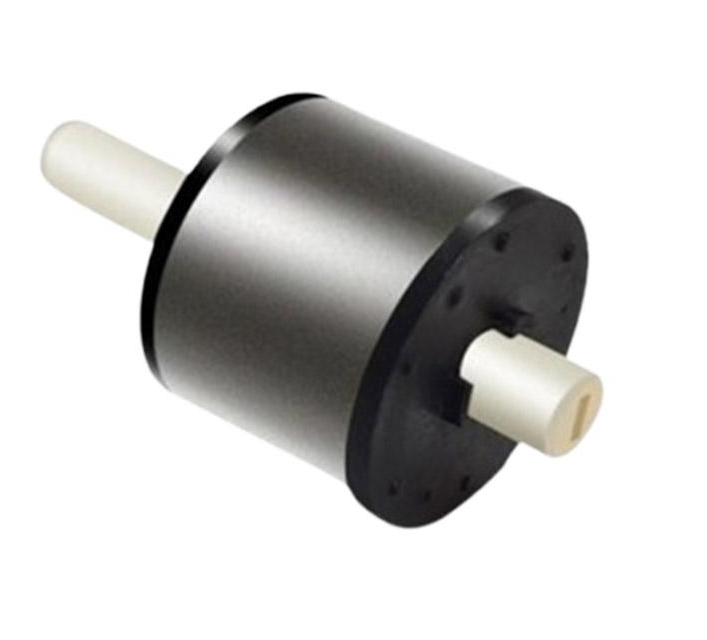
What Is a Permanent Magnet Pump Rotor?
A Permanent Magnet Pump Rotor is the rotating magnetic component used in a pump motor or magnetic drive pumping system. It contains permanent magnetic materials that interact with the motor’s magnetic field to generate rotational movement.
Depending on the pump architecture, the rotor may be designed as an inner rotor, an integrated magnetic ring, or a customized molded assembly. In some compact pump designs, the magnetic rotor is integrated with other functional components to simplify the structure and meet installation requirements.
Unlike a conventional rotor that relies on electromagnetic excitation, a permanent magnet rotor uses permanent magnetic materials to provide its magnetic field. This structure is widely considered in applications where compact dimensions, stable rotation, and energy-efficient operation are important.
The design of a Permanent Magnet Pump Rotor is not identical for every pump. A small aquarium pump, an automotive electronic cooling pump, and an industrial chemical transfer pump have different requirements. Therefore, rotor material, geometry, magnetization, and protective structure should be selected according to the actual application.
1. Permanent Magnet Pump Rotor Applications in Household and Civil Equipment
Household and civil applications represent an important market for micro permanent magnet pump rotors. These products are often required to operate quietly and continuously while fitting into relatively compact equipment structures.
Built-In Circulation Pumps for Heating Systems
Floor heating systems, wall-hung boilers, and water heaters use built-in circulation pumps to maintain continuous water movement. The pump rotor drives the circulation process, helping distribute heated water throughout the system.
A Permanent Magnet Pump Rotor used in these applications should support stable rotation and reliable operation during extended working periods. Low operating noise and appropriate power consumption are also important considerations for residential equipment.
For manufacturers of heating equipment, rotor selection should consider the pump’s operating temperature, circulation requirements, installation dimensions, and expected duty cycle.
Submersible Pumps for Aquariums and Small Fountains
Small submersible pumps are widely used in aquariums, rockery fountains, water heating mattresses, and compact solar fountains.
These applications commonly use small ferrite magnetic ring rotors. Their compact structure makes them suitable for small pump assemblies, while low-noise operation is important in residential and decorative environments.
Because many of these pumps are expected to operate for long periods, the Permanent Magnet Pump Rotor should be evaluated for stable magnetic performance, dimensional consistency, and compatibility with the surrounding fluid environment.
Tap Water Booster Pumps
Tap water booster pumps help increase incoming water pressure to meet the water supply requirements of high-rise buildings and other residential applications.
In these systems, the rotor is an important part of the motor-driven pumping assembly. Stable performance, quiet operation, water resistance, corrosion protection, and low power consumption are key selection considerations.
The specific rotor construction depends on the pump’s mechanical design and operating conditions. Manufacturers should evaluate the magnetic component together with the shaft, bearing, housing, and fluid-contact structure.
2. Permanent Magnet Pump Rotor Applications in New Energy Vehicles
New energy vehicles and fuel cell systems have increased the demand for reliable thermal management components. Pumps play an important role in circulating coolant and helping regulate the operating temperatures of batteries, electric motors, and electronic control systems.
Electronic Cooling Pumps for Electric Vehicles
Electronic cooling pumps are used in vehicle thermal management systems to circulate coolant through different components.
A Permanent Magnet Pump Rotor in an electronic cooling pump must be designed around several important requirements:
- Resistance to the expected operating temperature
- Compatibility with the specified coolant environment
- Stable operation at the required rotational speed
- Suitable magnetic performance
- Long-term mechanical reliability
High-speed permanent magnet inner rotors are commonly considered in these pump applications. The magnetic component must work together with the motor structure and pump design to support the required coolant circulation.
Fuel Cell Cooling Pumps
Fuel cell cooling pumps also depend on continuous coolant circulation to maintain suitable operating temperatures.
Compared with some household pump applications, these systems may involve more demanding requirements for temperature resistance, fluid compatibility, rotational speed, and service life.
The Permanent Magnet Pump Rotor should therefore be selected according to the actual thermal management system rather than simply using a standard household pump rotor design.
Injection Overmolding for Automotive Pump Rotors
Precision injection overmolding is one manufacturing approach used for selected permanent magnet rotor structures. It can support the integration of magnetic materials with other structural components according to the product design.
For automotive thermal management applications, an integrated rotor may help simplify component construction and support consistent assembly. The final design still requires evaluation of material compatibility, dimensional accuracy, magnetic performance, and operating conditions.
High Kos provides injection molded ferrite magnetic components for motor and pump-related applications. Its product range can be reviewed when evaluating customized magnetic component requirements.
3. Permanent Magnet Pump Rotor Applications in Industrial Water Treatment
Industrial fluid handling systems place different demands on pump rotors depending on the medium being transported and the working environment.
Permanent magnet pump rotors may be used in municipal water supply, sewage treatment, chemical transportation, and central HVAC circulation systems.
Municipal Water Supply and HVAC Circulation
Municipal water supply equipment and central HVAC systems require pump assemblies designed for their specified flow and pressure conditions.
The Permanent Magnet Pump Rotor must match the motor’s magnetic design and the pump’s mechanical requirements. Dimensional consistency, stable magnetic properties, and suitable operating characteristics are important when developing components for continuous-duty equipment.
For HVAC circulation systems, buyers should also consider the expected operating schedule, system temperature, installation space, and maintenance requirements.
Sewage Treatment Pumps
Sewage treatment applications may expose pump components to sediment, suspended particles, moisture, and corrosive substances.
Rotor selection should take account of the complete pump construction and the conditions inside the pumping system. Where required by the design, protective coatings or wear-resistant layers may be considered to improve the suitability of the assembly for its operating environment.
A Permanent Magnet Pump Rotor for sewage treatment should not be selected only by comparing magnetic material grades. Fluid compatibility, structural protection, mechanical stability, and the pump’s maintenance requirements are equally important.
Chemical Magnetic Drive Pumps
Chemical transfer systems may transport acids, alkalis, and organic solvents. In some magnetic drive pump designs, an isolated inner rotor is used as part of a shaft-seal-free structure.
This arrangement is intended to avoid leakage risks associated with conventional shaft sealing in suitable pump configurations.
For these applications, the Permanent Magnet Pump Rotor must be evaluated together with the isolation structure, chemical compatibility of surrounding materials, operating temperature, and required magnetic performance.
The suitability of any rotor material or encapsulation method depends on the specific chemical medium and system design.
Agricultural Irrigation and Submersible Pumps
Permanent magnet rotors are also used in pumping equipment for farmland irrigation, deep well water intake, and flood drainage.
Energy consumption is an important consideration for pumps that operate for extended periods. Compared with conventional asynchronous rotor solutions, permanent magnet rotor systems can offer a higher power factor and may help reduce electricity costs in suitable applications.
For agricultural and drainage equipment, buyers should evaluate the expected pumping duration, flow requirements, installation depth, water conditions, and motor configuration before selecting a Permanent Magnet Pump Rotor.
4. Permanent Magnet Pump Rotor Applications in Medical and Precision Equipment
Some fluid transfer systems require more than ordinary pumping performance. Medical equipment, semiconductor manufacturing equipment, and photovoltaic production equipment may need pumps that maintain fluid purity and avoid unwanted contamination.
High-Purity Fluid Transfer Pumps
High-purity fluid transfer pumps are used in applications where contamination can affect process quality or equipment performance.
The rotor and surrounding materials should be selected according to the fluid’s chemical characteristics and the system’s cleanliness requirements.
In these applications, low impurity leaching and the prevention of magnetic contamination are important considerations. The entire fluid-contact structure should be evaluated, rather than considering the magnetic rotor in isolation.
Micro Pumps for Robots and Instruments
Robots, precision instruments, and compact equipment may use small cooling pumps to manage heat and support stable operation.
These applications often require micro or thin-type rotor structures to fit limited installation spaces. Lightweight construction and dimensional accuracy can also influence the overall equipment design.
A customized Permanent Magnet Pump Rotor may be considered when standard rotor dimensions cannot meet the required assembly space or functional requirements.
5. Materials Used in Permanent Magnet Pump Rotor Manufacturing
Magnetic material selection directly influences the design possibilities and operating suitability of a pump rotor. The choice depends on magnetic requirements, geometry, working temperature, fluid environment, and production cost.
Ferrite Magnetic Materials
Ferrite is widely used in various permanent magnet applications, including small pump magnetic rings and selected motor rotor structures.
Ferrite magnetic components may be suitable for household circulation pumps, aquarium pumps, small submersible pumps, and other applications where their magnetic characteristics meet the design requirements.
Both sintered ferrite and injection molded ferrite can be considered, depending on the required geometry and manufacturing process.
Explore High Kos’s sintered ferrite magnet products and injection molded ferrite products to review the available product categories.
NdFeB Permanent Magnets
Neodymium iron boron magnets, commonly known as NdFeB magnets, are considered when a pump motor requires stronger magnetic performance within a limited space.
They may be evaluated for compact or demanding motor designs, including selected automotive and industrial applications.
However, the appropriate NdFeB solution depends on operating temperature, corrosion protection, mechanical structure, and the complete magnetic circuit. Buyers should confirm the required material characteristics with the motor and pump design teams.
Injection Molded Magnetic Components
Injection molded magnetic components can support customized geometries and integrated rotor structures.
For a Permanent Magnet Pump Rotor, this manufacturing approach may be useful when the component requires a specific shape, thin sections, or integration with other functional features.
The choice between injection molded and sintered magnetic materials should be based on the component drawing, magnetic requirements, production quantity, and operating environment.
6. How Permanent Magnet Pump Rotor Technology Is Evolving
Pump rotor technology continues to develop as equipment manufacturers pursue energy saving, miniaturization, low noise, and improved structural integration.
From Separate Components to Integrated Overmolding
Traditional rotor assemblies may contain several separately manufactured and assembled components. Integrated injection overmolding offers another approach by combining magnetic and structural functions within a customized component.
Depending on the design, this can help simplify assembly and support dimensional consistency.
For more information about this manufacturing approach, read High Kos’s article on injection-bonded magnets.
From Simple Magnetization to Multipole Designs
Early magnetic rotor designs may use relatively simple two-pole magnetization. Modern applications can require more complex magnetization patterns, including radial multipole, axial, and Halbach arrangements.
The appropriate magnetization pattern depends on the motor’s magnetic circuit and intended operating characteristics.
A Permanent Magnet Pump Rotor should therefore be developed with its magnetization requirements clearly defined. Pole number, magnetization direction, and magnetic distribution should be confirmed during the design process.
Expanding Magnetic Material Options
Magnetic ring materials have expanded from conventional ferrite solutions to include NdFeB permanent magnets and other magnetic material systems.
This provides more options for engineers developing different types of pump motors. However, stronger magnetic performance does not automatically mean a better solution. Material cost, temperature resistance, corrosion protection, geometry, and manufacturing feasibility must all be considered.
7. How to Select the Right Permanent Magnet Pump Rotor
Selecting the correct rotor is an application-specific process. Before requesting a quotation or beginning sample development, pump manufacturers should clarify the following requirements.
1. Flow rate and pressure requirements
The pump’s required flow rate and pressure influence the motor and rotor design. The magnetic component should be selected as part of the complete pumping system.
2. Fluid characteristics
Identify the pumped medium, including water, coolant, chemicals, or other fluids. Corrosion resistance and material compatibility should be considered according to the actual medium.
3. Operating temperature
Temperature conditions can affect magnetic material selection and the surrounding structural materials. Automotive cooling pumps and household circulation pumps may require different evaluations.
4. Rotational speed and duty cycle
The required speed and expected operating duration influence mechanical and magnetic design considerations. Continuous-operation applications require particular attention to long-term stability.
5. Magnetization pattern
Confirm the required pole number, magnetization direction, and magnetic distribution with the motor designer.
6. Rotor structure and installation dimensions
Provide drawings or samples showing the rotor’s dimensions, shaft interface, mounting requirements, and available installation space.
7. Anti-corrosion and protective requirements
For wet or chemically exposed environments, evaluate the complete rotor assembly and its protective structure according to the pumped medium.
A well-selected Permanent Magnet Pump Rotor should match all these requirements instead of being chosen only by material name or purchase price.
Why Choose High Kos for Customized Magnetic Pump Rotor Components?
High Kos focuses on the research, development, and production of injection molded and sintered magnetic products. Its product categories include injection molded ferrite, sintered ferrite, NdFeB magnets, magnetic rings, and motor-related magnetic components.
For pump manufacturers and equipment developers, customized magnetic components may need to match specific drawings, installation dimensions, magnetic requirements, and production conditions.
When evaluating a magnetic component manufacturer, buyers should consider:
- Experience with magnetic materials and rotor structures
- Ability to review drawings and samples
- Understanding of magnetization requirements
- Suitable manufacturing processes for the component geometry
- Dimensional and magnetic inspection arrangements
- Communication during sample development and mass production
High Kos’s official website provides further information about its magnetic product categories and manufacturing focus.
Conclusion
A Permanent Magnet Pump Rotor is an important component in household circulation pumps, automotive thermal management systems, industrial water treatment equipment, agricultural pumps, and high-purity fluid transfer systems.
Different applications require different combinations of magnetic materials, rotor structures, magnetization patterns, and environmental protection. Ferrite, NdFeB, and injection molded magnetic components each offer options for specific design requirements.
For pump manufacturers and equipment developers, the right selection should be based on flow rate, pressure, fluid characteristics, temperature, rotational speed, installation dimensions, and corrosion resistance.
High Kos provides magnetic component solutions for different motor and pump applications. Contact the team to discuss your drawings, material requirements, and customized Permanent Magnet Pump Rotor project.
Frequently Asked Questions
1. What is a Permanent Magnet Pump Rotor?
A Permanent Magnet Pump Rotor is a rotating magnetic component used in a pump motor or magnetic drive pump. Its permanent magnets interact with the motor’s magnetic field to generate rotation and drive the pumping mechanism.
2. Where are permanent magnet pump rotors commonly used?
They are used in household circulation pumps, aquarium pumps, booster pumps, automotive electronic cooling pumps, fuel cell cooling systems, industrial water treatment equipment, agricultural pumps, medical equipment, and precision fluid transfer systems.
3. Which magnetic materials are used for pump rotors?
Ferrite and NdFeB are common permanent magnet material options. Injection molded magnetic components may also be considered when the design requires customized geometry or integrated structural features. The final selection depends on the application and operating environment.
4. Why is injection overmolding used for pump rotors?
Injection overmolding can integrate magnetic and structural features into a customized component. Depending on the design, this may help simplify assembly and support dimensional consistency.
5. What should buyers consider when selecting a pump rotor?
Important factors include flow rate, pressure, fluid type, operating temperature, rotational speed, duty cycle, magnetic material, magnetization pattern, installation dimensions, and corrosion protection.
6. Can a Permanent Magnet Pump Rotor be customized?
Yes. Depending on the manufacturing process, customization may involve component geometry, dimensions, magnetic material, pole configuration, magnetization direction, and integrated structural features. Buyers should provide drawings or samples for technical evaluation.
7. Why is rotor quality important for pump reliability?
The rotor is a key power-transmission component in the pump system. Poor magnetic performance, dimensional defects, or insufficient dynamic balance may contribute to insufficient output, increased power consumption, excessive noise, or other pump malfunctions.
Contact High Kos for Permanent Magnet Pump Rotor Solutions
Are you developing a new circulation pump, automotive cooling pump, industrial water pump, or customized fluid transfer system?
Contact High Kos to discuss your application, drawings, magnetic material requirements, and customized rotor development needs.
Visit High Kos to explore its magnetic component solutions.