
Brushless motors are widely used in household appliances, automotive systems, water pumps, industrial automation, medical equipment, and other applications that require reliable and efficient power transmission. Within these motors, the rotor is a critical component because it interacts with the stator’s magnetic field to produce rotation. An inner rotor for brushless motor applications is designed with the rotor positioned inside the stator, creating a compact motor structure that supports a wide range of operating requirements.
For motor manufacturers and equipment developers, selecting the right inner rotor involves more than choosing a magnetic material. Rotor geometry, magnetic pole configuration, dimensional accuracy, mechanical balance, operating conditions, and compatibility with the stator all influence final motor performance.
This guide explains how an inner rotor for brushless motor systems works, which materials are commonly considered, what design factors matter during development, and how manufacturers can evaluate a suitable magnetic rotor solution.
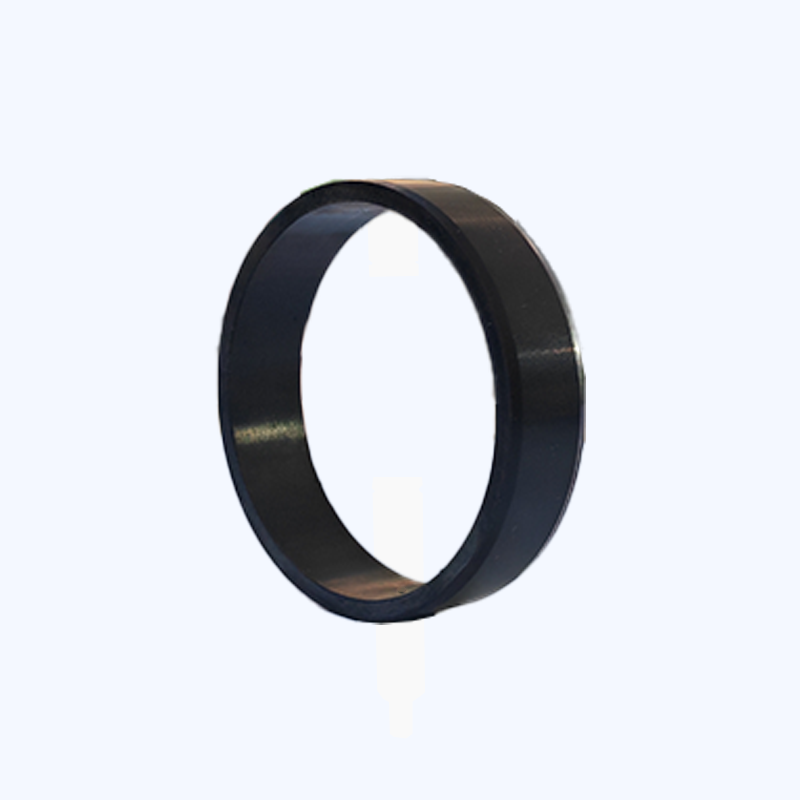
What Is an Inner Rotor for Brushless Motor?
An inner rotor for brushless motor systems is a rotating assembly installed inside the stator. The stator generally contains the windings, while permanent magnets are arranged on or integrated into the rotor. When the electronic controller energizes the stator windings in a controlled sequence, the resulting magnetic field interacts with the rotor magnets and generates rotational movement.
This arrangement is commonly found in brushless DC motors and permanent magnet synchronous motors. Depending on the motor design, the rotor may use a magnetic ring, segmented magnets, a molded magnetic component, or another customized magnetic structure.
The inner-rotor configuration is different from an outer-rotor motor, where the rotor surrounds the stator. In an inner-rotor design, the stator is positioned around the rotating component. This structure can be suitable for applications requiring a compact motor diameter, specific shaft arrangements, or integration with mechanical transmission components.
Main Components of an Inner Rotor Assembly
A typical inner rotor assembly may include:
- Rotor core or supporting structure: Provides the mechanical foundation for the magnetic components.
- Permanent magnets: Generate the magnetic field required for motor operation.
- Shaft or mounting interface: Connects the rotor to the equipment’s mechanical system.
- Magnetic pole arrangement: Determines how the magnetic field is distributed around the rotor.
- Protective or retaining structure: Helps maintain component positioning according to the motor design.
The exact construction depends on the application, motor architecture, and manufacturing process. Therefore, an inner rotor for brushless motor projects should be developed according to the complete motor assembly rather than evaluated as an isolated magnet.
How Does an Inner Rotor for Brushless Motor Work?
The operating principle is based on electromagnetic interaction between the stator and rotor. The electronic controller supplies current to the stator windings in a specific sequence. This produces a rotating magnetic field that interacts with the permanent magnets in the rotor.
As the magnetic poles attract and repel one another, the rotor follows the changing magnetic field and produces continuous rotation. The controller adjusts the timing of current switching according to the motor’s operating requirements.
In a brushless DC motor, electronic commutation replaces the mechanical brushes and commutator used in traditional brushed motors. This structure helps reduce brush-related wear and supports electronically controlled operation.
The Role of Magnetic Pole Configuration
The magnetic pole arrangement is an important part of rotor development. Depending on the motor design, the rotor may use multiple magnetic poles distributed around its circumference.
Radial multipole magnet rings are one possible solution for compact brushless motor structures. Their magnetic poles are arranged around the ring so that the rotor can interact with the stator field as intended.
For more information about this structure, see High Kos’s guide to radial multipole magnet rings.
The number of poles, magnetization direction, and magnetic distribution should be determined through motor design and testing. A suitable inner rotor for brushless motor applications must match the stator’s electromagnetic design and controller requirements.
Common Magnetic Materials for Brushless Motor Inner Rotors
Material selection directly affects magnetic performance, manufacturing options, cost, and application suitability. There is no single material that is ideal for every motor. The right choice depends on the required magnetic characteristics, rotor geometry, production volume, and operating environment.
1. Injection Molded Ferrite Magnets
Injection molded ferrite is a practical option for magnetic components that require complex shapes or integrated structural features. The material is formed through an injection molding process, allowing manufacturers to produce customized geometries that may be difficult to achieve with conventional magnet processing.
Potential advantages include:
- Flexible component geometry
- Suitability for integrated magnetic structures
- Options for customized magnetic pole arrangements
- Adaptability to different motor designs
Injection molded ferrite may be considered when the rotor requires a specific shape, multiple functional features, or a design that benefits from molded construction.
High Kos provides injection molded ferrite magnetic components for applications requiring customized magnetic structures.
2. Sintered Ferrite Magnets
Sintered ferrite is another commonly used permanent magnet material. It is considered in motor applications where the design requires ferrite magnetic properties and a suitable balance between material cost and application performance.
Sintered ferrite components can be manufactured in different shapes according to the product design. Their suitability depends on the motor’s magnetic circuit, available installation space, and operating requirements.
For an inner rotor for brushless motor projects, engineers should evaluate the magnetic performance of the selected ferrite grade together with the rotor dimensions and stator configuration.
Explore High Kos sintered ferrite magnet products for additional material information.
3. NdFeB Magnets
Neodymium iron boron magnets, commonly called NdFeB magnets, offer high magnetic performance and are considered in motor designs where strong magnetic output is required within a limited space.
They may be suitable for compact motors, high-performance equipment, and applications with demanding magnetic requirements. However, material selection should also consider temperature conditions, corrosion protection, mechanical design, and total manufacturing cost.
The appropriate NdFeB grade and configuration must be determined according to the actual motor application. Buyers should avoid selecting a magnet based only on its grade name without checking the complete operating conditions.
4. Injection Molded Magnetic Materials
Injection molded magnetic materials can offer additional design flexibility. Depending on the material system and manufacturing requirements, molded components can combine magnetic functionality with complex geometry.
This approach can be useful when a conventional magnet shape does not fit the intended rotor structure. It also provides opportunities to develop customized magnetic rings and rotor components for different motor platforms.
Inner Rotor for Brushless Motor vs. Outer Rotor Design
Both inner-rotor and outer-rotor structures are used in brushless motor applications. Their differences are mainly related to mechanical arrangement, motor dimensions, and the requirements of the final equipment.
| Comparison | Inner Rotor | Outer Rotor |
|---|---|---|
| Rotor position | Inside the stator | Around the stator |
| Motor arrangement | Stator surrounds the rotor | Rotor surrounds the stator |
| Design focus | Compact internal rotating assembly | External rotating structure |
| Integration | Depends on shaft and internal mounting design | Depends on outer rotating housing |
| Typical selection factors | Space, speed, shaft arrangement and magnetic design | Torque requirements, diameter and equipment layout |
An inner rotor for brushless motor applications may be suitable when the motor needs an internal rotating assembly and a particular shaft or transmission arrangement.
An outer rotor may be more appropriate for designs that benefit from a larger rotor diameter or a different mechanical integration method. The selection should be based on motor performance targets and equipment constraints, not on the assumption that one structure is universally better.
High Kos also offers motor outer rotor magnetic components, allowing engineers and buyers to explore different rotor structures.
Key Design Factors When Selecting an Inner Rotor for Brushless Motor
Choosing a suitable rotor requires coordination between magnetic design, mechanical structure, manufacturing feasibility, and application requirements.
1. Rotor Dimensions and Installation Space
The rotor’s outer diameter, inner diameter, length, and mounting dimensions must correspond to the motor’s design. Even small dimensional deviations may affect assembly clearance, air-gap consistency, and rotor positioning.
Before requesting a quotation, buyers should prepare available drawings or dimensional requirements. If the design is still under development, sharing the installation space and mechanical interface can help the manufacturer assess possible solutions.
2. Magnetic Performance and Pole Distribution
Magnetic performance should be evaluated according to the motor’s torque, speed, efficiency, and control requirements. Pole count and magnetization direction must match the stator and controller design.
An inner rotor for brushless motor applications should not be selected solely by comparing magnet material grades. The complete magnetic circuit determines how effectively the rotor and stator work together.
3. Mechanical Balance and Concentricity
Rotor balance is important because the component rotates during operation. Poor balance or excessive dimensional variation can contribute to vibration, noise, and mechanical stress.
Concentricity and dimensional consistency should also be considered, especially for motors used in precision equipment, pumps, and high-speed applications.
Manufacturers should establish suitable inspection procedures based on the rotor’s geometry and the customer’s quality requirements.
4. Operating Temperature and Environment
The working environment affects material selection and rotor construction. Temperature, humidity, exposure to chemicals, and other environmental conditions may influence long-term performance.
For example, a rotor used in a water pump may face different environmental conditions from one installed in a household appliance or industrial automation system.
Buyers should provide the expected operating temperature range and environmental information during the design discussion.
5. Manufacturing Consistency
A successful prototype does not automatically guarantee stable mass production. Material consistency, molding or sintering processes, magnetization, dimensional inspection, and assembly control all influence the repeatability of the final component.
For an inner rotor for brushless motor projects, buyers should evaluate whether the supplier can understand the drawing requirements, communicate technical issues, and maintain consistent production quality.
Applications of Brushless Motor Inner Rotors
Inner-rotor brushless motors are used across many industries. The magnetic rotor must be matched to the operating requirements of the final equipment.
Household Appliances
Household appliances use brushless motors in different drive and circulation systems. Depending on the product architecture, inner-rotor designs may be considered for fans, pumps, and other motor-driven components.
Manufacturers often focus on compact dimensions, stable operation, noise control, and reliable production quality.
Water Pumps and Fluid Equipment
Brushless motors are used in water circulation, fluid transfer, and other pump-related equipment. The rotor design must correspond to the pump’s mechanical structure and operating environment.
For relevant applications, High Kos provides information about water pump inner rotor design and applications.
Automotive and New Energy Vehicle Components
Automotive equipment may use compact electric motors in auxiliary systems and other applications. In these projects, component dimensions, environmental conditions, magnetic performance, and production consistency are important considerations.
The appropriate magnet material and rotor construction should be selected according to the vehicle system’s technical requirements.
Read more about automotive ferrite magnets and their potential applications.
Industrial Automation and Robotics
Automation equipment often requires motors that fit specific mechanical layouts. An inner rotor for brushless motor applications can be considered where compact installation, controlled rotation, and customized dimensions are important.
The rotor’s magnetic structure and mechanical interface should be developed in coordination with the motor assembly.
Medical Equipment, Drones, and Power Tools
Medical devices, drones, model aircraft, and power tools may use different types of compact brushless motors. Their operating requirements vary significantly.
Some designs prioritize size and weight, while others emphasize output, operating stability, or resistance to environmental conditions. Therefore, rotor selection should always be based on the actual application rather than a general-purpose specification.
Why Work with a Custom Magnetic Rotor Manufacturer?
Standard magnetic components may not meet every motor design requirement. When the rotor needs a special shape, customized pole arrangement, or specific installation dimensions, working with a manufacturer experienced in magnetic components can make the development process more efficient.
High Kos focuses on magnetic products and customized magnetic components, including injection molded and sintered magnetic solutions.
When evaluating a supplier, consider the following factors:
- Material knowledge: The supplier should understand the differences between ferrite, NdFeB, and injection molded magnetic materials.
- Customization capability: The manufacturer should be able to review drawings and discuss component geometry and magnetic requirements.
- Manufacturing experience: Experience with magnetic rings and rotor components can help identify potential production challenges.
- Quality inspection: Inspection methods should correspond to the product’s dimensional and performance requirements.
- Communication: Clear technical communication is essential when developing a new inner rotor for brushless motor applications.
- Production planning: Buyers should discuss sample development, approval procedures, lead times, and mass-production arrangements before placing orders.
You can learn more about High Kos and its magnetic product range through the official High Kos website.
How to Develop a Customized Inner Rotor
A structured development process helps reduce misunderstandings between the motor designer and magnetic component manufacturer.
Step 1: Share the application information
Explain the motor type, final equipment, working environment, and expected operating conditions.
Step 2: Provide drawings or samples
Share the rotor drawing, dimensional requirements, existing sample, or available mechanical interface information.
Step 3: Discuss magnetic material and structure
Evaluate ferrite, NdFeB, or injection molded magnetic solutions according to the required magnetic performance and manufacturing feasibility.
Step 4: Confirm the magnetization requirements
Discuss pole count, magnetization direction, and other relevant magnetic characteristics with the manufacturer.
Step 5: Review samples and testing requirements
Evaluate the prototype according to agreed dimensional, magnetic, and assembly requirements.
Step 6: Confirm mass-production requirements
After sample approval, confirm the production specifications, inspection criteria, packaging, and delivery arrangements.
This process helps ensure that the inner rotor for brushless motor production is aligned with the actual motor design and application requirements.
Conclusion
An inner rotor for brushless motor systems is an important magnetic and mechanical component that directly interacts with the stator to generate rotation. Its performance depends on material selection, rotor dimensions, pole configuration, mechanical balance, environmental conditions, and manufacturing consistency.
Ferrite, NdFeB, and injection molded magnetic materials can all be considered for different rotor designs. The best choice depends on the complete motor structure and the technical requirements of the final equipment.
For motor manufacturers, pump producers, appliance companies, and automation equipment developers, working with an experienced magnetic component supplier can support more effective design evaluation and customized production. High Kos provides magnetic component solutions for different industrial applications. Contact the team to discuss your drawings, material requirements, and customized rotor project.
Frequently Asked Questions
1. What is an inner rotor for brushless motor?
An inner rotor for brushless motor applications is the rotating component positioned inside the stator. It typically contains permanent magnets that interact with the stator’s rotating magnetic field to produce mechanical movement.
2. Which materials are used for brushless motor inner rotors?
Commonly considered materials include ferrite and NdFeB magnets. Injection molded magnetic materials may also be suitable for designs requiring customized shapes or integrated structural features. Selection depends on magnetic requirements, dimensions, operating conditions, and cost.
3. What is the difference between an inner rotor and an outer rotor?
An inner rotor is positioned inside the stator, while an outer rotor surrounds the stator. They have different mechanical arrangements and integration requirements. The appropriate structure depends on the motor’s intended application and design.
4. Can an inner rotor be customized?
Yes. Depending on the manufacturing process and technical requirements, rotor dimensions, magnetic material, pole arrangement, and component geometry can be customized. Buyers should provide drawings or samples for technical evaluation.
5. What information should I provide when requesting a rotor quotation?
Useful information includes the motor application, product drawing, dimensions, magnetic material preference, pole configuration, operating environment, estimated order quantity, and any specific inspection requirements.
6. How can I evaluate the quality of an inner rotor?
Evaluate dimensional accuracy, magnetic characteristics, magnetization consistency, mechanical balance where applicable, assembly compatibility, and production inspection procedures. The inspection criteria should be agreed upon according to the motor’s requirements.
Contact High Kos for Customized Magnetic Rotor Solutions
Are you developing a new brushless motor or looking for a customized magnetic rotor supplier? High Kos can discuss your application, drawings, material options, and production requirements.
Visit High Kos to explore its magnetic components, or contact the team to discuss your inner rotor project.