
Magnetic rings are widely used in electronic equipment, motor systems, sensing devices, automotive components, and industrial automation. Their performance depends on material composition, magnetic structure, dimensions, frequency response, and magnetization design.
Understanding Magnetic Ring Physical Properties helps engineers determine how a component will behave under different electrical and magnetic conditions. Ferrite rings used for electromagnetic interference (EMI) suppression mainly depend on frequency-related impedance, while permanently magnetized rings can be used with Hall-effect sensors for position and speed detection.
Understanding Magnetic Ring Physical Properties
The basic Magnetic Ring Physical Properties are closely related to the material from which the component is manufactured. Ferrite is widely used in electronic anti-interference components because of its magnetic response and frequency-dependent characteristics.
Inside ferrite materials are numerous magnetic domains. When there is no external magnetic field, these domains have different orientations, and their magnetic effects largely cancel each other at the macroscopic level.
When an alternating magnetic field is applied, the domains respond to the changing field. As the frequency increases, magnetic losses become more significant. This behavior contributes to the high-frequency impedance that makes ferrite components useful for noise suppression.
Therefore, the Magnetic Ring Physical Properties should always be evaluated together with the operating frequency and intended application.
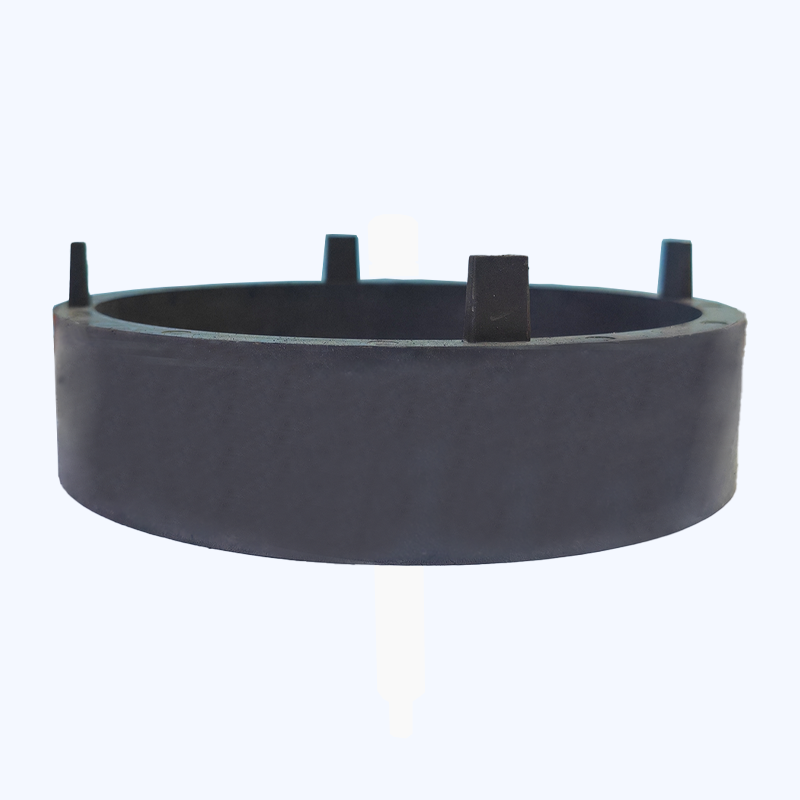
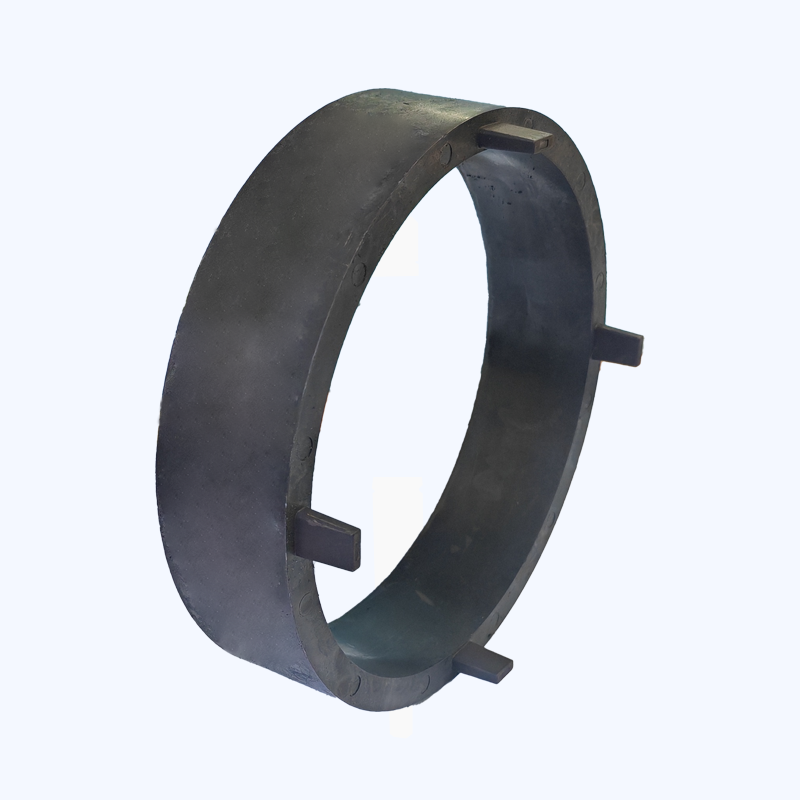
Magnetic Ring Physical Properties and Frequency Response
One of the most important Magnetic Ring Physical Properties is frequency-dependent impedance.
At relatively low frequencies, a ferrite ring normally has less influence on the desired current or signal. At higher frequencies, the magnetic material interacts more strongly with unwanted electrical noise.
The impedance characteristics depend on several factors, including ferrite composition, permeability, dimensions, frequency, conductor configuration, and temperature.
Because of this frequency-selective behavior, engineers can choose different ferrite materials according to the frequency range that needs to be controlled.
High-Frequency Impedance
The high-frequency response is an important part of the Magnetic Ring Physical Properties used in EMI applications.
When high-frequency interference passes through a conductor surrounded by ferrite, the component presents increased impedance to the unwanted current. Some of the associated electromagnetic energy is dissipated through losses within the magnetic material.
The result is reduced high-frequency noise transmission through the cable or circuit.
Low-Frequency Signal Transmission
Another important aspect of the Magnetic Ring Physical Properties is the relatively lower impedance presented to lower-frequency current.
This allows the desired power or signal to continue through the conductor while the component provides stronger resistance to unwanted high-frequency interference.
The exact response varies according to the ferrite formulation and operating conditions, so component selection should be based on actual system requirements.
Magnetic Ring Physical Properties for EMI Suppression
The Magnetic Ring Physical Properties make ferrite rings useful for electromagnetic interference suppression.
Modern electronic systems can generate high-frequency noise through switching power supplies, motors, digital circuits, and communication equipment. This noise may travel through power cables and signal lines.
A ferrite ring provides a passive method of increasing impedance to unwanted high-frequency current.
Ferrite Rings on Power Cables
A ferrite component can be installed around a power cable, allowing the conductor to pass through the center of the ring.
When high-frequency interference travels along the cable, the ferrite material increases the impedance encountered by these unwanted components.
The cylindrical bulge visible on some charger cables, USB cables, display cables, and other electronic cables is a familiar example.
The Magnetic Ring Physical Properties determine how effectively a particular ferrite component responds to the target noise frequency.
EMI Suppression on Signal Cables
Ferrite rings can also be installed on communication and signal cables.
Their purpose is to reduce unwanted high-frequency interference while maintaining the normal transmission of the required electrical signal.
Factors such as cable type, ferrite material, frequency range, and the number of times the cable passes through the ring can affect the final suppression performance.
Magnetic Rings for Hall-Effect Sensing
The Magnetic Ring Physical Properties are also important in magnetic sensing applications, although the design requirements are different from those of EMI suppression components.
A sensing ring can be permanently magnetized with a defined magnetic pattern. When the ring rotates or moves together with a mechanical component, its magnetic field changes relative to a Hall-effect sensor.
The sensor detects these changes and converts them into electrical signals that can be processed by a control system.
Position Detection
A multipolar magnetic ring can generate repeated magnetic-field transitions as it rotates.
The Hall sensor detects these transitions and sends corresponding electrical signals to the controller. The system can use this information to determine the rotational or positional state of the mechanical component.
The Magnetic Ring Physical Properties, including pole arrangement and magnetic field strength, therefore have a direct relationship with the generated sensing signal.
Speed Detection
Magnetic sensing rings can also be used to measure rotational speed.
As the magnetic poles pass the Hall sensor, the sensor produces corresponding signal changes. The frequency of these signals can then be processed to determine the rotational speed.
This non-contact measurement method is widely suitable for motor and motion-control applications.
Flow Measurement
In certain flow measurement systems, a rotating or moving mechanical element can be combined with a magnetized ring.
As the element moves, the magnetic field changes relative to the Hall sensor. The resulting electrical pulses can be processed to estimate movement or flow rate.
This approach avoids the need for direct electrical contact with the moving component.
Magnetic Ring Physical Properties of Ferrite and Permanent Rings
Although many components are generally called magnetic rings, their material properties and functions can be very different.
Ferrite rings designed for EMI suppression normally rely on frequency-dependent magnetic behavior rather than permanent magnetism.
Permanent magnetic rings, in contrast, are designed to generate a stable magnetic field and a defined pole pattern.
The Magnetic Ring Physical Properties required for these two applications should therefore be evaluated separately.
| Characteristic | Ferrite EMI Ring | Permanent Magnetic Ring |
|---|---|---|
| Main purpose | EMI suppression | Sensing or motor applications |
| Typical material | Ferrite | Ferrite, NdFeB or other permanent magnets |
| Permanent magnetism | Normally absent | Present |
| Main characteristic | Frequency-dependent impedance | Magnetic field pattern |
| Typical sensor use | Not normally required | Hall-effect or magnetic sensor |
| Common applications | Cables and circuits | Motors, encoders and sensors |
Understanding these differences prevents engineers from selecting a component based only on its name or appearance.
Magnetic Ring Physical Properties vs. Phone Attachment Rings
The term “magnetic ring” is also widely used in the mobile phone accessory market.
However, phone attachment rings are fundamentally different from electronic magnetic components. They are generally made from neodymium magnets, iron-based metal sheets, or similar materials and are designed to create magnetic attraction for mounting purposes.
Their function is mechanical rather than electronic.
By comparison, the Magnetic Ring Physical Properties of an electronic component are considered in relation to electromagnetic suppression, magnetic sensing, motor operation, or signal detection.
Electronic Ferrite Magnetic Rings
Typical characteristics include:
- Ferrite-based material
- Grey or dark grey appearance
- Generally no permanent magnetism when used for EMI suppression
- Matte or relatively rough surface
- Installation around cables or inside electronic assemblies
- Designed to control electromagnetic interference
Mobile Phone Magnetic Attachment Rings
Typical characteristics include:
- Neodymium magnets or ferromagnetic metal
- Permanent magnetic attraction or magnetic response
- Smooth metallic appearance
- Installation on the rear of a phone or inside a protective case
- Designed for magnetic mounting
These products should therefore not be considered equivalent simply because they share the word “ring.”
Factors Affecting Magnetic Ring Physical Properties
Several design factors can influence the Magnetic Ring Physical Properties and final application performance.
Material Selection
Ferrite formulations can have different permeability, loss characteristics, and frequency responses.
For permanent magnetic rings, engineers may select ferrite, bonded NdFeB, sintered NdFeB, or other materials according to magnetic strength, temperature requirements, geometry, and cost.
Ring Dimensions
The inner diameter, outer diameter, thickness, and overall geometry can affect the magnetic and electrical characteristics.
For cable applications, the internal opening must also be suitable for the cable diameter and installation method.
For sensing applications, dimensional accuracy is important because the distance between the magnetic ring and sensor can influence the detected magnetic field.
Operating Frequency
Frequency is a key consideration when evaluating the Magnetic Ring Physical Properties of an EMI suppression component.
A ferrite material that performs well within one frequency range may provide a different response at another frequency. Engineers should therefore identify the actual interference spectrum before selecting the material.
Magnetic Pole Configuration
For sensing rings, pole count and magnetization pattern influence the generated signal.
The magnetic configuration should match the Hall sensor, operating speed, control electronics, and required sensing performance.
Applications Based on Magnetic Ring Physical Properties
The different Magnetic Ring Physical Properties allow these components to serve many industries.
Electronic Equipment
Ferrite components can help reduce conducted electromagnetic interference in power and signal cables.
Motor Systems
Permanent magnetic rings can be integrated into motor rotors or used as magnetic markers for speed and position feedback.
Automotive Components
Magnetic sensing components can support applications requiring rotational or positional detection in automotive systems.
Household Appliances
Magnetic rings can be used for motor feedback, safety detection, speed monitoring, and flow-related sensing functions.
Industrial Automation
In automated equipment, magnetic sensing rings can provide non-contact feedback for motors, actuators, rotary mechanisms, and other moving components.
Selecting Components According to Magnetic Ring Physical Properties
The intended application should be identified before selecting a magnetic ring.
For EMI suppression, important parameters include:
- Target interference frequency
- Ferrite material
- Impedance characteristics
- Cable diameter
- Installation configuration
- Required attenuation
For magnetic sensing applications, engineers should consider:
- Magnetic material
- Pole count
- Magnetic field strength
- Ring dimensions
- Sensor type
- Operating speed
- Magnetization pattern
- Required measurement performance
Evaluating these factors together provides a more reliable approach to component selection.
Why Magnetic Ring Physical Properties Matter in Component Design
The Magnetic Ring Physical Properties determine how a component interacts with electrical currents, electromagnetic fields, and magnetic sensors.
For EMI applications, frequency response and impedance are particularly important. For sensing applications, magnetic field strength, pole arrangement, dimensions, and magnetization accuracy become more important.
A suitable design therefore requires a clear understanding of the electrical and mechanical environment in which the component will operate.
Conclusion
The Magnetic Ring Physical Properties determine the behavior and application range of different magnetic ring components. Ferrite rings can provide frequency-dependent impedance for reducing high-frequency electromagnetic interference, while permanently magnetized rings can generate magnetic signals for Hall-effect sensing, position detection, and speed measurement.
Electronic magnetic rings should also be distinguished from mobile phone attachment rings. Although they have similar names, their materials, structures, and intended functions are substantially different.
By evaluating material composition, frequency response, dimensions, magnetic strength, pole configuration, and operating conditions, engineers can select a magnetic ring that matches the requirements of electronic, motor, sensing, and industrial applications.