
Introduction to Permanent Ferrite Magnetic Rings
Permanent Ferrite Magnetic Rings are important magnetic components used in automotive motor systems. In automotive applications, the term “magnetic ring” can refer to different products, including soft ferrite rings for electromagnetic interference (EMI) suppression and permanent-magnet components used to generate the excitation field of motors.
Among automotive auxiliary motor applications, permanent ferrite magnetic arcs and rings are particularly important. These components provide a stable magnetic field for various DC permanent-magnet motors used throughout a vehicle.
With their combination of cost efficiency, temperature stability, corrosion resistance and demagnetization resistance, Permanent Ferrite Magnetic Rings remain a practical choice for many automotive motor applications.
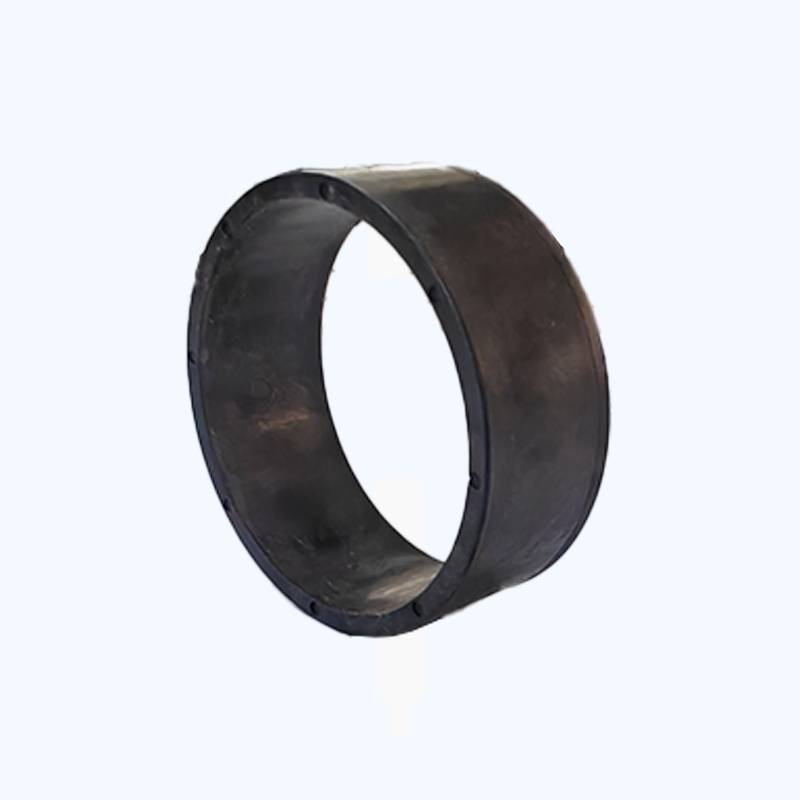
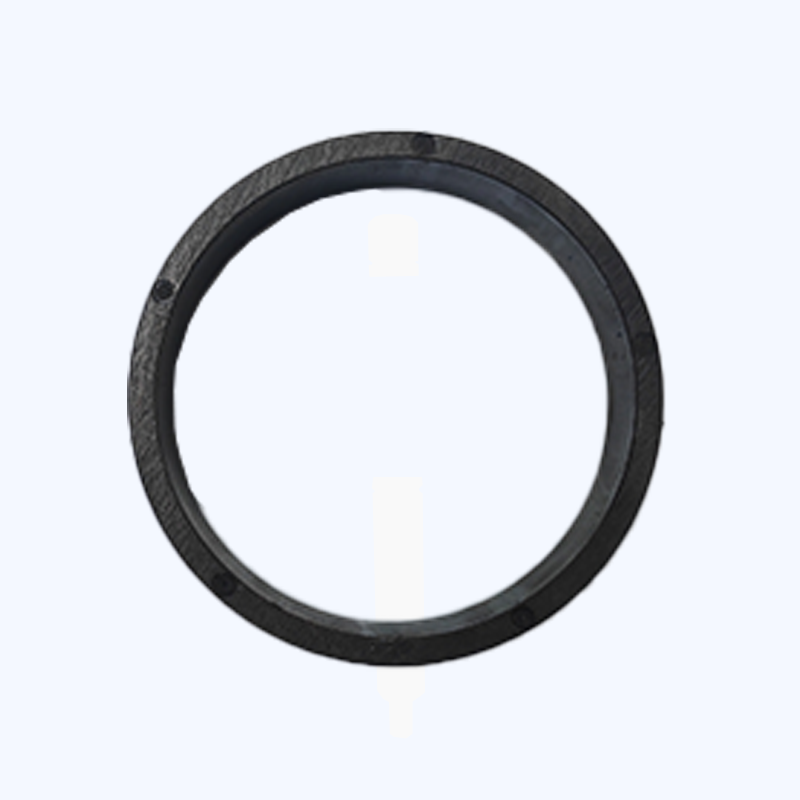
What Are Permanent Ferrite Magnetic Rings?
Permanent Ferrite Magnetic Rings are permanent-magnet components manufactured from ferrite magnetic materials, commonly based on strontium ferrite.
Depending on the motor structure, they can be produced as:
- Magnetic rings
- Arc magnets
- Segment magnets
- Customized rotor magnets
- Injection-molded ferrite magnetic components
Unlike soft ferrite components used for EMI suppression, permanent ferrite materials retain a stable magnetic field after magnetization.
In automotive motors, this magnetic field acts as the excitation source and interacts with the electromagnetic field generated by the motor windings.
Permanent Ferrite Magnetic Rings in Automotive Motors
Automobiles contain a large number of small and medium-sized motors for body control, comfort systems, thermal management and other auxiliary functions.
Permanent Ferrite Magnetic Rings and magnetic arcs are widely used in these motor systems because they provide a practical balance between magnetic performance and production cost.
Typical automotive motor applications include:
- Starter motors
- Windshield wiper motors
- Power window motors
- Power seat motors
- ABS-related motors
- HVAC blower motors
- Fuel pump motors
- Cooling fan motors
- Various automotive actuators
These applications generally require reliable magnetic performance rather than the extreme power density demanded by high-performance traction motors.
Why Automotive Motors Use Permanent Ferrite Magnetic Rings
Cost-Effective Magnetic Performance
One of the main advantages of Permanent Ferrite Magnetic Rings is their cost efficiency.
Ferrite does not depend on rare-earth elements such as neodymium, making it attractive for high-volume automotive motor production.
For auxiliary motors where cost, reliability and consistent production are important, ferrite can provide an effective alternative to more expensive rare-earth permanent magnets.
Good Temperature Stability
Automotive components are exposed to repeated temperature changes.
Engine compartments, HVAC systems and other areas can experience significant thermal variation during vehicle operation.
Appropriately selected ferrite magnetic materials can maintain stable magnetic characteristics across a broad temperature range.
This makes Permanent Ferrite Magnetic Rings suitable for applications that experience both low-temperature startup and elevated operating temperatures.
Strong Corrosion Resistance
Automotive motor components can be exposed to moisture, condensation and other environmental factors.
Ferrite provides good corrosion resistance compared with many metallic permanent-magnet materials.
This characteristic can reduce concerns about magnetic-component degradation during long-term vehicle operation.
Resistance to Demagnetization
Automotive motors can experience temperature changes, vibration and opposing magnetic fields.
The demagnetization resistance of ferrite is therefore an important advantage.
When the appropriate ferrite grade is selected according to the motor’s operating conditions, Permanent Ferrite Magnetic Rings can maintain stable magnetic performance throughout the intended service life.
Permanent Ferrite Magnetic Rings for Automotive DC Motors
Traditional automotive DC permanent-magnet motors are among the most established applications for ferrite magnets.
The magnetic components are often positioned around the inner circumference of the motor housing or stator.
Magnetic Arc Configuration
Instead of using a complete circular ring, many automotive motors use several arc-shaped ferrite magnets.
These magnetic arcs are arranged around the stator to create alternating magnetic poles.
This configuration provides the excitation field required for motor operation.
The geometry of each arc magnet influences:
- Air-gap flux density
- Magnetic-field distribution
- Motor torque
- Commutation characteristics
- Overall efficiency
For this reason, dimensional consistency is particularly important when producing automotive magnetic arcs.
Permanent Ferrite Magnetic Rings for Wiper Motors
Windshield wiper motors operate repeatedly under changing environmental conditions.
They require reliable torque output, stable operation and reasonable manufacturing cost.
Permanent Ferrite Magnetic Rings can provide the permanent magnetic field required by these motors while maintaining good resistance to temperature and environmental changes.
Because automotive wiper motors are produced in large quantities, consistent magnet dimensions and magnetic performance are important for maintaining production quality.
Permanent Ferrite Magnetic Rings for Power Window Motors
Power window motors are compact actuators that must provide sufficient torque within a limited space.
Ferrite magnetic rings or arc magnets can be incorporated into the motor structure to generate the required rotor or stator magnetic field.
Their relatively low material cost makes ferrite particularly attractive for high-volume automotive body applications.
Permanent Ferrite Magnetic Rings for Blower and Fan Motors
Automotive HVAC blower motors and cooling fans operate across a wide range of speeds.
The magnetic components must maintain stable performance while the motor experiences repeated starting, stopping and speed changes.
Ferrite magnetic rings can provide a practical solution where cost and reliability are more important than achieving the highest possible magnetic energy density.
Permanent Ferrite Magnetic Rings vs NdFeB Magnets
The choice between ferrite and NdFeB depends strongly on the motor’s requirements.
| Property | Ferrite | NdFeB |
|---|---|---|
| Magnetic performance | Moderate | High |
| Material cost | Lower | Higher |
| Rare-earth elements | No | Yes |
| Corrosion resistance | Excellent | Requires protection |
| Temperature performance | Good for suitable grades | Grade-dependent |
| Demagnetization resistance | Good | Grade-dependent |
| Power density | Moderate | High |
| High-volume cost control | Excellent | Higher |
For compact traction motors where maximum power density is critical, NdFeB may be preferred.
For many auxiliary automotive motors, however, Permanent Ferrite Magnetic Rings can offer a more economical and sufficiently capable solution.
Automotive Magnetic Ring Manufacturing Technologies
Different forming technologies can be used depending on the motor structure and production requirements.
Sintered Ferrite Magnetic Rings
Sintered ferrite is widely used for conventional automotive magnetic arcs and rings.
The process produces dense ferrite components with stable magnetic properties.
It is suitable for applications requiring:
- Consistent magnetic performance
- High-volume production
- Stable dimensions
- Cost-effective manufacturing
Injection-Molded Ferrite Magnetic Components
Injection molding combines ferrite magnetic powder with a polymer binder.
This approach provides greater freedom in component geometry and can support integrated forming with other parts.
High-performance injection-molded ferrite materials are increasingly considered for automotive motor rotors where dimensional consistency and structural integration are important.
Advantages include:
- Complex geometries
- Good dimensional consistency
- Integrated molding capability
- Automated production potential
- Reduced secondary assembly
The trade-off is that the polymer binder reduces magnetic powder concentration compared with dense sintered ferrite.
Magnetic Performance Grades for Automotive Applications
Not every automotive motor requires the same ferrite grade.
Performance selection should be based on the actual motor design.
Important parameters include:
Remanence
Remanence determines the magnetic flux available from the permanent magnet.
Higher suitable remanence can contribute to greater air-gap flux and motor torque.
Coercivity
Coercivity indicates the magnet’s resistance to demagnetization.
This becomes particularly important in motors exposed to elevated temperatures or strong opposing magnetic fields.
Maximum Energy Product
The maximum magnetic energy product provides an indication of the magnet’s energy density.
Motor designers can use this parameter to compare different material grades when optimizing motor size and torque output.
Magnetization Accuracy for Automotive Magnetic Rings
Material performance is only one part of the final magnetic-ring quality.
The magnetization process must also be accurately controlled.
For Permanent Ferrite Magnetic Rings, important magnetization parameters include:
- Pole number
- Pole pitch
- Magnetization direction
- Pole strength
- Magnetic-field uniformity
- Angular positioning
Poor magnetization consistency can lead to variations in air-gap flux and motor performance.
For automotive mass production, repeatability between batches is particularly important.
The Growing Role of Ferrite in New-Energy Vehicles
The growth of new-energy vehicles is changing automotive motor requirements, but it does not eliminate the demand for ferrite.
Traditional body and auxiliary motors remain necessary in both conventional vehicles and electric vehicles.
At the same time, new motor architectures are creating opportunities for additional permanent-magnet components.
Permanent Ferrite Magnetic Rings can therefore continue to serve applications where cost efficiency, environmental stability and adequate magnetic performance are the primary requirements.
For higher-performance brushless motors, advanced ferrite grades and injection-molded ferrite materials may also provide additional opportunities.
How to Select Permanent Ferrite Magnetic Rings
Identify the Motor Application
First determine whether the magnetic component will be used in a wiper motor, window motor, blower motor, pump motor, actuator or another system.
Each application has different torque, temperature and dimensional requirements.
Determine the Operating Temperature
The selected ferrite grade should maintain sufficient magnetic performance at the motor’s maximum operating temperature.
Define the Magnetic Requirements
Consider:
- Required air-gap flux
- Motor torque
- Rotor or stator dimensions
- Pole configuration
- Operating speed
Select the Manufacturing Process
Sintered ferrite is suitable for many conventional magnetic arcs and rings, while injection molding may be more appropriate when complex geometry and integrated assembly are required.
Consider Production Volume
Automotive applications typically involve large production quantities.
Dimensional consistency, automated manufacturing and batch-to-batch magnetic stability should therefore be considered alongside material cost.
Why Choose Highkos for Permanent Ferrite Magnetic Rings?
Highkos specializes in customized magnetic components for automotive, motor and industrial applications.
Its product solutions include:
- Permanent Ferrite Magnetic Rings
- Ferrite magnetic arcs
- Injection-molded ferrite magnets
- Bonded magnetic components
- Motor rotor magnets
- Multi-pole magnetic components
- Customized magnetic rings
- OEM and ODM magnetic solutions
For automotive motor manufacturers, magnetic components can be customized according to required dimensions, magnetic grade, pole configuration, magnetization pattern and application conditions.
Highkos focuses on providing magnetic components that balance magnetic performance, dimensional consistency, manufacturing efficiency and cost.
Frequently Asked Questions
What automotive motors use Permanent Ferrite Magnetic Rings?
They are commonly used in wiper motors, power window motors, blower motors, fuel pump motors, starter motors, seat motors and other automotive auxiliary motors.
Why is ferrite widely used in automotive motors?
Ferrite provides a combination of low cost, corrosion resistance, stable magnetic performance and good demagnetization resistance, making it suitable for high-volume automotive motor applications.
Are ferrite magnetic rings better than NdFeB?
Not necessarily. NdFeB provides much higher magnetic performance and is suitable for high-power-density applications. Ferrite is often more attractive when cost, environmental stability and sufficient magnetic performance are the main priorities.
Can ferrite magnets be injection molded?
Yes. Ferrite magnetic powder can be combined with polymer binders and injection molded into customized shapes. This can be useful for complex automotive motor components and automated assembly.
What is the difference between a magnetic arc and a magnetic ring?
A magnetic ring is generally a continuous annular component, while magnetic arcs are separate curved segments arranged around a motor structure. Both can provide permanent magnetic excitation depending on the motor design.
Conclusion
Permanent Ferrite Magnetic Rings remain an important magnetic solution for automotive motors. From wiper and window motors to pumps, blowers, seat adjustment systems and other auxiliary actuators, ferrite provides a useful combination of cost efficiency, temperature adaptability, corrosion resistance and demagnetization resistance.
As automotive motor technology continues to develop, the demand for optimized magnetic components is also evolving. Sintered ferrite remains important for conventional magnetic arcs and rings, while injection-molded ferrite materials provide additional opportunities for complex and integrated motor structures.
For automotive manufacturers, selecting the right material grade, geometry, forming process and magnetization specification is essential for achieving stable motor performance and reliable mass production.