
Introduction to Permanent Magnet Magnetic Rings
In modern motor design, Permanent Magnet Magnetic Rings are widely used as rotor excitation components in BLDC motors, permanent-magnet synchronous motors (PMSM) and stepper motors. By generating alternating N/S magnetic poles around the rotor circumference, Permanent Magnet Magnetic Rings interact with the magnetic field produced by the stator windings to generate electromagnetic torque.
The performance of Permanent Magnet Magnetic Rings is determined by more than magnetic strength alone. Material selection, forming technology, pole configuration, magnetization accuracy, axial dimensions and air-gap magnetic-field distribution all influence the final motor performance.
For this reason, choosing the right Permanent Magnet Magnetic Rings requires a complete evaluation of the motor’s operating temperature, torque requirements, power density, production volume and cost target.
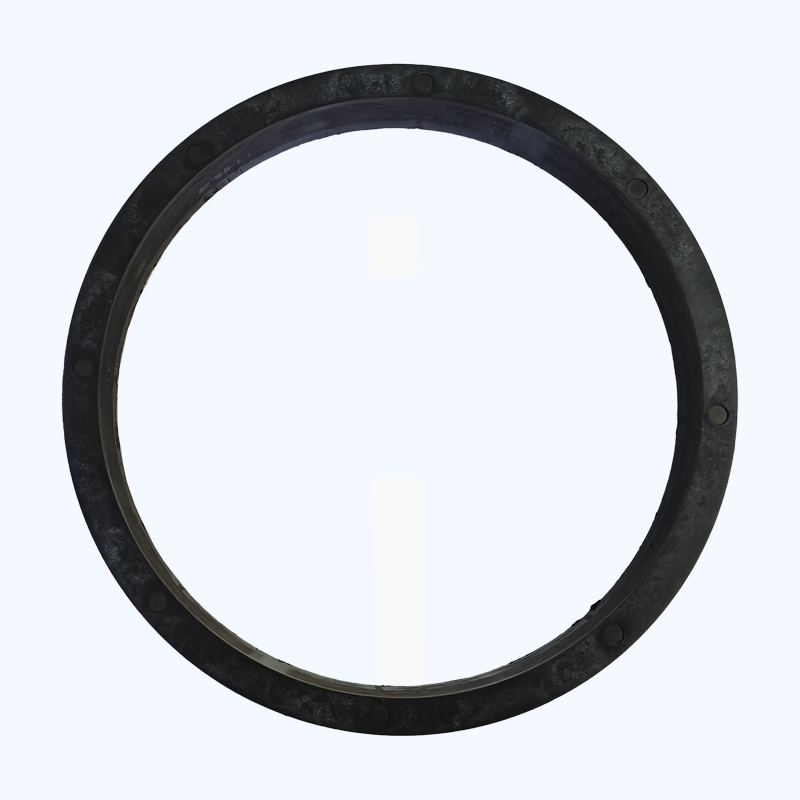
What Are Permanent Magnet Magnetic Rings?
Permanent Magnet Magnetic Rings are annular permanent-magnet components designed to provide the excitation magnetic field of a motor rotor.
During manufacturing, multiple alternating N and S poles can be magnetized around the circumference of the ring. When the rotor rotates inside the stator, these magnetic poles interact with the rotating electromagnetic field generated by the stator windings.
This interaction produces electromagnetic torque and drives the motor.
Typical applications of Permanent Magnet Magnetic Rings include:
- BLDC motors
- PMSM motors
- Stepper motors
- Automotive motors
- Servo motors
- Fan motors
- Water pump motors
- Household appliance motors
- Industrial drive motors
The appropriate magnetic ring design depends on the specific motor architecture and operating conditions.
Functional Advantages of Permanent Magnet Magnetic Rings
Simplified Rotor Structure
One major advantage of Permanent Magnet Magnetic Rings is that they provide rotor excitation without requiring conventional excitation windings and slip rings.
This simplifies the rotor structure and can reduce:
- Mechanical components
- Electrical connections
- Maintenance requirements
- Rotor excitation losses
For compact motor designs, this simplified structure can improve overall reliability.
Improved Motor Efficiency
Permanent Magnet Magnetic Rings provide a constant magnetic field without requiring continuous electrical excitation.
This is one reason permanent-magnet motors can achieve high efficiency and high torque density.
PMSM and BLDC motors using appropriately designed magnetic rings are widely used in applications where energy efficiency and compact motor dimensions are important.
Manufacturing Flexibility
Different manufacturing technologies can be used to produce Permanent Magnet Magnetic Rings, including sintering, injection molding and compression bonding.
Injection molding and bonded magnet processes are particularly useful for producing large quantities of components with consistent dimensions.
For applications requiring integrated rotor structures, injection-molded magnetic rings can also be molded around shafts or other inserts.
Materials Used for Permanent Magnet Magnetic Rings
The magnetic material determines many of the basic characteristics of Permanent Magnet Magnetic Rings, including magnetic flux, temperature resistance, corrosion resistance and cost.
Sintered NdFeB Permanent Magnet Magnetic Rings
Sintered NdFeB is one of the most widely used high-performance materials for Permanent Magnet Magnetic Rings.
Depending on the material grade, NdFeB can provide high remanence and a high maximum magnetic energy product.
This makes NdFeB magnetic rings suitable for motors where high power density and high torque are priorities.
Typical applications include:
- Electric vehicle drive motors
- High-performance servo motors
- Industrial motors
- Compact high-torque motors
- High-power BLDC motors
The main limitation is that sintered NdFeB is relatively hard and brittle, so rotor assembly and mechanical protection require careful consideration.
Bonded NdFeB Magnetic Rings
Bonded NdFeB Permanent Magnet Magnetic Rings combine NdFeB magnetic powder with a polymer binder.
Compared with sintered NdFeB, bonded NdFeB normally provides lower magnetic performance but offers greater manufacturing flexibility.
The higher electrical resistivity of bonded materials can also help reduce certain high-frequency eddy-current losses.
Bonded NdFeB magnetic rings can therefore be considered for:
- Small BLDC motors
- Medium-sized brushless motors
- Compact permanent-magnet motors
- Applications requiring a balance between cost and magnetic performance
Ferrite Permanent Magnet Magnetic Rings
Ferrite is another important material for Permanent Magnet Magnetic Rings, particularly in cost-sensitive motor applications.
Although ferrite provides lower remanence than NdFeB, it offers advantages including:
- Low cost
- Good corrosion resistance
- Good environmental stability
- Suitable temperature capability for appropriate grades
Ferrite magnetic rings are commonly used in:
- Fan motors
- Water pump motors
- Air-conditioning motors
- Household appliances
- Cost-sensitive BLDC applications
When extremely high power density is not required, ferrite can provide a practical balance between motor performance and production cost.
Samarium Cobalt Magnetic Rings
Samarium cobalt (SmCo) provides excellent temperature stability and corrosion resistance.
As a result, SmCo Permanent Magnet Magnetic Rings are suitable for specialized applications where motors operate under severe thermal or environmental conditions.
Potential applications include:
- Aerospace equipment
- High-temperature motors
- Specialized industrial systems
- Demanding motion-control applications
Although the material cost is higher, its temperature performance can justify its use in specialized motor designs.
Magnetization of Permanent Magnet Magnetic Rings
The final performance of Permanent Magnet Magnetic Rings depends not only on the magnetic material but also on the accuracy of the magnetization process.
Even a high-performance magnetic material can produce poor motor characteristics if the pole strength, pole position or magnetic-field waveform is inconsistent.
Magnetic-Field Orientation
Before magnetization, the internal magnetic orientation of the material must be considered according to the intended magnetization direction.
For certain Permanent Magnet Magnetic Rings, radial or other controlled orientations can help produce a more uniform magnetic field.
Correct magnetic orientation contributes to more consistent pole performance.
Magnetizing Field Strength
The magnetizing field must be strong enough to achieve the required magnetic saturation.
The appropriate magnetizing field depends on the coercivity and grade of the magnetic material.
Insufficient magnetizing field strength can cause:
- Reduced magnetic flux
- Uneven pole strength
- Lower motor torque
- Distorted back-EMF
- Increased motor performance variation
Multi-Pole Magnetization
Many Permanent Magnet Magnetic Rings are magnetized with multiple alternating N/S poles.
During multi-pole magnetization, pulse timing, magnetic-field strength and pole positioning must be carefully controlled.
The resulting flux-density waveform directly influences the motor’s back-EMF waveform.
Accurate multi-pole magnetization can help achieve:
- More stable motor torque
- Lower torque ripple
- Smoother commutation
- Better electromagnetic performance
- More consistent mass production
Permanent Magnet Magnetic Rings and Air-Gap Magnetic Fields
The magnetic-field distribution in the motor air gap is one of the most important factors affecting motor performance.
A strong magnetic ring is not necessarily the best magnetic ring if its magnetic field is poorly distributed.
The design of Permanent Magnet Magnetic Rings should therefore consider the relationship between the rotor magnetic field and the stator electromagnetic structure.
Pole Shape Optimization
The shape of magnetic poles can be optimized to control the air-gap magnetic-field waveform.
Specially designed notches or transitions between magnetic poles can modify the flux distribution.
Depending on the motor design, this can help reduce:
- Torque ripple
- Electromagnetic vibration
- Back-EMF distortion
- Commutation fluctuations
Halbach Permanent Magnet Magnetic Rings
Halbach Permanent Magnet Magnetic Rings use a specialized magnetization arrangement to concentrate magnetic flux toward one side while reducing magnetic leakage on the opposite side.
In certain PMSM designs, this configuration can increase useful air-gap flux density.
It can also improve the sinusoidal quality of the air-gap magnetic field under appropriate motor configurations.
Therefore, Halbach magnetic structures can be considered when motor designers need better flux utilization and controlled magnetic-field distribution.
Axial Length Optimization of Permanent Magnet Magnetic Rings
The axial dimensions of Permanent Magnet Magnetic Rings should be matched with the stator and rotor geometry.
If the magnetic ring extends beyond the axial length of the stator core, the additional magnetic material may contribute to magnetic flux paths through the stator end regions.
This can improve the utilization of the stator core ends and potentially increase the effective back-EMF.
However, the optimum axial length depends on the complete motor magnetic circuit.
Designers should evaluate:
- Magnetic ring axial length
- Stator core length
- Rotor core dimensions
- Air-gap size
- Winding configuration
- Magnetic pole arrangement
rather than optimizing the magnetic ring independently.
Permanent Magnet Magnetic Rings for BLDC Motors
BLDC motors are one of the most common applications for Permanent Magnet Magnetic Rings.
The rotor magnetic ring provides the permanent magnetic field required for electronic commutation.
Accurate pole positioning and consistent magnetic strength are especially important because the controller relies on the rotor magnetic position to determine the appropriate stator excitation sequence.
Depending on the motor size and performance requirements, BLDC motors may use:
- Ferrite magnetic rings
- Bonded NdFeB rings
- Sintered NdFeB magnets
- Injection-molded magnetic rings
Permanent Magnet Magnetic Rings for PMSM Motors
PMSM motors require a stable rotor magnetic field to maintain synchronous operation.
For high-performance PMSM applications, Permanent Magnet Magnetic Rings may use high-energy NdFeB materials.
For cost-sensitive applications, ferrite or bonded magnetic materials may provide a more economical solution.
The final selection should consider:
- Required torque
- Maximum speed
- Operating temperature
- Power density
- Demagnetization resistance
- Manufacturing cost
Permanent Magnet Magnetic Rings for Stepper Motors
Stepper motors use controlled magnetic interaction to achieve precise incremental movement.
The magnetic pole arrangement and magnetic-field distribution of Permanent Magnet Magnetic Rings therefore affect the motor’s positioning characteristics.
For compact stepper motors, a magnetic ring with good dimensional consistency and accurate pole magnetization can support stable motor operation.
How to Select Permanent Magnet Magnetic Rings
Define the Motor’s Power Requirement
High-power-density applications generally require higher-performance magnetic materials.
NdFeB is often considered when compact dimensions and strong magnetic output are important, while ferrite can be attractive for cost-sensitive applications.
Check Operating Temperature
Temperature directly affects permanent-magnet performance.
The selected Permanent Magnet Magnetic Rings should maintain adequate magnetic properties throughout the complete operating temperature range.
Select the Forming Process
The three common manufacturing approaches are:
- Sintered magnetic rings
- Injection-molded magnetic rings
- Bonded magnetic rings
Each process provides a different balance between magnetic performance, mechanical strength, dimensional accuracy and production efficiency.
Define Magnetization Requirements
The number of poles, pole pitch, magnetization direction and magnetic-field waveform should be defined according to the motor’s electromagnetic design.
Evaluate the Complete Motor System
Finally, Permanent Magnet Magnetic Rings should be evaluated together with the rotor, stator, winding and air gap.
This system-level approach is more effective than selecting a magnetic ring based only on its nominal magnetic properties.
Why Choose Highkos for Permanent Magnet Magnetic Rings?
Highkos provides customized magnetic component solutions for motor manufacturers and industrial applications.
Its product capabilities include:
- Permanent Magnet Magnetic Rings
- Ferrite magnetic rings
- NdFeB magnetic rings
- Bonded magnetic rings
- Injection-molded magnetic rings
- Multi-pole magnetization
- Customized rotor magnetic components
- OEM and ODM magnetic solutions
For different motor applications, Highkos can help customers evaluate magnetic material, ring geometry, pole configuration and manufacturing requirements.
The objective is to achieve a suitable balance between magnetic performance, dimensional accuracy, production efficiency and cost.
Frequently Asked Questions
What are Permanent Magnet Magnetic Rings used for?
Permanent Magnet Magnetic Rings are primarily used as rotor excitation components in BLDC motors, PMSM motors, stepper motors and other permanent-magnet motor systems.
Which material is best for Permanent Magnet Magnetic Rings?
There is no universal material. NdFeB is suitable for high power density, ferrite is attractive for cost-sensitive applications, bonded NdFeB provides manufacturing flexibility, and SmCo is suitable for high-temperature environments.
Why is magnetization accuracy important?
Magnetization determines the strength and position of the magnetic poles. Poor magnetization can cause uneven magnetic flux, distorted back-EMF and increased torque ripple.
Can Permanent Magnet Magnetic Rings be injection molded?
Yes. Injection molding can combine magnetic powder with a polymer binder and produce complex magnetic ring geometries. It is particularly useful for high-volume production and integrated rotor structures.
What is the difference between ferrite and NdFeB magnetic rings?
NdFeB generally provides substantially higher magnetic performance and is suitable for high power-density motors. Ferrite offers lower cost, good corrosion resistance and suitable performance for many fans, pumps and household appliances.
Conclusion
Permanent Magnet Magnetic Rings are critical rotor components in many modern permanent-magnet motors. Their function extends beyond simply generating magnetic flux. Material selection, magnetization precision, pole configuration, ring geometry and air-gap optimization all influence the final motor characteristics.
For BLDC, PMSM and stepper motors, the right Permanent Magnet Magnetic Rings can help achieve an appropriate balance of torque, efficiency, power density, reliability and manufacturing cost.
For this reason, motor manufacturers should select magnetic rings according to the complete motor design rather than evaluating magnetic strength as an isolated parameter.