
Introduction
As modern motors continue to evolve toward higher efficiency, smarter control and greater precision, accurate rotor position detection has become increasingly important. Whether in industrial automation, electric vehicles or household appliances, motor controllers rely on precise position feedback to ensure smooth and efficient operation.
Hall Sensing Magnetic Rings are one of the most widely used magnetic components for rotor position detection. Working together with Hall effect sensors, these magnetic rings convert rotor movement into electrical signals that enable real-time motor control.
From brushless DC motors (BLDC) to high-precision servo systems and specialized sensing applications, Hall sensing magnetic rings have become an essential part of intelligent motion control.
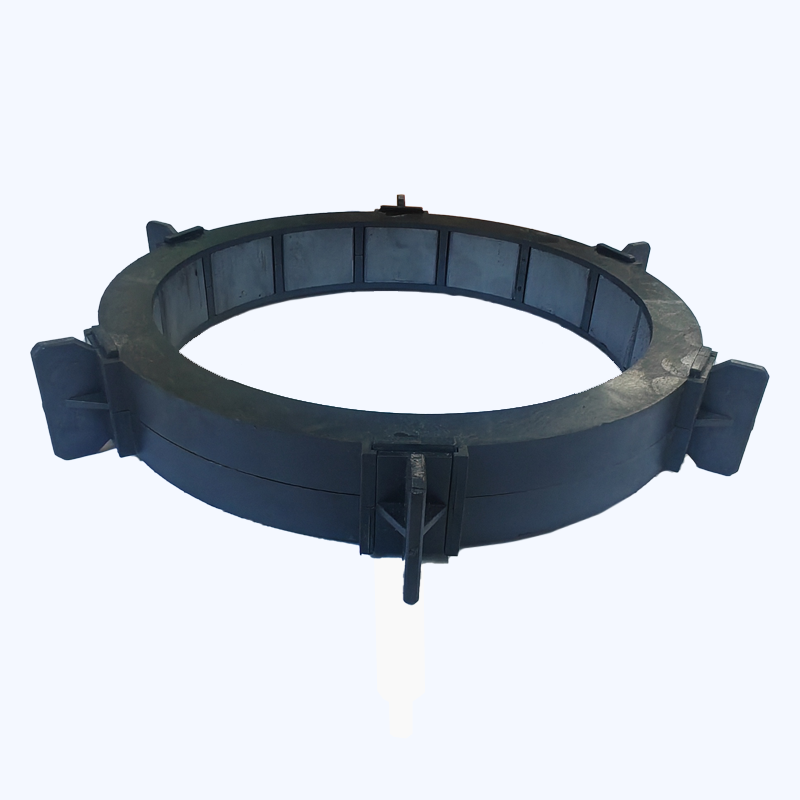
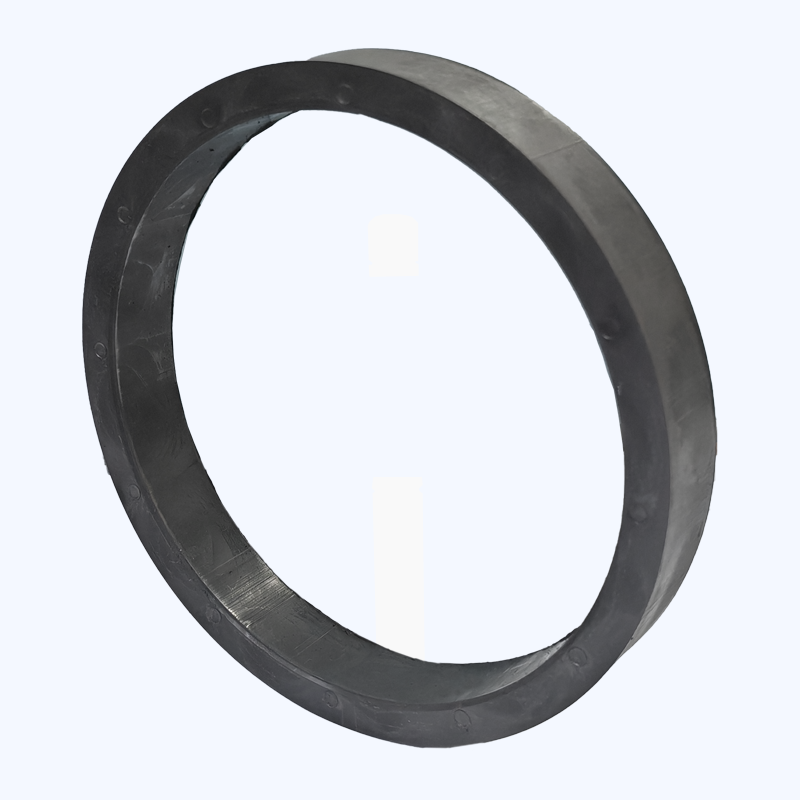
What Are Hall Sensing Magnetic Rings?
Hall Sensing Magnetic Rings are permanent magnetic rings specially designed for use with Hall effect sensors. Unlike rotor magnets that generate driving torque, Hall sensing magnetic rings are dedicated to position detection and signal generation.
The magnetic ring is mounted directly onto the motor shaft and rotates together with the rotor. As it rotates, alternating north and south magnetic poles pass by stationary Hall sensors installed on the stator.
The Hall sensors detect these changing magnetic fields and convert them into electrical signals that are transmitted to the motor controller.
These signals provide critical information including:
- Rotor position
- Rotational speed
- Rotation direction
- Angular displacement
This information allows the controller to adjust motor operation with high accuracy.
How Hall Sensing Magnetic Rings Work
The operating principle is based on the Hall Effect.
When the magnetic poles on the rotating ring pass a Hall sensor, the magnetic field changes continuously. The Hall sensor converts these magnetic field variations into electrical output signals.
The motor controller processes these signals to determine the exact position of the rotor and adjusts current supplied to the stator windings.
This real-time feedback enables:
- Accurate electronic commutation
- Stable speed regulation
- Smooth acceleration
- Precise position control
Without reliable rotor position sensing, many modern motor control systems would not achieve the performance expected in today’s applications.
Hall Sensing Magnetic Rings in Brushless DC Motors
Brushless DC motors represent the largest application area for Hall Sensing Magnetic Rings.
Unlike traditional brushed motors, BLDC motors do not use brushes or mechanical commutators.
Instead, they rely entirely on electronic commutation.
Electronic Commutation
As the rotor rotates, the magnetic ring generates alternating magnetic fields.
Hall sensors mounted on the stator continuously detect these magnetic changes.
The motor controller uses the position information to determine exactly when each stator winding should be energized.
This electronic commutation system provides several advantages:
- Higher motor efficiency
- Reduced mechanical wear
- Lower operating noise
- Longer service life
- Improved reliability
Closed-Loop Speed Control
Besides rotor positioning, Hall sensing magnetic rings also provide continuous speed and direction information.
This feedback allows the controller to perform closed-loop speed regulation, maintaining stable motor performance under changing loads.
Such capability is especially valuable in:
- Variable frequency drives
- Industrial automation
- Robotics
- Electric vehicles
Hall Sensing Magnetic Rings in Servo Systems
Modern servo systems demand extremely accurate position feedback.
For this reason, Hall Sensing Magnetic Rings are frequently used as magnetic encoder components.
Magnetic Encoder Technology
A specially magnetized magnetic ring, often using sine-cosine magnetization, works together with multiple linear Hall sensors.
This configuration provides highly accurate rotor position information throughout the entire rotation.
Compared with optical encoders, magnetic encoder systems offer several advantages.
Advantages Over Optical Encoders
Magnetic encoder solutions provide:
- Better vibration resistance
- Excellent dust resistance
- Reliable operation in oily environments
- Lower maintenance requirements
- Improved durability
These characteristics make magnetic encoder systems ideal for demanding industrial environments.
Applications in High-Precision Motion Control
Because of their accuracy and reliability, Hall sensing magnetic rings are widely used in advanced motion control systems.
Typical applications include:
Industrial Robotic Arms
Robotic joints require accurate position feedback for smooth and repeatable movement.
Hall sensing magnetic rings help achieve precise motion control while maintaining long-term reliability.
CNC Machine Tools
Precision machining depends on accurate motor positioning.
Magnetic encoder systems provide reliable feedback even under vibration and coolant exposure.
Electric Power Steering Systems
Modern electric power steering systems require continuous monitoring of motor position to ensure accurate steering assistance.
Hall sensing magnetic rings deliver stable feedback while operating in demanding automotive environments.
Special Applications of Hall Sensing Magnetic Rings
In addition to standard motor control, Hall sensing magnetic rings are also used in several specialized applications.
Electric Bicycle Torque Sensors
Many electric bicycles integrate Hall sensing magnetic rings with torque sensing mechanisms.
As the rider applies force to the pedals, mechanical deformation is detected and converted into electrical signals.
The motor controller adjusts power assistance according to rider input, creating a smooth and natural riding experience.
Switched Reluctance Motors
Although switched reluctance motors have relatively simple structures, accurate rotor position detection remains essential.
Hall sensing magnetic rings provide position information that allows the controller to determine the correct excitation timing during startup and low-speed operation.
This improves:
- Starting performance
- Low-speed stability
- Overall operating efficiency
Advantages of Hall Sensing Magnetic Rings
Hall sensing magnetic rings offer several important benefits for modern motor systems.
Accurate Rotor Position Detection
Real-time position feedback improves motor efficiency and control accuracy.
Reliable Performance
Magnetic sensing technology performs well in environments involving dust, vibration and oil contamination.
Long Service Life
Because there is no mechanical contact between the magnetic ring and Hall sensor, wear is minimal.
Cost-Effective Motion Control
Compared with many optical sensing systems, Hall sensing magnetic rings provide an economical solution while maintaining excellent reliability.
How to Choose the Right Hall Sensing Magnetic Ring
Selecting the appropriate Hall sensing magnetic ring depends on several engineering factors.
Consider the following:
Magnetic Pole Count
Different motors require different pole configurations for accurate signal generation.
Magnetic Material
Ferrite and rare-earth magnetic materials provide different performance characteristics depending on application requirements.
Magnetization Pattern
Radial, multi-pole and sine-cosine magnetization patterns should be selected according to the sensing method.
Operating Environment
Temperature, vibration, humidity and contamination resistance should all be considered during product selection.
Working with an experienced magnetic component manufacturer helps ensure optimal performance for each motor design.
Why Choose Highkos?
Highkos specializes in manufacturing customized magnetic components for motor position sensing and motion control applications.
Our capabilities include:
- Hall sensing magnetic rings
- Multi-pole magnetic rings
- Magnetic encoder rings
- Injection molded magnetic components
- Permanent ferrite magnetic rings
- OEM and ODM manufacturing
With advanced magnetization technology and strict quality control, Highkos provides reliable magnetic solutions for automotive, industrial automation, robotics and smart motor applications worldwide.
Frequently Asked Questions
What are Hall Sensing Magnetic Rings used for?
Hall sensing magnetic rings provide rotor position, speed and direction information for motor controllers by working together with Hall effect sensors.
Which motors commonly use Hall Sensing Magnetic Rings?
They are widely used in BLDC motors, servo motors, permanent magnet motors, switched reluctance motors and electric bicycle drive systems.
Are Hall Sensing Magnetic Rings better than optical encoders?
Each technology has its advantages. Hall sensing magnetic rings generally provide better resistance to vibration, dust and oil contamination, making them suitable for harsh industrial environments.
Can Hall Sensing Magnetic Rings be customized?
Yes. Pole number, dimensions, magnetic material and magnetization pattern can all be customized to match specific motor and sensor designs.