
Introduction
Injection molded magnetic rings and bonded magnetic rings are two widely used permanent magnet solutions in modern electric motors. Although both are manufactured using magnetic powders combined with polymer binders, their production methods, magnetic properties, structural characteristics, and application scenarios differ significantly.
Selecting the appropriate magnetic ring is essential for improving motor efficiency, reliability, and overall product performance. While injection molded magnetic rings excel in integrated structures and precision manufacturing, bonded magnetic rings are designed for applications requiring stronger magnetic fields and higher output torque.
Understanding these differences helps motor manufacturers choose the most suitable solution based on design objectives, production volume, and operating conditions.
Learn more about customized magnetic solutions:
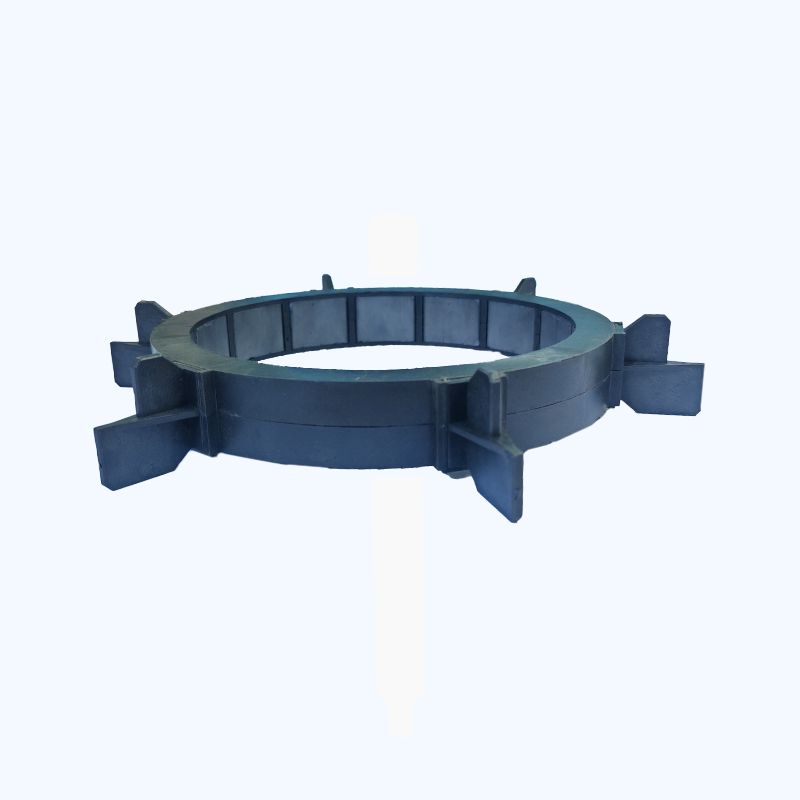
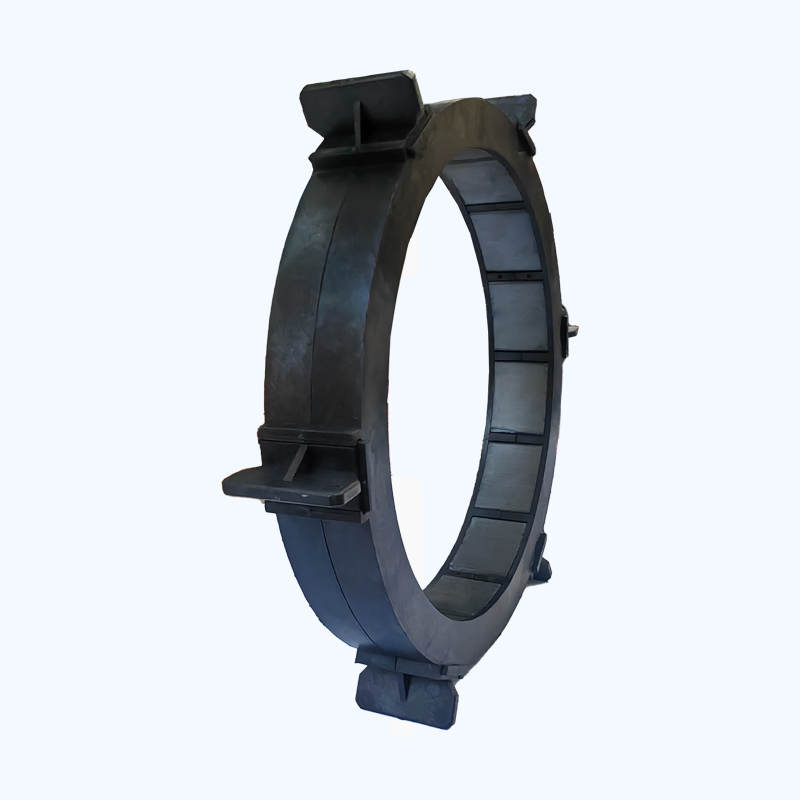
What Are Injection Molded Magnetic Rings?
Injection Molded Magnetic Rings for Integrated Motor Design
Injection molded magnetic rings are manufactured by mixing magnetic powder with engineering thermoplastics and forming the material through an injection molding process.
One of the greatest advantages of this manufacturing method is the ability to produce complex geometries while simultaneously molding the magnet together with other components such as motor shafts, hubs, or plastic carriers.
This insert molding process creates an integrated rotor assembly that eliminates secondary bonding operations, reduces assembly errors, and improves overall production efficiency.
Compared with conventional assembly methods, integrated molding provides:
- Higher dimensional accuracy
- Improved concentricity
- Better assembly reliability
- Reduced production cost
- Faster manufacturing cycles
These advantages make injection molded magnetic rings particularly attractive for high-volume production.
What Are Bonded Magnetic Rings?
Bonded Magnetic Rings for Higher Magnetic Performance
Bonded magnetic rings are typically manufactured through compression molding. This process allows a much higher magnetic powder content than injection molding, resulting in stronger magnetic properties.
Because more magnetic material is packed into the same volume, bonded magnetic rings generate higher magnetic energy products and stronger magnetic fields.
These characteristics enable motors to produce higher torque while maintaining compact dimensions.
For applications where output performance is more important than structural complexity, bonded magnetic rings often become the preferred choice.
Injection Molded Magnetic Rings vs Bonded Magnetic Rings
Manufacturing Process
The primary difference begins with the production method.
Injection molded magnetic rings use thermoplastic injection molding technology. This process enables complex shapes, thin-wall structures, and integrated assemblies with shafts or other components.
Bonded magnetic rings generally rely on compression molding. Although the process is less flexible for complicated geometries, it achieves significantly higher magnetic powder loading.
As a result, manufacturers choose different production technologies depending on product requirements.
Magnetic Performance
Magnetic performance is one of the most important considerations when selecting a motor magnet.
Injection molded magnetic rings generally contain approximately 45–65% magnetic powder, providing a magnetic energy product suitable for most precision motors and consumer applications.
Compression bonded magnetic rings typically achieve 65–80% magnetic powder loading, allowing magnetic energy products of approximately 10–12 MGOe, considerably higher than the 5–8 MGOe commonly achieved by injection molded magnetic rings.
This higher magnetic energy allows motors to generate stronger magnetic fields and greater output torque.
Structural Integration
One of the strongest competitive advantages of injection molded magnetic rings is structural integration.
Instead of manufacturing the rotor, shaft, and magnet separately, insert molding combines multiple components into a single assembly during production.
Benefits include:
- Fewer assembly steps
- Reduced adhesive usage
- Improved rotor balance
- Higher positioning accuracy
- Better long-term reliability
This manufacturing approach is especially valuable for precision motors operating at high rotational speeds.
Dimensional Accuracy
Precision motor manufacturers often require extremely tight dimensional tolerances.
Injection molding naturally provides excellent repeatability and consistent dimensions, making it suitable for miniature motors and complex rotor designs.
Compression molded magnets generally require additional machining if high dimensional precision is necessary.
Production Cost
For large-volume production, injection molded magnetic rings provide excellent manufacturing efficiency.
Because insert molding combines multiple manufacturing steps into one process, overall production costs can be significantly reduced.
Compression bonded magnetic rings may require additional machining and assembly, resulting in higher manufacturing costs for complex motor structures.
Applications of Injection Molded Magnetic Rings
Home Appliance Motors
Household appliances increasingly rely on brushless motors for energy efficiency and quiet operation.
Typical applications include:
- Inverter air conditioners
- Washing machines
- Vacuum cleaners
- Electric fans
- Air purifiers
- Water pumps
The integrated rotor structure improves assembly consistency while reducing manufacturing costs.
Automotive Motors
The automotive industry continues to adopt compact brushless motors across numerous vehicle systems.
Injection molded magnetic rings are commonly used in:
- Electric water pump motors
- Window lift motors
- Cooling fan motors
- HVAC blower motors
- Fuel pump motors
- Small actuator motors
Their lightweight design and integrated construction improve durability under continuous operation.
Precision Micro Motors
Small motors require compact structures and excellent rotational balance.
Typical products include:
- Camera motors
- Office automation equipment
- Smart home devices
- Medical equipment
- Robotics
- Consumer electronics
The high dimensional precision of injection molding makes these applications possible.
Applications of Bonded Magnetic Rings
High-Power Brushless Motors
Bonded magnetic rings are widely selected for motors requiring higher output torque.
Common examples include:
- Power tools
- Garden equipment
- Electric chain saws
- Industrial fans
- High-speed blowers
Their stronger magnetic field allows motors to deliver higher power without increasing motor size.
Servo Motors
Servo systems require rapid response, stable torque output, and high efficiency.
Because bonded magnetic rings provide stronger magnetic performance, they are commonly used in industrial automation equipment, CNC machinery, and robotics.
Automotive Seat Adjustment Motors
Seat adjustment systems require continuous torque while maintaining compact motor dimensions.
Bonded magnetic rings provide an excellent balance between magnetic performance and production cost, making them suitable for these demanding automotive applications.
How to Choose the Right Magnetic Ring
The selection depends on several important factors:
- Required output torque
- Rotor structure
- Available installation space
- Manufacturing volume
- Cost target
- Assembly requirements
- Dimensional tolerance
- Operating environment
If integrated rotor construction, lightweight design, and high-volume manufacturing are priorities, injection molded magnetic rings are often the ideal solution.
If maximum magnetic performance and higher torque are the primary objectives, bonded magnetic rings may provide better results.
Why Choose Highkos?
Highkos specializes in designing and manufacturing customized permanent magnetic components for global motor manufacturers.
Our capabilities include:
- Injection molded ferrite magnetic rings
- Bonded NdFeB magnetic rings
- Insert molding technology
- Multi-pole magnetization
- Customized magnetic assemblies
- Automotive-grade quality management
- OEM and ODM manufacturing
Our engineering team works closely with customers from prototype development through mass production to optimize both magnetic performance and manufacturing efficiency.
Learn more:
Frequently Asked Questions
Which magnetic ring provides higher torque?
Bonded magnetic rings generally provide higher magnetic energy products, enabling greater motor output torque.
Why are injection molded magnetic rings widely used in automotive motors?
Because they can be molded together with motor shafts, reducing assembly steps while improving dimensional accuracy and long-term reliability.
Which magnetic ring is better for brushless DC motors?
Both solutions are suitable. Injection molded magnetic rings are preferred for compact, high-volume precision motors, while bonded magnetic rings are ideal for high-power brushless motor applications.
Conclusion
Both injection molded magnetic rings and bonded magnetic rings play essential roles in modern motor technology. While injection molded magnetic rings offer superior structural integration, dimensional accuracy, and manufacturing efficiency, bonded magnetic rings provide stronger magnetic performance and higher output torque.
Choosing the right solution depends on the motor’s design goals, operating conditions, and performance requirements. By partnering with an experienced magnetic component manufacturer, companies can optimize both product quality and production efficiency while meeting the demands of today’s competitive motor industry.