
Introduction
Permanent magnets are essential components in modern motor systems, directly affecting efficiency, torque output, reliability and operating performance. Among various bonded magnetic materials, injection molded magnets and compression bonded magnets are widely used in automotive, industrial equipment, household appliances and electronic applications.
Although both solutions belong to the bonded magnet category, their manufacturing processes, material structures and design capabilities create significant differences in practical applications.
Choosing the right magnetic material depends on factors such as required magnetic strength, structural complexity, production volume and overall cost efficiency.
This article explains the differences between these two magnet technologies, including magnetic performance, manufacturing processes, structural integration capabilities and suitable motor applications.
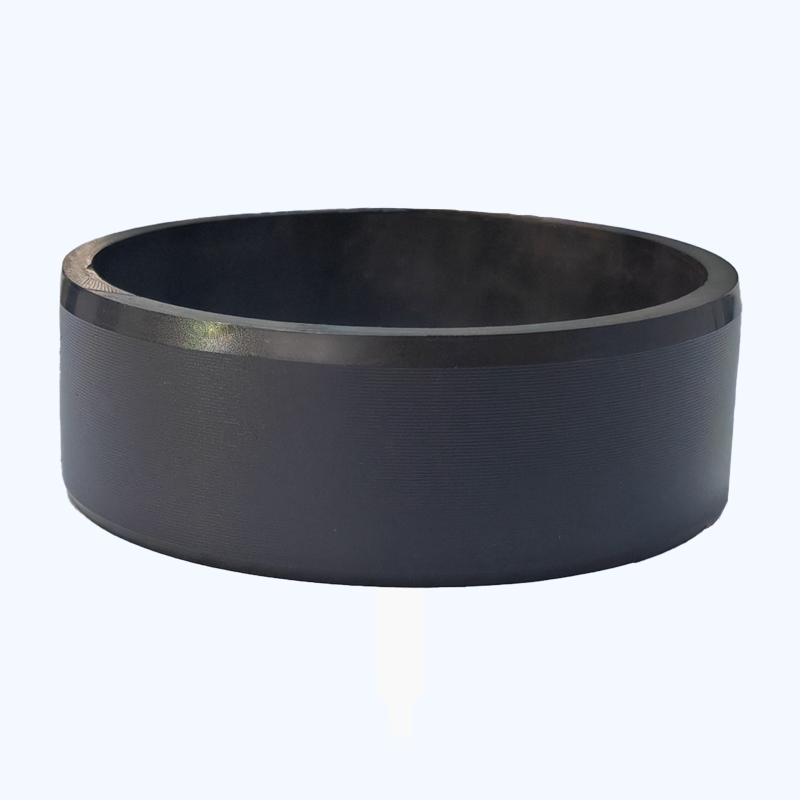
What Are Injection Molded Magnets?
Injection molded magnets are composite permanent magnets produced through an injection molding process.
During manufacturing, magnetic powders are combined with thermoplastic binders and processed under controlled heating conditions. The material is then injected into customized molds to create precise magnetic components with complex geometries.
Unlike traditional manufacturing methods, this process allows magnets to be directly integrated with other parts, improving assembly efficiency and product consistency.
Manufacturing Process of Injection Molded Magnets
The production process generally includes:
- Preparation of magnetic powder materials
- Mixing magnetic powder with polymer binders
- Heating and material plasticization
- Injection molding through customized tooling
- Cooling and quality inspection
This manufacturing method provides excellent flexibility for producing small and complex magnetic components.
Advantages of Injection Molded Ferrite Magnets
Injection molded ferrite magnets provide several important benefits:
- Complex shape capability
- High dimensional accuracy
- Stable mass production
- Lightweight design
- Reduced secondary processing
- Better integration with plastic or metal components
These advantages make them suitable for applications requiring compact structures and efficient manufacturing.
What Are Bonded Magnets?
Bonded magnets are permanent magnetic materials manufactured by combining magnetic powders with bonding materials.
Compared with sintered magnets, bonded magnets offer greater design flexibility because the magnetic particles are held together using polymers or other binders.
Different production methods create different performance characteristics.
Types of Bonded Magnetic Materials
Common bonded magnet technologies include:
- Injection molded magnets
- Compression bonded magnets
- Extrusion bonded magnets
Each process provides different advantages depending on the required magnetic performance and product design.
Compression Bonded Magnets for High Performance Applications
Compression bonded magnets are manufactured by compacting magnetic powder under high pressure.
Because they contain a higher percentage of magnetic material, they generally provide stronger magnetic output compared with injection molding processes.
Typical applications include:
- High-performance motors
- Industrial servo systems
- Electric vehicle components
However, additional assembly processes may be required when integrating these magnets into complex motor structures.
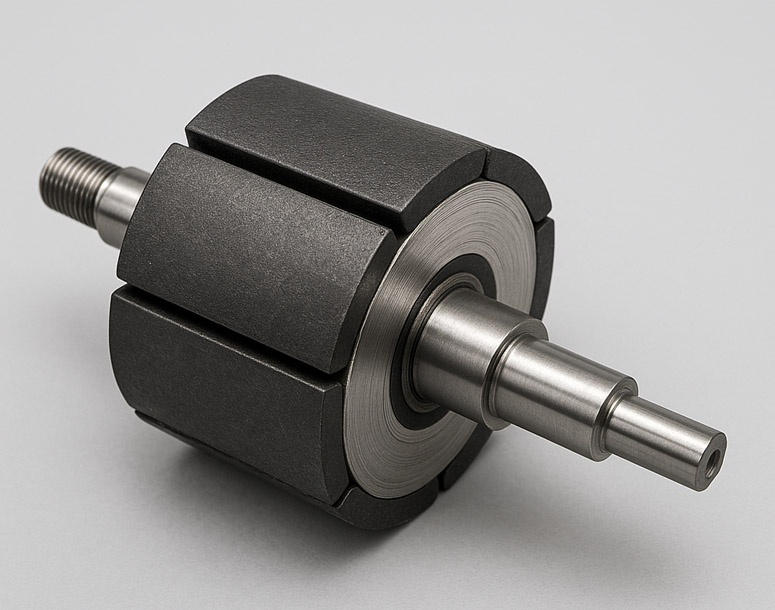
Magnetic Performance Comparison Between Different Magnet Technologies
Magnetic performance is one of the most important factors affecting motor efficiency and torque capability.
Magnetic Material Loading and Energy Product
Compression bonded magnets usually achieve a higher magnetic powder loading ratio, typically around 65% to 80%.
This higher material concentration provides:
- Higher magnetic flux density
- Stronger magnetic output
- Improved power density
For NdFeB-based bonded magnets, the maximum energy product can reach approximately 10–12 MGOe or higher.
In comparison, injection molded materials require more polymer content to maintain proper flow characteristics during molding.
Typical characteristics include:
- Magnetic powder loading ratio: approximately 45%–65%
- Maximum energy product: around 5–8 MGOe
Although the magnetic output is lower, this technology offers advantages in manufacturing flexibility and structural integration.
Selecting the Right Solution for Motor Applications
The appropriate magnet type depends on the motor design requirements.
Compression bonded solutions are commonly selected for:
- High torque applications
- High power density motors
- Performance-focused systems
Injection molding solutions are often preferred for:
- Automotive auxiliary motors
- Fan motors
- Water pump motors
- Sensor components
- Compact electrical devices
Structural Integration Advantages of Injection Molded Components
One major advantage of injection molding technology is its ability to combine magnetic materials with other components during the forming process.
This capability helps manufacturers simplify assembly and improve product reliability.
Integrated Molding with Motor Components
During production, magnetic elements can be formed together with:
- Metal shafts
- Plastic housings
- Rotor structures
- Mechanical inserts
This eliminates additional processes such as:
- Adhesive bonding
- Press fitting
- Manual assembly
Benefits include:
- Reduced manufacturing steps
- Improved dimensional accuracy
- Lower assembly costs
- Better production consistency
Precision Control for Magnetic Rings and Sensors
Modern motors and electronic systems often require accurate magnetic positioning.
Injection molding allows precise control of:
- Pole arrangement
- Magnetic orientation
- Component dimensions
This is especially valuable for:
- Encoder rings
- Position sensors
- Small motor rotors
Improved precision helps enhance motor stability, reduce vibration and improve operating performance.
Manufacturing Efficiency and Cost Benefits
Besides magnetic performance, production efficiency plays an important role in selecting a suitable magnetic solution.
Reduced Secondary Processing Requirements
Integrated molding reduces the need for additional manufacturing operations.
Compared with traditional assembly methods, manufacturers can benefit from:
- Shorter production cycles
- Lower labor requirements
- Reduced assembly errors
- Improved automation capability
For high-volume production, these advantages can significantly improve overall cost efficiency.
Flexible Design for Complex Magnetic Structures
Injection molding supports customized designs that are difficult to achieve with conventional processing methods.
Possible designs include:
- Multi-pole magnetic rings
- Complex rotor structures
- Thin-wall components
- Integrated magnetic assemblies
This flexibility provides engineers with more freedom during motor development.
Applications of Injection Molded Magnets in Motor Systems
Due to their design flexibility and manufacturing advantages, these magnetic components are widely used across multiple industries.
Automotive Motor Applications
Common applications include:
- Windshield wiper motors
- Window lift motors
- Seat adjustment systems
- Small actuators
Benefits include:
- Compact design
- Stable operation
- Cost-effective mass production
HVAC and Fan Motor Applications
These components are commonly used in:
- Air conditioning systems
- Ventilation equipment
- Cooling devices
Their advantages include:
- Reliable performance
- Lightweight structure
- Long service life
Water Pump and Sensor Applications
Other applications include:
- Water pump motors
- Magnetic sensors
- Control systems
- Detection devices
High precision and stable magnetic characteristics make them suitable for demanding electronic applications.
How to Choose Between Injection Molded Magnets and Bonded Magnets?
Selecting the correct magnetic solution depends on application requirements.
| Requirement | Recommended Solution |
|---|---|
| Maximum magnetic strength | Compression bonded magnets |
| Complex geometry | Injection molding technology |
| Integrated motor structure | Injection molded components |
| Large production volume | Injection molding technology |
| Precision magnetic positioning | Injection molded components |
| High torque applications | Compression bonded magnets |
A professional magnetic component supplier can help optimize material selection according to motor performance requirements, production conditions and cost targets.
Why Choose Highkos for Customized Magnetic Solutions?
Highkos specializes in developing and manufacturing customized magnetic components for motor and industrial applications.
With experience in injection molding technology, tooling development and production management, Highkos supports customers with:
- Custom magnetic component design
- Prototype development
- OEM manufacturing
- Mass production capability
- Application-based engineering support
The company provides reliable magnetic solutions for automotive systems, electronic devices, motors and industrial equipment.
Frequently Asked Questions
What is the difference between injection molded magnets and bonded magnets?
The main difference is the manufacturing process. Injection molded products are created through molding technology, which allows complex structures and integrated designs, while compression bonded magnets focus more on achieving higher magnetic density.
Are ferrite-based molded magnets suitable for motors?
Yes. They are widely used in compact motors, automotive components, fans, pumps and sensor applications where balanced performance and cost efficiency are required.
Can magnetic components be customized?
Yes. Manufacturers can customize shape, size, magnetic orientation and assembly requirements based on specific application needs.
Which industries use bonded magnetic materials?
Bonded magnetic materials are commonly used in automotive, electronics, household appliances, industrial equipment and automation systems.