
Many engineers and product designers ask a common question: Does Size Affect Gauss Value? The answer is yes. While the magnetic material determines the intrinsic magnetic properties, the size and geometry of a magnet directly influence the magnetic field strength measured on its surface.
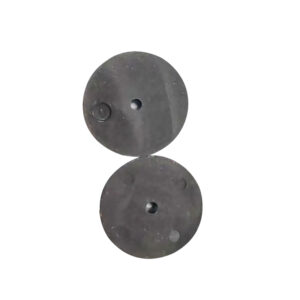
Understanding the relationship between magnet dimensions and magnetic field strength helps improve product performance, optimize costs, and ensure reliable operation in motors, sensors, encoders, and automation systems. For custom magnetic ring solutions, visit https://www.highkos.com/.
Why Does Size Affect Gauss Value?
To understand Does Size Affect Gauss Value, it is important to distinguish between remanence and surface Gauss value. Remanence is an inherent property of the magnetic material and remains the same regardless of the magnet’s dimensions. Surface Gauss value, however, depends on how magnetic flux is distributed within the magnet.
A larger or thicker magnet can direct magnetic flux differently than a smaller one, resulting in different Gauss meter readings even when the magnets are made from the same material.
Does Size Affect Gauss Value Through Magnet Thickness?
Thickness is usually the most influential dimension. For axially magnetized magnetic rings, increasing thickness allows more magnetic flux to concentrate near the pole surface.
As thickness increases, the measured magnetic field generally becomes stronger. However, there is a limit. Once the thickness reaches approximately one-third to one-half of the outer diameter, magnetic saturation begins to occur. Beyond this point, additional thickness produces only minor improvements in surface Gauss value.
This is why engineers often focus on balancing thickness and material grade rather than simply making magnets larger.
Does Size Affect Gauss Value Through Diameter Changes?
Outer diameter and inner diameter also influence magnetic field distribution.
A larger outer diameter increases the total amount of magnetic material and total magnetic flux. However, the surface Gauss value does not always increase proportionally because the magnetic field spreads across a larger area.
Similarly, a larger inner diameter reduces the wall thickness of a magnetic ring. Thin-walled rings usually exhibit lower surface Gauss values because the magnetic circuit becomes less concentrated.
In many applications, a magnetic ring with a smaller inner hole and wider magnetic path generates a stronger and more stable magnetic field.
How Magnet Volume Influences Magnetic Performance
Overall magnet volume affects more than surface measurements. Two magnetic rings may show similar Gauss readings on the surface but perform differently in real-world applications.
A small magnetic ring may produce a strong surface field, yet the field strength decreases rapidly with distance. A larger magnetic ring containing more magnetic material can maintain useful magnetic force over a longer range.
This characteristic is especially important in sensing systems, industrial automation, and brushless motor designs where consistent magnetic performance is required.
Learn more about magnetic ring applications and custom magnet solutions at https://www.highkos.com/.
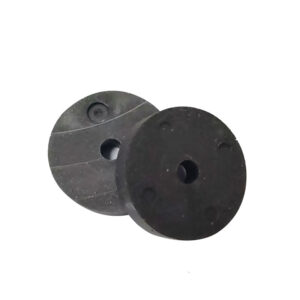
Applications Where Magnet Size Matters
The influence of magnet size on Gauss value is important in many industries, including:
- Hall effect sensors
- Brushless DC motors
- Rotary encoders
- Automotive position sensors
- Industrial automation equipment
- Smart home appliances
- Speed and motion detection systems
Selecting the correct dimensions helps ensure stable signal output and reliable performance.
Design Recommendations
When higher magnetic performance is required, increasing magnet size is not always the most effective solution.
Engineers should also consider:
- Optimizing magnetic circuit design
- Using higher-grade magnetic materials
- Improving magnetization patterns
- Selecting the correct pole count
- Matching magnet dimensions to application requirements
These approaches often provide better results while controlling manufacturing costs.
FAQ: Does Size Affect Gauss Value?
Does Size Affect Gauss Value in all magnets?
Yes. Magnet dimensions influence magnetic flux distribution, which directly affects the measured surface Gauss value.
Does increasing thickness always increase Gauss value?
No. Surface Gauss value increases until magnetic saturation is reached. Beyond that point, improvements become minimal.
Do larger magnets always produce stronger magnetic fields?
Not necessarily on the surface. However, larger magnets generally provide greater total magnetic flux and longer effective working distances.
Which dimension affects Gauss value the most?
For most magnetic rings, thickness along the magnetization direction has the greatest influence on surface Gauss value.
Conclusion
So, Does Size Affect Gauss Value? Absolutely. Thickness, outer diameter, inner diameter, and overall volume all influence magnetic field distribution and measured Gauss values. Understanding Does Size Affect Gauss Value allows engineers to design more efficient magnetic systems while balancing performance and cost.
For custom magnetic rings, multipole magnets, and magnetic assemblies, visit HIGHKOS Magnet at https://www.highkos.com/ for professional support and engineering solutions.