
When selecting a magnet for sensors, motors, and industrial equipment, engineers often evaluate the magnetic ring gauss value to understand its magnetic capabilities. This parameter helps determine how much magnetic energy is available for a specific application and whether the component can deliver reliable long-term performance.
Although magnetic field strength is important, it is only one part of the overall picture. Material type, magnet dimensions, magnetization pattern, and operating conditions all influence how a ring magnet performs in real-world applications.
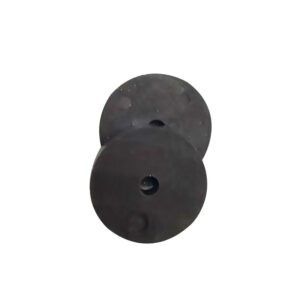
For additional information about custom magnetic products and engineering solutions, visit https://www.highkos.com/.
What Is the Magnetic Ring Gauss Value?
The magnetic ring gauss value refers to the magnetic flux density measured at a specific location, usually on the surface of a ring magnet. This measurement is obtained using a Gauss meter and is expressed in Gauss (G).
A higher gauss reading generally indicates a stronger magnetic field near the surface. However, surface measurements alone do not fully describe how a magnet will behave within a complete system.
Engineers typically use this data as an initial reference when comparing different magnetic materials and designs.
Why Magnetic Field Strength Matters
Improved Attraction Force
Magnets with higher surface flux density can create stronger attraction forces. This characteristic is valuable in positioning systems, magnetic couplings, and industrial holding applications.
The ability to generate reliable magnetic force often improves equipment stability and operating efficiency.
Enhanced Sensor Reliability
Many electronic systems depend on magnetic detection. Hall-effect sensors, encoders, and proximity switches require a stable field to produce accurate signals.
A suitable magnetic ring gauss value helps ensure that sensors receive sufficient magnetic input, improving detection accuracy and reducing the risk of signal loss.
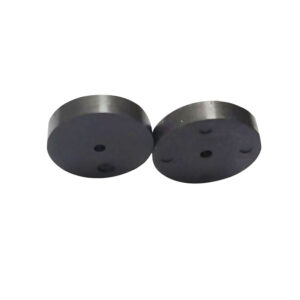
Better Resistance to External Influences
Strong magnetic materials are often more resistant to demagnetization caused by elevated temperatures or opposing magnetic fields.
Manufacturers frequently evaluate magnetic performance alongside environmental requirements to ensure long-term reliability.
Learn more about magnet stability:
https://www.highkos.com/news/demagnetizing-field-magnets/
Material Selection and Magnetic Performance
Different magnetic materials produce different levels of magnetic energy.
Ferrite Ring Magnets
Ferrite magnets are commonly used because they provide excellent corrosion resistance and economical production costs. They are widely found in household appliances, industrial motors, and electromagnetic components.
Learn more about ferrite products:
https://www.highkos.com/products/ferrite-magnets/sintered-ferrite/
Neodymium Magnets
Neodymium magnets offer significantly greater magnetic energy and can achieve a much higher magnetic ring gauss value than ferrite alternatives.
Their compact size and strong field output make them ideal for robotics, medical devices, sensors, and high-efficiency motors.
Explore neodymium solutions:
https://www.highkos.com/products/ferrite-magnets/neodymium-magnets/sintered-ndfeb/
Samarium Cobalt Magnets
Samarium cobalt materials provide excellent temperature stability and corrosion resistance. These properties make them suitable for aerospace, defense, and demanding industrial environments.
Factors Beyond Surface Measurements
While the magnetic ring gauss value is an important specification, several other factors influence overall magnetic behavior.
Magnet Size and Geometry
A larger magnet may generate a stronger usable field at a distance than a smaller magnet with a higher surface reading. The volume of magnetic material often plays a significant role in determining field distribution.
Magnetization Method
Ring magnets can be magnetized using axial, radial, or multipole patterns. Each method creates a different magnetic field configuration and affects application performance.
Learn more about magnetization technology:
https://www.highkos.com/news/multipole-magnetization-injection-magnets/
Magnetic Circuit Design
Air gaps, shielding materials, and component placement can significantly affect magnetic efficiency. In many cases, optimizing the magnetic circuit improves performance more effectively than simply increasing field strength.
Understanding Field Decay
One important consideration is that magnetic fields weaken as distance increases. Even when a component has a high magnetic ring gauss value, the field intensity decreases rapidly away from the surface.
Because of this natural decay, engineers must evaluate both the available field strength and the required operating distance during product development.
This consideration is especially important in sensor systems and precision positioning equipment.
Common Industrial Applications
Ring magnets are used across a wide range of industries, including:
- Hall-effect sensing systems
- Brushless DC motors
- Automotive position detection
- Industrial automation equipment
- Medical devices
- Smart home appliances
- Robotics and motion-control systems
Application examples can be found here:
https://www.highkos.com/news/bldc-magnetic-ring-motor-solutions/
Conclusion
The magnetic ring gauss value provides a useful indication of magnetic field strength and helps engineers compare different magnet options. However, successful product design requires consideration of multiple factors, including material type, geometry, magnetization pattern, and system configuration.
By understanding how these elements work together, manufacturers can select the most suitable magnetic solution for their application while achieving reliable performance and long service life.
FAQ
What does the magnetic ring gauss value indicate?
It measures magnetic flux density at a specific location, usually on the magnet surface.
Does a higher gauss reading always produce better results?
Not necessarily. Magnet size, operating distance, and system design also affect overall performance.
Which magnetic material generates the strongest field?
Neodymium magnets generally provide the highest magnetic energy among commercially available permanent magnets.
How is the magnetic ring gauss value measured?
A Gauss meter is used to measure the magnetic flux density near the surface of the magnet.