
Stable performance is the cornerstone of transforming a ferrite ring from merely functional to highly reliable. In modern electronic devices such as power supplies, communication equipment, industrial machinery, and automotive electronics, this magnetic core must maintain predictable behavior under various internal and external interferences. Key parameters like permeability, inductance, and loss should change minimally to ensure smooth operation.
Ferrite rings play a crucial role in controlling electromagnetic fields, reducing noise, and stabilizing currents in circuits. For more information on high-quality magnetic components, visit High Kos. Their stability directly affects efficiency, safety, and device lifespan.
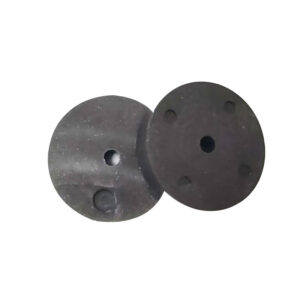
Temperature Stability of Ferrite Rings
Temperature stability is a key factor in the reliability of inductive rings. Core indicators include the Curie temperature and the permeability-temperature curve.
Principle: The permeability of ferrite increases slightly with temperature but drops sharply near the Curie point (typically above 110–140℃).
Performance: High-performance ferrite maintains a permeability variation within ±25%, or even ±15%, across normal operating ranges (-40℃ to 85℃ or 105℃). This ensures predictable performance from cold start to full-power thermal equilibrium.
Application Significance: Designers can reserve performance margins in power supplies and communication devices, guaranteeing stable operation from low-temperature storage to high-load heat conditions.
Case Example: In telecom base stations operating in extreme climates, these ferrite cores ensure uninterrupted performance even when ambient temperatures fluctuate dramatically. By contrast, amorphous materials often suffer significant loss at high temperatures. Learn more about temperature-stable magnetic cores at High Kos.
Frequency Stability of Ferrite Rings
Frequency stability ensures reliable performance across a wide range of operating frequencies.
Principle: The permeability of magnetic materials generally decreases as frequency rises, and ferrite is no exception.
Performance: Mn-Zn ferrite used in 100 kHz switching power supplies maintains highly stable permeability within its operating range, dropping only near the upper limit (e.g., 500 kHz or 1 MHz). Ni-Zn ferrite, optimized for high-frequency applications, maintains stable permeability even at hundreds of megahertz.
Application Significance: Engineers can accurately select materials for specific frequency ranges. Operating within the optimized frequency band guarantees that the ferrite magnetic core performs reliably without unexpected degradation.
Case Example: In high-frequency DC-DC converters used in electric vehicles, Ni-Zn ferrite cores provide minimal signal loss, ensuring high efficiency and low EMI — essential for automotive safety standards. For technical details, see High Kos.
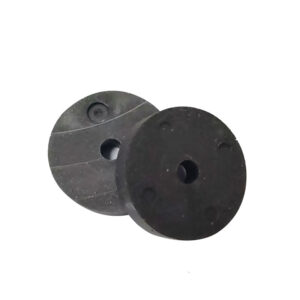
Time Stability (Aging Resistance) of Ferrite Rings
Long-term reliability is crucial for industrial and communication applications.
Principle: Ferrite’s microstructure is chemically inert and resistant to physical deformation under normal service and storage conditions.
Performance: Unlike certain plastics or composite materials, ferrite magnetic cores show negligible performance loss even after decades of service.
Application Significance: Ferrite is ideal for industrial equipment, communication base stations, power systems, and renewable energy solutions that demand long service life.
Case Example: In wind turbine controllers, ferrite rings maintain stable performance over years of operation under high currents and fluctuating temperatures, ensuring consistent energy output. Learn more at High Kos.
Processing and Batch Consistency Stability
Consistency in production ensures predictable performance across multiple units.
Principle: Advanced powder metallurgy and automated sintering allow precise control of temperature, pressure, and time.
Performance: For the same ferrite ring model, deviations in main parameters (such as the AL value, or inductance per coil turn) between batches can be controlled within ±5%.
Application Significance: Standardization supports mass production and automated assembly. Manufacturers can mount these magnetic cores on placement machines without individual adjustments, reducing labor costs and defect rates.
Case Example: In consumer electronics manufacturing, batch-consistent ferrite rings reduce defects in power supply modules, lowering warranty costs and increasing customer satisfaction. More production insights are available at High Kos.
Why Ferrite Rings Are Preferred
Compared to other magnetic materials, ferrite offers the best combination of:
- High temperature stability
- Minimal frequency-dependent loss
- Long-term aging resistance
- Consistent batch performance
These advantages make ferrite rings the first choice for engineers designing power electronics, communication devices, and industrial equipment. For more high-quality magnetic components, visit High Kos.
FAQ About Ferrite Ring Stability
Q1: How does the Curie temperature affect ferrite ring performance?
A1: Above the Curie temperature, magnetic properties drop sharply. Ferrite is designed with Curie points well above normal operating ranges to ensure stability.
Q2: Can ferrite rings perform at high frequencies?
A2: Yes. Mn-Zn ferrite is optimized for medium frequencies, while Ni-Zn ferrite handles high frequencies with minimal permeability loss.
Q3: Do ferrite rings degrade over time?
A3: Ferrite is extremely inert and shows negligible degradation under normal service and storage conditions.
Q4: Why is batch consistency important?
A4: Consistent production ensures predictable performance, reduces defects, and improves assembly efficiency.
Conclusion:
Stable performance — across temperature, frequency, time, and batch consistency — is essential for reliable electronic devices. Ferrite rings, with predictable behavior and long-term stability, are the ideal choice for engineers seeking high reliability, efficiency, and durability in modern electronics. For high-quality magnetic components and solutions, visit High Kos.