
In modern DC brushless fans, the magnetic ring plays a fundamental role in ensuring stable, efficient, and long-lasting motor operation. Installed around the rotor, this key component is made from high-performance permanent magnet materials and features multiple alternating north (N) and south (S) poles. Its precise magnetic design directly determines the performance and efficiency of the entire motor system.
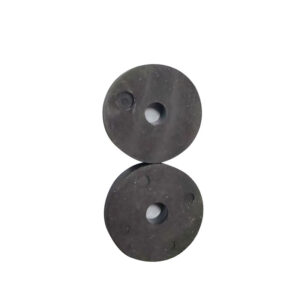
How the Magnetic Ring Generates Driving Force
The multi-pole magnetic ring interacts continuously with the rotating magnetic field generated by the stator coils. When the electromagnetic field shifts, it creates a controlled push-and-pull effect on the rotor. This interaction produces smooth rotational motion, which ultimately drives the fan blades to generate airflow.
Because the magnetic ring is carefully engineered and uniformly magnetized, it ensures stable torque output, reduced vibration, and consistent performance even under long-term operation. This makes it an essential component in high-demand applications such as electronic cooling systems, industrial ventilation equipment, and precision motor assemblies.
👉 Learn more about advanced magnetic solutions here:
https://www.highkos.com/
Enabling a True Brushless Motor Structure
One of the most important advantages of the magnetic ring is that it enables a completely brushless design. In traditional brushed motors, carbon brushes physically contact the commutator, which leads to friction, wear, heat generation, and electrical sparking over time.
By replacing mechanical contact with electronic commutation, the combination of magnetic rings and control electronics eliminates these issues entirely. This structural innovation results in several major improvements:
- Significantly extended motor lifespan
- Lower maintenance requirements
- Reduced operating noise
- No spark generation and minimal electromagnetic interference
- Higher reliability in continuous operation environments
This is why brushless motor technology has become the standard in modern high-performance devices, especially in applications where stability and durability are critical.
HighKos provides advanced magnetic components and engineering support for such systems, helping manufacturers achieve higher efficiency and product reliability.
👉 https://www.highkos.com/
Hall Sensor: The High-Precision “Electronic Commutator”
For a brushless motor to operate accurately, the controller must constantly know the rotor’s position. This is achieved through the Hall sensor, a highly sensitive magnetic field detection component.
Real-Time Rotor Position Feedback
Inside a typical DC brushless fan, there are usually 1 to 3 Hall sensors embedded in the stator structure. These sensors detect changes in the magnetic field generated by the rotating magnetic ring in real time.
The detected magnetic variations are converted into electrical signals and transmitted to the motor’s control chip. Based on this feedback, the controller determines the exact timing for energizing each coil group. This process repeats thousands of times per second, enabling precise and continuous electronic commutation.
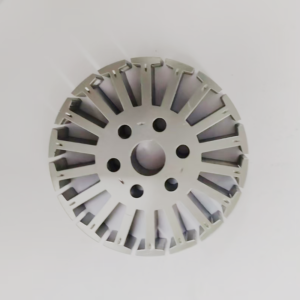
Core Advantages of Magnetic Ring and Hall Sensor Integration
The combination of magnetic rings and Hall sensors creates a highly efficient and intelligent motor control system. Compared with traditional brushed motors, this structure delivers significant performance improvements.
1. Ultra-Quiet Operation and Long Service Life
Since there is no physical brush contact, friction noise is eliminated. This greatly reduces operational sound levels. At the same time, the absence of mechanical wear significantly extends motor lifespan, making it ideal for CPU cooling fans, server systems, and high-end air circulation equipment.
2. High Efficiency and Stable Performance
Hall sensors ensure precise switching timing, allowing the motor to operate at optimal efficiency. This reduces unnecessary energy loss and improves overall performance stability, especially under variable load conditions.
3. Flexible and Intelligent Speed Control
By analyzing pulse signals from the Hall sensors, the system can achieve stepless speed regulation. This allows the fan to operate smoothly from low-speed gentle airflow to high-speed cooling modes. Some advanced systems can even simulate natural wind variations for improved comfort in household applications.
Conclusion
The integration of the magnetic ring and Hall sensor represents a key technological advancement in modern brushless motor design. It not only improves efficiency and lifespan but also enables quieter, smarter, and more energy-saving operation. With the continuous development of magnetic technology, companies like HighKos are driving innovation in precision magnetic components and motor solutions worldwide.