
In modern motor systems, Hall sensor magnetic rings play a vital role in achieving accurate rotor detection, speed measurement, and improved overall motor performance. These sensor magnetic components are widely used in brushless DC motors (BLDC), stepper motors, and industrial motor systems. High-quality Hall sensor magnetic rings ensure accurate sensor readings, stable operation, and extended motor lifespan.
With the increasing demand for automation, electric vehicles, and smart appliances, industries rely he
avily on magnetic rings for sensors to maintain precision and efficiency. Proper selection of these components helps ensure that motors operate reliably under varying load conditions, temperature changes, and high-speed rotations.
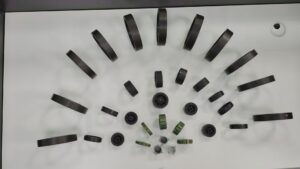
Applications of Hall Sensor Magnetic Rings
Hall sensor magnetic rings are essential wherever precise rotor positioning and speed detection are required. Their applications extend across multiple industries:
- Brushless DC motors (BLDC): Used in electric vehicles, drones, and robotics for efficient torque control.
- Stepper motors: Common in automation systems, 3D printers, and CNC machinery where precise incremental movement is needed.
- Servo motors in robotics: Ensuring accurate positioning in robotic arms and automated assembly lines.
- Industrial and home appliances: From washing machines to HVAC systems, motors need stable performance and accurate speed feedback.
The magnetic field generated by these sensor magnetic rings enables accurate rotor detection. This reduces vibration, minimizes energy loss, and enhances motor efficiency. Furthermore, they provide a reliable feedback mechanism for motor controllers, improving response time and operational safety.
Types of Hall Sensor Magnetic Rings
Manufacturers produce a variety of Hall sensor magnetic rings to meet different performance requirements:
1. Sintered Neodymium Rings
- High magnetic flux density, ideal for high-speed motors
- Compact design suitable for motor integration
- Long operational lifespan even under continuous high-speed conditions
2. Ferrite Magnetic Rings
- Cost-effective solution for small motors
- Stable magnetic performance across temperature fluctuations
- Commonly used in household appliances and low-cost industrial equipment
3. Bonded Magnetic Rings
- Can be shaped for complex motor designs
- Precision magnetization ensures consistent rotor feedback
- Widely used in industrial automation and robotics applications
Selecting the correct type of magnetic ring is crucial for achieving accurate rotor sensing and optimal motor efficiency.

Manufacturing Process of Hall Sensor Magnetic Rings
High-quality Hall sensor magnetic rings require meticulous production processes. The manufacturing process typically includes the following stages:
Material Preparation
Raw magnetic powders are carefully blended to ensure uniform composition and magneti
c properties. Material quality directly impacts the consistency and performance of the final magnetic ring.
Forming and Magnetization
The powders are pressed into precise ring shapes, then magnetized along specific axes to achieve the required magnetic flux for Hall sensor detection. Proper magnetization ensures reliable feedback for motor control systems.
Coating and Surface Treatment
Protective coatings are applied to enhance durability, corrosion resistance, and mechanical strength. Coating also prevents degradation in harsh environments, such as high humidity or chemical exposure.
Quality Testing
Each sensor magnetic component undergoes rigorous testing to ensure performance reliability:
- Magnetic flux density verification
- Dimensional accuracy checks
- Thermal stability assessment
- Mechanical strength and durability tests
A rigorous quality assurance process ensures that Hall sensor magnetic rings meet the highest standards for industrial and consumer applications.
Advantages of Hall Sensor Magnetic Rings
The benefits of integrating Hall sensor magnetic rings into motor systems include:
- Accurate rotor detection: Ensures precise motor control, reducing mechanical wear.
- Stable performance: Maintains magnetic properties across temperature changes and extended operation periods.
- Compact and lightweight design: Facilitates motor integration, especially in small devices.
- Customizable options: Sizes, magnetic strengths, and configurations can be tailored for specific applications.
- Energy efficiency: Accurate detection allows controllers to optimize motor operation, reducing power consumption.
These advantages make sensor magnetic rings ideal for automotive, industrial automation, robotics, and consumer electronics.
Industry Applications and Case Studies
Automotive
Electric vehicles use BLDC motors with Hall sensor magnetic rings for precise torque control and regenerative braking. Accurate rotor position detection allows better energy efficiency and smoother acceleration.
Robotics
Industrial robotic arms rely on these sensor magnetic rings to achieve high positional accuracy. They enable repeatable movements with minimal error, improving productivity and reducing maintenance downtime.
Consumer Electronics
Small motors in drones, printers, and home appliances depend on magnetic rings to maintain stability and responsiveness, ensuring reliability and long service life.
Case Example
A robotics manufacturer upgraded its motors with high-precision Hall sensor magnetic rings, achieving:
- Reduced torque ripple
- Increased speed accuracy
- Lower vibration and noise
- Extended motor lifespan
This example demonstrates the crucial role of magnetic rings in modern motor systems.
Choosing a Supplier
When sourcing magnetic rings for Hall sensors, companies should evaluate:
- Experience in producing high-performance magnetic rings
- Ability to provide custom sizes, shapes, and magnetic strengths
- Strict quality control and testing standards
- Technical support for motor integration
- Bulk supply and timely delivery
Partnering with a reliable supplier ensures that Hall sensor magnetic rings meet the required performance, durability, and efficiency standards.
Conclusion
Hall sensor magnetic rings are critical for precise rotor detection and efficient motor operation. Their reliable magnetic properties, compact design, and durability make them suitable for automotive, robotics, and industrial applications. Choosing a trusted supplier ensures higher motor performance, reduced maintenance, and long-term operational reliability.
Take Action
Upgrade your motor systems with high-quality Hall sensor magnetic rings. Visit our product page to explore solutions for BLDC, stepper, and industrial motors. Contact Highkos today to order custom or bulk sensor magnetic components for your projects.
FAQ
What is a Hall sensor magnetic ring used for?
It provides precise rotor detection and a stable magnetic field for motors.
Which types are available?
Sintered neodymium, ferrite, and bonded magnetic rings are commonly used.
Can sensor magnetic rings be customized?
Yes, including size, shape, and magnetic properties.
Which industries use sensor magnetic rings?
Automotive, robotics, industrial automation, and consumer electronics.
What are the main benefits?
Accurate rotor detection, stable motor performance, compact design, and long lifespan.