
Permanent magnet ferrite materials are essential components in modern motors, sensors, and energy systems. However, in March 2026 the global supply chain for permanent magnet ferrite entered a serious crisis due to disruptions in the upstream celestite raw material market.
This sudden supply shock is already affecting industries such as:
-
new energy vehicle motors
-
wind power generators
-
energy-efficient motors
-
industrial automation systems
As companies relying on magnetic components face rising costs and unstable supply, the security of the global magnetic materials supply chain has become a major industry concern.
Manufacturers of precision magnetic components, such as
https://www.highkos.com/, are closely monitoring these changes as they directly impact the production of ferrite magnets and injection molded magnetic parts used in modern motor systems.
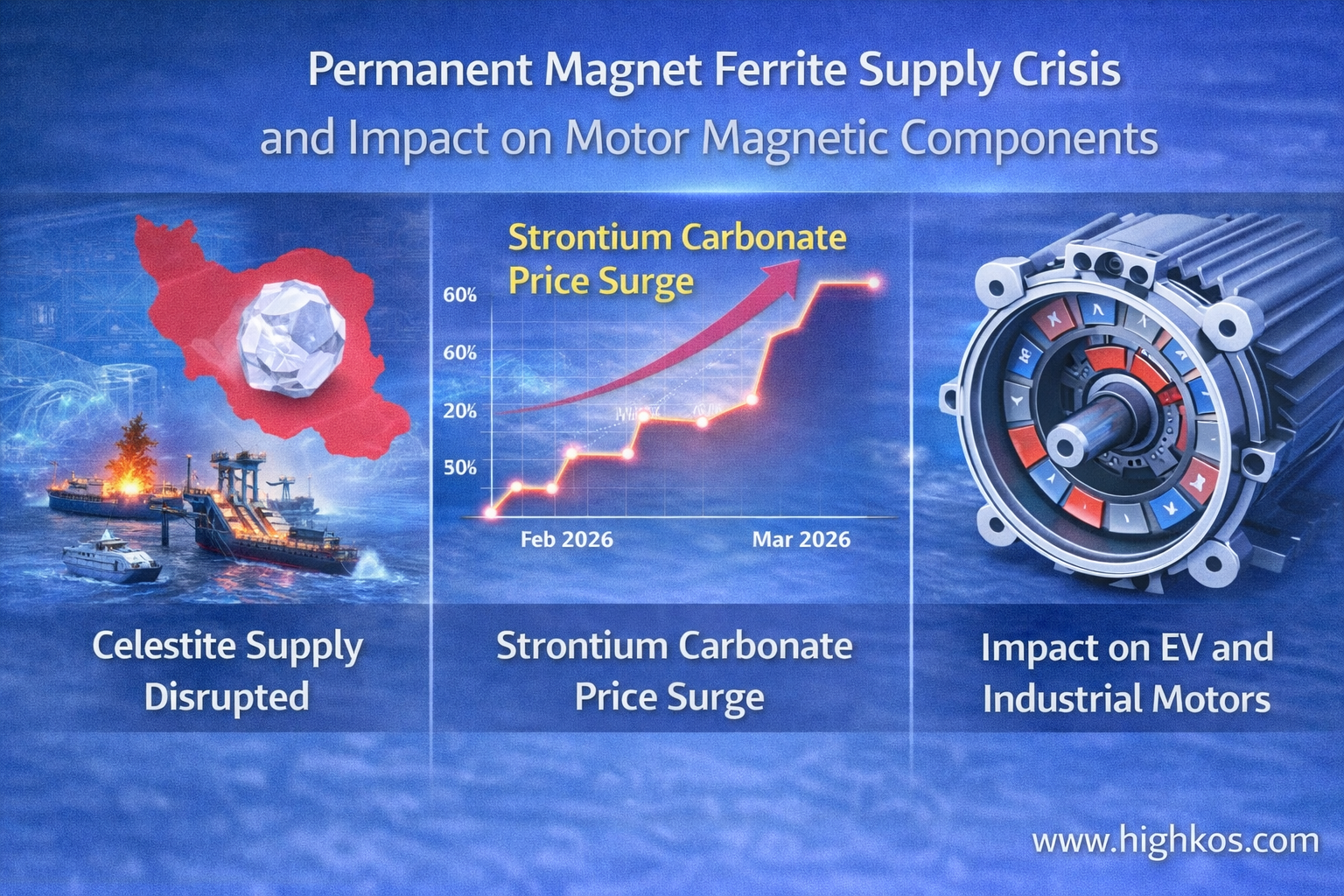
Global Celestite Shortage Behind the Ferrite Magnet Crisis
The current crisis originates from the sudden disruption of high-grade celestite supply, which is the key raw material used to produce strontium carbonate.
Strontium carbonate is one of the most critical ingredients used in manufacturing permanent magnet ferrite materials.
However, global celestite resources are highly concentrated.
Important facts about the global supply chain include:
-
Iran holds about 85% of the world’s high-grade celestite reserves
-
Iran accounts for around 35% of global celestite production
-
China imports about 70% of its celestite supply
-
60–70% of China’s imports come from Iran
This extreme concentration makes the ferrite industry highly vulnerable to geopolitical disruptions.
Logistics Disruption Intensifies Raw Material Shortage
The situation worsened after geopolitical conflicts affected Bandar Abbas, Iran’s largest port.
Key developments include:
-
Bandar Abbas handles 55% of Iran’s non-oil cargo
-
The port experienced operational suspension after attacks
-
Shipping routes through the Strait of Hormuz faced major disruption
As a result, the supply of Iranian celestite — the main source of raw materials for strontium carbonate — was suddenly cut off.
To make matters worse, alternative global suppliers cannot compensate for the loss.
Mexico, another important celestite producer, previously exported around 28,000 tons annually to China. However, a major fire at one of its mining operations caused permanent production losses.
Secondary suppliers in regions such as Spain and Mexico have:
-
lower ore grades
-
higher mining costs
-
limited production capacity
These factors make them unable to replace Iran’s high-grade celestite supply.
Strontium Carbonate Prices Surge Across the Industry
The raw material shortage immediately triggered extreme price volatility in the strontium carbonate market.
On March 4, 2026, domestic prices surged dramatically:
-
price increase in one day: 2,525 yuan per ton
-
new price level: 11,025 yuan per ton
-
daily increase: 29.71%
Within only a few days:
-
industrial-grade prices rose to 15,800 yuan per ton
-
electronic-grade products exceeded 30,000 yuan per ton
At the beginning of the year, prices were only around 8,000 yuan per ton.
This sudden and massive price jump occurred with almost no warning, making cost calculations and product pricing across the entire industry chain extremely difficult.
Impact on Permanent Magnet Ferrite and Motor Components
The price surge of strontium carbonate directly affects the production cost of permanent magnet ferrite materials.
In ferrite magnet production:
-
strontium carbonate accounts for 25%–40% of total material cost
This means that even moderate price changes can significantly affect the profitability of magnet manufacturers and motor producers.
Industries most affected include:
New Energy Vehicle Motors
EV motors require reliable magnetic materials for efficient performance and thermal stability.
Wind Power Generation
Wind turbine systems depend heavily on durable magnetic components for generators.
High-Efficiency Industrial Motors
Energy-efficient motors widely used in factories and automation systems rely on ferrite magnets for stable operation.
These industries are growing rapidly, with annual demand growth exceeding 25%, especially under China’s dual-carbon strategy.
Risks for the Global Motor Supply Chain
If the supply interruption continues, the impact on downstream manufacturing could become severe.
Possible consequences include:
-
reduced operating rates at strontium carbonate plants
-
reduced production capacity of ferrite magnets
-
supply shortages for motor magnetic components
-
longer delivery cycles for industrial equipment
Motor manufacturers may also face significant operational challenges, including difficulties sourcing key magnetic parts.
Even high-end markets with strong cost-transfer capabilities cannot fully absorb such rapid price volatility.
Strategic Importance of Supply Chain Stability
This crisis highlights a fundamental weakness in the global magnetic materials industry — excessive reliance on a single raw material source.
For companies involved in:
-
electric vehicles
-
renewable energy
-
industrial automation
ensuring a stable supply of permanent magnet ferrite materials is becoming a strategic priority.
Leading manufacturers are now focusing on:
-
diversified supply chains
-
improved material efficiency
-
advanced magnet manufacturing technologies
Companies specializing in magnetic components, such as
https://www.highkos.com/, continue to invest in high-precision manufacturing and innovative magnetic material solutions to help industries adapt to supply chain challenges.
Conclusion
The global shortage of celestite has triggered a major supply chain crisis for permanent magnet ferrite materials, pushing strontium carbonate prices to unprecedented levels.
This development is already affecting critical industries such as new energy vehicles, wind power, and high-efficiency motors.
As demand for magnetic components continues to grow worldwide, ensuring stable raw material supply and improving manufacturing resilience will be essential for the long-term development of the motor and magnet industry.
For more information about precision magnetic components and injection molded magnets, visit: