
What Are Radial Multipole Magnet Rings: Core Definition & Magnetic Mechanism
Fundamental Structure of Radial Multipole Magnet Rings
Radial multipole magnet rings are annular permanent magnetic components with alternating N and S poles distributed evenly along the radial direction of the ring inner or outer circumference,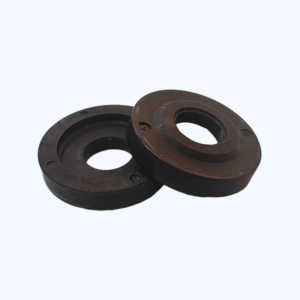
which is the core feature separating them from axial magnetized rings. Unlike axial variants whose magnetic flux runs parallel to the ring central axis, this special magnet structure generates field lines radiating perpendicularly outward or inward from the ring center, forming symmetrical, periodic radial magnetic waveforms around the ring body.
A complete magnet ring of this style consists of three core parts: magnetic composite substrate (ferrite/NdFeB magnetic powder mixed with thermoplastic resin), integrated structural inserts (metal shafts, positioning sleeves for motor assembly), and uniform multi-pole magnetic domains formed by oriented injection molding and post multi-pole magnetization. Our factory’s annular radial magnetic products support customizable pole counts ranging from 2 poles up to 48 poles, matching different rotation speed and angle detection demands of brushless DC motors and magnetic encoders.
How This Magnet Ring Style Forms Stable Radial Magnetic Fields
The manufacturing orientation process determines the magnetic field quality of radial multipole magnet rings. During injection molding, a radial orientation magnetic field is applied inside the mold cavity, forcing magnetic powder particles to align along the ring’s radial direction before resin cooling and solidification. After molding, dedicated multi-pole radial magnetizing equipment charges the ring to form alternating radial N-S pole pairs.
This molding + magnetizing dual process ensures every finished ring delivers consistent magnetic flux density (Gauss value) at each pole surface, solving the uneven magnetic field defect of split assembled magnet tiles. As introduced in our technical blog Magnetic Field Stability Analysis of Magnet Rings, uniform radial flux distribution directly reduces motor torque ripple and improves encoder angle detection accuracy, which is the core value of this radial multi-pole magnetic design in precision electronic equipment.
Two Main Material Types of Radial Multipole Magnet Rings & Performance Comparison
Injection Ferrite Radial Multipole Magnet Rings (Cost-Effective Mass Production Option)
Injection ferrite radial multipole magnet rings blend strontium/barium ferrite magnetic powder with PA6, PA12 or PP thermoplastic binders, the most widely used radial magnetic annular parts for mid-low power household appliances and industrial fans. Its maximum magnetic energy product ranges from 3–8 MGOe, with excellent corrosion resistance, low raw material cost, and stable performance under -40℃ to 120℃ working temperature.
For mass production projects such as energy-saving ceiling fan rotors, water pump motor stators, and small household appliance brushless motors, ferrite-based radial magnetic rings cut total component cost by 30% compared with rare earth alternatives while meeting basic magnetic drive requirements. Our 10,000㎡ automated production workshop supports continuous molding of ferrite magnet rings with inner diameter Φ5mm to Φ180mm, fully complying with ISO9001 quality control standards.
Injection NdFeB Radial Multipole Magnet Rings (High Precision High Flux Premium Solution)
Injection NdFeB radial multipole magnet rings adopt high-performance rare earth NdFeB magnetic powder mixed with high-temperature resistant PPS resin, targeting high-end automotive electronics, precision magnetic encoders, and high-speed brushless DC motors. Its magnetic energy product reaches 12–48 MGOe, delivering 3–6 times stronger radial magnetic flux than ferrite counterparts under identical ring size.
This kind of magnet ring can be integrally molded with metal shafts, positioning pins and mounting flanges in one shot, eliminating secondary assembly errors. It is the core magnetic component of single-pole absolute encoders, automotive seat adjustment motors, and new energy vehicle cooling pump rotors, and all rare earth radial magnetic rings from our factory pass IATF16949 automotive-grade reliability certification, meeting strict vibration and temperature cycling test standards for vehicle electronic parts.
Full Manufacturing Process of Custom Radial Multipole Magnet Rings
Mold Development & Magnetic Orientation Design for Radial Multipole Magnet Rings
The first step of customized radial magnetic ring production is mold design tailored to client drawings or samples. Our engineering team calculates radial magnetic field orientation parameters based on required pole count, target Gauss value and dimensional tolerance, embedding radial orientation coils inside mold cavities to guarantee ordered magnetic powder arrangement. All molds for these annular multi-pole magnets are independently developed in-house, with over 50 proprietary magnetic orientation patents to ensure magnetic consistency across mass batches.
Magnetic Composite Mixing & One-Shot Injection Molding
Magnetic powder and thermoplastic resin are fully blended under constant temperature and pressure to form uniform magnetic pellets, then fed into injection machines for integrated molding of the magnetic ring. The injection process can embed metal shafts, copper sleeves and positioning hardware simultaneously, avoiding loose assembly and magnetic gap deviation that often occur with split magnet tile assembly. Unlike sintered magnetic rings prone to cracking, injection-molded radial magnetic components feature good toughness and shock resistance, suitable for high-speed rotating motor environments.
Multi-Pole Radial Magnetization, Inspection & Finishing
After injection molding, semi-finished radial multipole magnet rings enter dedicated radial multi-pole magnetizing equipment to form alternating radial N-S poles. Post-magnetization full inspection covers three core indicators: surface Gauss value uniformity, dimensional tolerance, and magnetic pole symmetry. Unqualified products with uneven radial flux or dimensional deviation are eliminated automatically, while qualified magnetic rings undergo surface cleaning and packaging without extra coating treatment, as the resin binder fully wraps magnetic powder to resist oxidation.
Key Application Scenarios of Radial Multipole Magnet Rings Across 6 Major Industries
Brushless DC Household Appliance Motors
Radial multipole magnet rings serve as rotor magnetic cores for inverter air conditioner motors, silent decorative ceiling fans, range hood brushless motors and water circulation pumps. The symmetrical radial magnetic field of these annular magnets effectively reduces motor operating noise and energy consumption, matching the energy-saving upgrade trend of home appliances. Our mass-produced ferrite radial magnetic rings for fan motors have been supplied to over 300 long-term partners globally.
Automotive Electronic Adjustment Motors & Cooling Pumps
Automotive-grade injection NdFeB radial multipole magnet rings are applied to car instrument adjustment motors, seat slide motors, electronic throttle pumps and new energy vehicle battery cooling pumps. The stable radial magnetic flux of these rare earth magnet rings ensures precise motor angle control and stable torque output under vehicle vibration and wide temperature fluctuations, fully meeting IATF16949 automotive quality system requirements.
Magnetic Encoders & Precision Angle Sensors
Single-pole and multi-pole radial magnetic rings are the core magnetic medium of absolute and incremental magnetic encoders. The periodic radial magnetic waveform generated by radial multipole magnet rings allows magnetic sensors to capture real-time rotation angle, speed and position signals without optical components, delivering higher shock resistance and dustproof performance than optical encoders. Our technical article Single-Pole Absolute Encoder Working Principle details how radial multi-pole magnetic rings determine encoder detection accuracy.
Industrial Energy-Saving Equipment
Industrial silent fan rotors, automated equipment stepping motor stators and hydraulic valve position sensors all adopt radial multi-pole annular magnets. The uniform radial magnetic field minimizes motor torque fluctuation, improving industrial equipment operation stability and extending service life.
Medical Miniature Precision Motors
Miniature thin-wall radial magnetic rings with micro inner diameters are customized for medical infusion pump motors, surgical instrument drive motors and medical detection sensors, where small size, low noise and stable magnetic output are mandatory.
New Energy Water Pump & Heat Dissipation Equipment
High-temperature resistant PPS-based NdFeB radial multipole magnet rings are widely used in photovoltaic water pumps, charging pile heat dissipation fans and energy storage cooling circulation pumps, maintaining consistent radial magnetic performance under long-term high-temperature operation.
8 Unique Performance Advantages of Our Factory’s Radial Multipole Magnet Rings
- Uniform Radial Magnetic Flux Distribution: The proprietary radial orientation mold technology of our radial multipole magnet rings controls Gauss value deviation within ±3% across all poles, far better than the ±8% industry average of split magnet tile assemblies.
- Integrated One-Shot Molding Capability: These annular magnetic parts can be molded with metal shafts, flanges and positioning structures in a single process, cutting secondary processing costs by over 40%.
- Ultra-Wide Customization Range: Our radial magnetic rings support inner diameter Φ3mm to Φ200mm, pole count 2–48 poles, ferrite/NdFeB dual material options, and custom wall thickness, mounting holes and special-shaped steps per client drawings.
- Excellent Mechanical Toughness: Injection composite magnetic rings avoid cracking and chipping issues common with sintered counterparts, adapting to high-speed rotation and frequent vibration working conditions.
- Wide Temperature Adaptability: Ferrite radial magnetic rings work stably from -40℃ to 120℃; PPS NdFeB variants support continuous operation up to 150℃ for high-temperature equipment.
- Authoritative Quality Certifications: All radial multipole magnet rings pass ISO9001 quality management system and IATF16949 automotive-grade certification, with complete raw material inspection, production traceability and finished product test reports.
- Low Batch Consistency Deviation: Automated full-process production lines ensure dimensional and magnetic performance consistency of these multi-pole magnetic rings across 100,000+ mass production batches, eliminating performance fluctuation risks for end equipment.
- Customized Magnetic Performance Tuning: We adjust magnetic powder ratio and magnetizing intensity to modify the radial surface Gauss value accurately according to client’s motor or sensor design parameters.
Influencing Factors of Radial Multipole Magnet Rings’ Magnetic Performance
Raw Magnetic Material Grade
Ferrite and NdFeB powder grades directly determine the maximum radial magnetic flux of radial multipole magnet rings. High-coercivity ferrite powder delivers stable anti-demagnetization performance for low-cost magnetic rings, while high-remanence NdFeB powder enables high-Gauss radial magnetic components for precision sensors and high-torque motors. Improper material selection will cause insufficient radial magnetic field strength or irreversible magnetic loss under temperature rise.
Ring Dimensional Parameters
Outer diameter, inner diameter and wall thickness of the annular magnet significantly affect surface Gauss value. As analyzed in our technical post Does Magnet Size Affect Gauss Value?, under identical magnetic material, thicker wall radial magnetic rings generate higher radial surface magnetic flux, while excessively thin walls lead to uneven magnetic orientation during molding and weakened radial field uniformity.
Pole Count & Magnetizing Process
Different pole count designs of radial multi-pole magnetic rings match different rotation speed requirements: low pole count (2–8 poles) for high-speed motors, high pole count (16–48 poles) for low-speed high-precision encoders. Improper magnetizing voltage or fixture positioning will create asymmetric radial N-S poles, causing motor jitter or encoder signal distortion. Our factory calibrates dedicated magnetizing fixtures for each specification of radial magnetic rings to guarantee pole symmetry.
Operating Temperature Environment
Long-term high-temperature operation triggers magnetic attenuation of radial multipole magnet rings. NdFeB magnetic rings suffer faster magnetic loss above 120℃, so PPS high-temperature resin is recommended for heat-intensive equipment; ferrite radial magnetic rings exhibit superior temperature stability and are preferred for low-to-medium temperature mass production scenarios.
Comprehensive FAQ About Radial Multipole Magnet Rings
What is the difference between radial multipole magnet rings and axial magnet rings?
A: Radial multipole magnet rings have magnetic flux radiating outward/inward perpendicular to the ring axis, suitable for inner rotor brushless motors and side-mounted magnetic sensors. Axial magnet rings generate magnetic flux parallel to the central axis, mainly used for axial flux motors and end-face detection sensors. This radial multi-pole design provides more uniform periodic magnetic signals for rotation angle detection, making it the mainstream choice for encoders.
Can radial multipole magnet rings be customized with special dimensions and pole counts?
A: Yes. Our factory supports full customization of radial multipole magnet rings: we accept customer drawings, samples or parameter specifications to develop dedicated molds, covering inner diameter Φ3–200mm, pole count 2–48 poles, special positioning holes, stepped walls and integrated metal inserts. Small-batch prototype orders and mass production orders are both acceptable.
Which material variant of these magnetic rings should I choose for automotive motor projects?
A: Automotive electronic parts require injection NdFeB radial multipole magnet rings with PPS binder, which pass IATF16949 certification, resist high temperature and vibration, and deliver strong radial magnetic flux to ensure stable motor torque output. For low-cost automotive auxiliary fans, injection ferrite radial magnetic rings are a cost-effective alternative.
How to test the magnetic field uniformity of radial multipole magnet rings?
A: We use a digital Gauss meter paired with rotary positioning fixtures to test the surface Gauss value of every pole on each ring, recording deviation data. All finished radial multi-pole magnetic rings undergo 100% full inspection before delivery, and we can provide test reports for each batch upon client request.
Are radial multipole magnet rings resistant to corrosion and oxidation?
A: Yes. These magnetic rings are composite materials formed by magnetic powder wrapped in thermoplastic resin, with no exposed magnetic powder surface, eliminating rust and oxidation risks without additional electroplating or epoxy coating treatment. They perform stably in humid household and industrial environments.
What is the typical lead time for customized radial multipole magnet rings?
A: Prototype mold development takes 7–12 working days; small-batch sample production takes 3–5 days after mold completion; mass production lead time ranges from 7–15 working days based on order quantity. We maintain common specification stock of radial magnetic rings for immediate delivery of urgent small orders.
Conclusion: Why Custom Radial Multipole Magnet Rings Are Indispensable for Modern Motor & Sensor Manufacturing
Radial multipole magnet rings are irreplaceable core magnetic components across home appliances, automotive electronics, industrial automation and precision sensing industries, balancing magnetic performance, dimensional precision and mass production cost efficiency. Compared with traditional split magnet tile assemblies, integrated injection molded radial magnetic rings deliver uniform radial magnetic fields, simplified assembly processes and longer equipment service life, becoming the standard magnetic solution for new-generation brushless motors and magnetic encoders.
Selecting a qualified manufacturer with full-chain mold development, injection molding and magnetizing capacity directly determines end-product stability. Zhongshan High Kos Electronics Technology Co., Ltd., founded in 2007, owns a complete industrial chain covering mold R&D, injection molding, precision machining and magnetization, with standardized production lines for ferrite and rare earth radial multi-pole magnetic rings and global service experience serving over 300 industry partners.